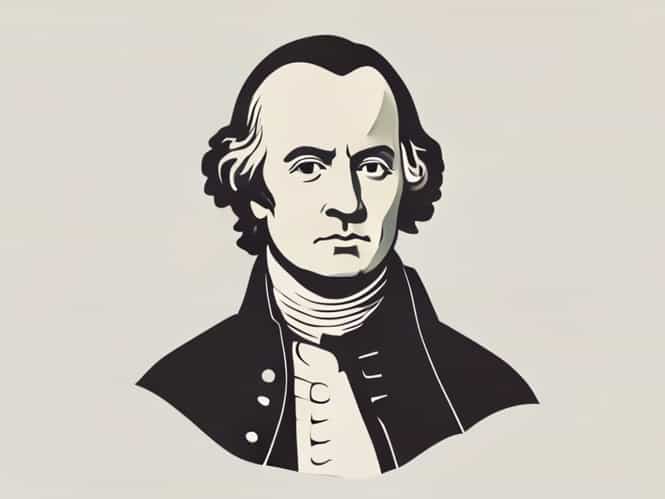
Thomas Jefferson is often celebrated as one of the most influential figures in American history, not only for drafting the Declaration of Independence but also for shaping early American political thought. Jeffersonian principles emphasizing limited government, agrarianism, states’ rights, and individual liberty have long been associated with his name. Yet, historians and scholars continue to debate just how closely Jefferson adhered to these ideals throughout his career. While he championed a vision of a nation rooted in republican virtue and self-reliance, the complexities of governance, international politics, and personal contradictions sometimes challenged the very principles he espoused. Understanding how Jeffersonian Jefferson truly was requires an exploration of his policies, writings, personal life, and the historical context of his leadership.
Jeffersonian Ideals and Philosophy
Jeffersonianism is rooted in several core ideals that guided Jefferson’s vision for the United States. Central to this philosophy was a commitment to limited government, where federal power would remain constrained and local governance would flourish. Jefferson believed that an agrarian society of independent farmers was the backbone of a healthy republic, arguing that such citizens were virtuous, self-sufficient, and less prone to corruption than urban elites. Individual liberty and natural rights were also fundamental, as Jefferson’s writings consistently emphasized freedom of thought, religion, and speech.
Advocacy for States’ Rights
Another hallmark of Jeffersonian thought was the prioritization of states’ rights over federal authority. Jefferson feared centralized power, believing that a strong national government could easily become tyrannical. His advocacy for the Kentucky and Virginia Resolutions, which asserted that states could nullify federal laws deemed unconstitutional, demonstrated his commitment to decentralization. This stance reflected a deep-seated belief in the sovereignty of individual states and the protection of citizens from overreach by distant federal authorities.
Jefferson’s Presidency Theory Versus Practice
Jefferson’s presidency (1801 1809) provides a revealing lens through which to evaluate his adherence to Jeffersonian principles. On one hand, Jefferson reduced federal debt, cut military expenditures, and repealed certain taxes implemented by his predecessors, signaling a commitment to limited government. On the other hand, some of his decisions revealed practical departures from strict Jeffersonian ideals, illustrating the tension between principle and governance.
The Louisiana Purchase
Perhaps the most famous example of Jefferson’s pragmatic departure from his philosophy was the Louisiana Purchase in 1803. By acquiring vast territories from France, Jefferson doubled the size of the United States, ensuring access to land for future agrarian citizens. However, the purchase also raised constitutional questions, as Jefferson had previously emphasized strict adherence to the Constitution and the limited powers of the federal government. To authorize the purchase, Jefferson resorted to broad interpretations of presidential powers, demonstrating that even a staunch Jeffersonian could adapt principles when national interests demanded it.
Handling of the Barbary Wars
Jefferson also faced challenges in foreign policy that tested his ideals. His response to the Barbary pirates, who demanded tribute from American merchant ships, required the deployment of the U.S. Navy. Although Jefferson initially sought peaceful solutions, he ultimately used military force, highlighting the tension between his preference for limited government and the practical necessity of protecting national interests abroad. These actions underscore the complex balance between Jeffersonian philosophy and the realities of leadership.
Economic Policies and Jeffersonian Values
Jefferson’s economic policies reflected his vision of an agrarian republic, favoring policies that supported farmers and rural communities over industrial or commercial elites. He opposed the creation of a powerful national bank and sought to minimize federal economic intervention. Jefferson believed that economic independence was essential for political freedom, and he championed policies that promoted self-reliance among citizens.
Contradictions in Economic Practice
Despite these ideals, Jefferson’s administration was not entirely consistent. While promoting agrarianism, Jefferson engaged in land speculation and benefited personally from the expansion of territories, revealing a tension between ideology and personal interest. Additionally, the complexities of funding government operations and maintaining national security sometimes required compromises with economic policies he had criticized, demonstrating the pragmatic limitations of Jeffersonian theory in practice.
Social and Political Contradictions
Jefferson’s personal and social life further complicates assessments of his Jeffersonian fidelity. He owned enslaved people throughout his life, a stark contradiction to his public writings on liberty and equality. While Jefferson expressed moral discomfort with slavery and supported gradual emancipation in principle, he failed to implement these ideals consistently in his personal or political life. These contradictions highlight the difficulty of adhering strictly to Jeffersonian philosophy in a society deeply intertwined with slavery and social hierarchies.
Political Leadership and Partisanship
Jefferson also navigated the challenges of partisanship and political leadership. As a founder of the Democratic-Republican Party, he sought to limit the influence of the Federalist Party and federal authority, but his administration sometimes engaged in strong political maneuvering, such as using patronage to consolidate power. While these actions can be viewed as pragmatic responses to political realities, they also demonstrate deviations from the Jeffersonian ideal of limited, principled governance.
Jeffersonianism and Legacy
Evaluating Jefferson’s Jeffersonian credentials requires acknowledging both his philosophical vision and the practical compromises of leadership. While Jefferson consistently promoted ideals of individual liberty, agrarianism, and limited government, his presidency and personal life reveal tensions and contradictions. His legacy is thus a blend of principled advocacy and pragmatic adaptation, illustrating the complex interplay between philosophy and real-world governance.
Influence on American Political Thought
Despite these contradictions, Jefferson’s ideas have had a lasting impact on American political thought. His advocacy for personal liberty, local governance, and civic virtue shaped the early republic and influenced subsequent generations of political leaders. Jeffersonian principles continue to serve as a reference point in debates over federalism, civil liberties, and the role of government in citizens’ lives. Even when Jefferson deviated from his ideals, his philosophical framework provided a foundation for understanding the balance between liberty and authority in the United States.
Thomas Jefferson was undoubtedly a Jeffersonian in many respects, championing limited government, agrarianism, and individual liberty. Yet his presidency and personal life reveal pragmatic departures and contradictions that challenge a simplistic view of his philosophy. The Louisiana Purchase, the Barbary Wars, economic compromises, and his relationship with slavery all illustrate the tension between Jeffersonian ideals and the practical realities of leadership. Understanding Jefferson requires a nuanced perspective that recognizes both his philosophical contributions and the complexities of applying those principles in governance.
Ultimately, Jefferson’s Jeffersonianism was both aspirational and adaptable. He envisioned a nation grounded in liberty, virtue, and agrarian independence, and he pursued policies that often reflected these ideals. However, his willingness to make pragmatic choices in the face of political and social realities demonstrates that even the most principled leaders must navigate the tension between philosophy and practicality. Jefferson’s enduring influence lies in his articulation of core American values, providing a lens through which citizens and scholars can explore the ongoing balance between liberty, governance, and civic responsibility.
examining “how Jeffersonian was Jefferson” underscores the complexity of historical leadership. Jefferson’s life and presidency reflect a dynamic interplay of ideals, pragmatism, and personal contradictions. His legacy continues to shape political discourse, illustrating that Jeffersonian principles are as much about aspiration and philosophical guidance as they are about the practical realities of governing a diverse and evolving nation.