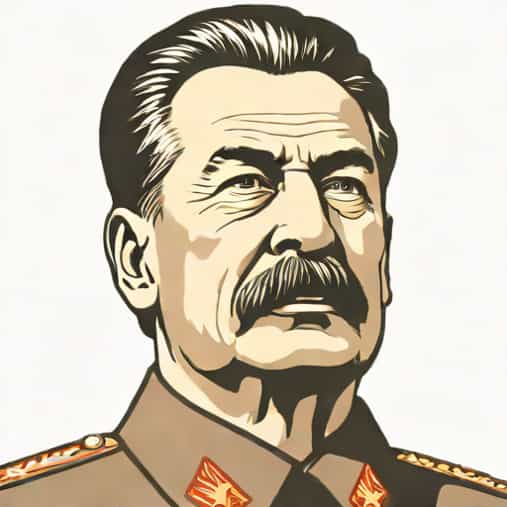
Joseph Stalin, one of the most influential and controversial figures of the twentieth century, ruled the Soviet Union for nearly three decades, shaping both domestic and international politics through his policies, purges, and leadership during World War II. Many people are curious about the details of his life, including the circumstances surrounding his death and his age at the time. Stalin’s age at death is more than just a number; it provides context to his long tenure in power, the health challenges he faced, and the historical era in which he lived. Understanding this aspect of his life helps shed light on the final years of one of history’s most notorious leaders.
Early Life and Background
Joseph Vissarionovich Stalin was born on December 18, 1878, in Gori, a small town in the Russian Empire, which is now part of Georgia. He grew up in a modest family and experienced a challenging childhood, including illness and poverty. Stalin’s early life was marked by education in religious schools and an eventual introduction to revolutionary ideas. He became involved in the Bolshevik movement, participating in underground activities against the Tsarist regime. His formative years shaped his political ideology and his drive to consolidate power in the Soviet Union later in life.
Rise to Power
Stalin’s rise to power was gradual but decisive. After the Russian Revolution of 1917 and the subsequent civil war, he positioned himself as a key figure in the Communist Party. By the mid-1920s, Stalin had emerged as the leader of the Soviet Union following the death of Vladimir Lenin. His consolidation of power involved eliminating rivals, implementing policies such as collectivization and industrialization, and establishing a regime characterized by strict control and widespread purges. Understanding his political career provides context for evaluating the significance of his age and health at the time of his death.
Health in Later Years
As Stalin aged, his health began to deteriorate, influenced by years of stress, overwork, and possible medical conditions such as hypertension. Reports suggest that he had a sedentary lifestyle in his later years, coupled with heavy smoking and irregular eating habits. These factors contributed to his vulnerability to health complications. His age at death reflects both the long duration of his rule and the toll that decades of political leadership and personal lifestyle had taken on his body.
Final Days and Death
Joseph Stalin died on March 5, 1953. At the time of his death, he was 74 years old, having been born in December 1878. His death marked the end of an era in Soviet history, as he had dominated the political, social, and economic life of the country for decades. Stalin was found in his Kuntsevo dacha, outside Moscow, after suffering a stroke, and his death was officially announced two days later. The announcement led to widespread mourning in the Soviet Union, alongside political maneuvering among his successors.
Significance of Stalin’s Age at Death
Stalin’s age at death is significant for several reasons. At 74, he had lived through some of the most tumultuous periods of Russian and Soviet history, including the fall of the Russian Empire, the rise of the Bolsheviks, the civil war, World War II, and the early years of the Cold War. His age indicates not only personal longevity but also the extended period during which he exerted influence and maintained control over the Soviet Union. Reaching this age also allowed him to implement long-term policies, consolidate his political ideology, and leave a lasting legacy on both the country and the world.
Impact of His Death
The death of Stalin at the age of 74 triggered a significant transition in Soviet leadership. His passing created a power vacuum, leading to a period of political maneuvering among his successors, including Nikita Khrushchev. Policies and governance approaches changed as the new leadership moved to distance itself from some of Stalin’s more oppressive tactics. Understanding his age at death helps historians evaluate the duration of his influence and the timing of political changes that followed.
Historical Context
Comparing Stalin’s age at death with the life expectancy of the time provides additional insight. In the early 1950s, the average life expectancy in the Soviet Union was significantly lower than 74 years, particularly for men. This highlights that despite his demanding lifestyle and the stresses of leadership, Stalin lived a relatively long life for his era. His longevity allowed him to oversee numerous political, social, and military campaigns, which shaped mid-twentieth century history in profound ways.
Legacy and Reflection
The legacy of Joseph Stalin is intertwined with the policies and actions he implemented during his life. At 74, he had accumulated decades of power, which were marked by industrialization, collectivization, purges, and the transformation of the Soviet Union into a major world power. Scholars continue to analyze the correlation between his age, health, and decision-making in his final years. His death at 74 not only ended his personal story but also signaled a turning point in Soviet history, affecting governance, domestic policies, and international relations for years to come.
Joseph Stalin died at the age of 74 on March 5, 1953, marking the end of a long and controversial career in leadership. His age at death provides context to his lengthy rule, the historical events he influenced, and the physical toll of decades of political power. From his early life in Georgia to his rise as the leader of the Soviet Union, and finally to his death, Stalin’s life demonstrates the intersection of personal longevity and historical impact. Understanding his age at death helps illuminate the broader narrative of twentieth-century history, the evolution of the Soviet Union, and the enduring significance of one of history’s most formidable political figures.