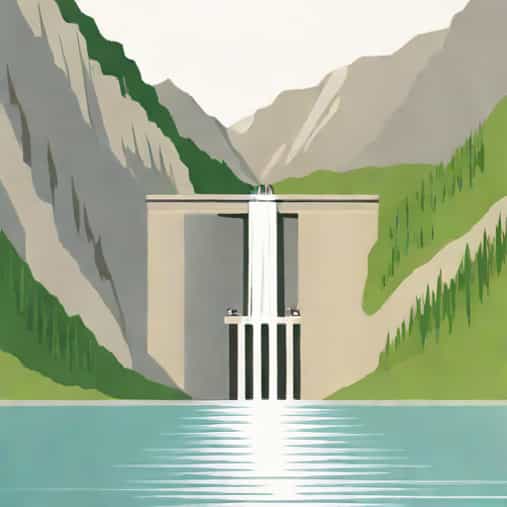
The question is the Vajont Dam still in use often appears when people learn about the tragic Vajont disaster of 1963, one of the most devastating engineering-related catastrophes in history. Many assume the dam must have been destroyed, abandoned entirely, or left in ruins after the tragedy. Surprisingly, the answer is more complex. The Vajont Dam itself still stands in northern Italy, but it is not used in the way it was originally intended. Understanding why requires looking at its history, what happened during the disaster, and how its purpose has changed over time.
Understanding What the Vajont Dam Was Built For
The Vajont Dam was constructed as a massive hydroelectric dam designed to store water and produce power for surrounding regions. At the time, it was considered a remarkable achievement in engineering. Standing tall in a steep valley near Longarone in the Dolomite mountains, it represented technological ambition, economic development, and national pride. The structure was meant to demonstrate how human innovation could harness natural forces to create energy and progress.
The Scale and Technology Behind the Dam
The Vajont Dam was constructed as an arched concrete dam, a type known for its strength and ability to endure tremendous pressure. Engineers believed it to be one of the safest and strongest dams ever built. It was incredibly high for its time, making it one of the tallest in the world. The project involved years of planning, heavy investment, and confidence from scientists, engineers, and government officials.
- Designed for hydroelectric power production
- Built with advanced engineering techniques of its era
- Located in a narrow mountain valley
- Intended to store an enormous volume of water
However, what appeared to be a triumph of engineering would soon prove to be a tragic example of how ignoring geology, nature, and safety warnings can lead to disaster.
The Vajont Disaster and Its Lasting Impact
In 1963, a massive landslide from Monte Toc plunged into the reservoir behind the dam, displacing millions of cubic meters of water in seconds. The resulting wave surged over the top of the dam and swept through nearby towns, destroying everything in its path. Thousands of lives were lost, and entire communities were erased within moments. It was not the dam breaking that caused the disaster; the dam structure remained standing. Instead, it was the violent displacement of water caused by the landslide that led to such unimaginable destruction.
Why the Disaster Happened
The tragedy of Vajont is often remembered as a failure not of materials, but of judgment. Geological instability in the area had been warned about repeatedly. Cracks in the mountain, earth movement, and earlier smaller landslides indicated danger. Increasing water levels in the reservoir further weakened the slope, yet operations continued. The disaster demonstrated how overlooking environmental and geological realities can turn even the strongest engineering structure into part of a deadly event.
So, Is the Vajont Dam Still in Use?
Today, the Vajont Dam still physically exists, standing as a monumental and haunting structure. However, it is not used the way it was originally designed to be. The reservoir is no longer in operation, and the dam does not function in active hydroelectric service. Instead, it serves as a memorial site, educational location, and enduring symbol of engineering responsibility and human consequence.
The Dam Today
Although the concrete structure remains largely intact, its former purpose has ended. It is maintained mainly for historical and structural reasons rather than energy production. The surrounding region treats the Vajont Dam as a place of remembrance, honoring the victims and reminding future generations about the importance of safety in engineering, construction, and environmental planning.
- The dam still stands physically
- It is no longer used as a functioning hydroelectric reservoir
- The site is treated as a memorial area
- It symbolizes the balance between progress and responsibility
In this sense, the Vajont Dam is still there, but it is not still in use in any practical energy-producing way.
Why the Vajont Dam Still Matters Today
The question of whether the Vajont Dam is still in use is closely tied to why the site remains important in modern discussions. It is studied internationally in engineering schools, environmental science programs, disaster management fields, and ethical studies. It reminds experts and leaders that human ambition must always be balanced with respect for nature and careful evaluation of risks.
Lessons Learned from Vajont
The Vajont tragedy teaches several vital lessons that continue to influence safety standards today. It emphasizes that listening to scientific warnings is essential, especially when dealing with powerful natural environments. It also reinforces that engineering strength alone cannot protect humanity when environmental factors are ignored. The structure itself survived, but the consequences of mismanagement were catastrophic.
- Environmental study must never be ignored
- Engineering requires responsibility, not just capability
- Lives must always come before profit or prestige
- History holds valuable warnings for the future
Because of this, the Vajont Dam is not only a physical landmark; it is a powerful educational symbol. Its continued presence keeps the story alive so that similar disasters can hopefully be prevented elsewhere in the world.
A Place of Memory and Reflection
Instead of being a place of industrial power, the Vajont Dam is now a place of remembrance. It stands silent, overlooking a valley forever changed by tragedy. People visit to understand what happened, to honor those who were lost, and to recognize the importance of respecting both engineering and nature together. The dam’s towering concrete wall feels both impressive and solemn, representing strength, sorrow, and human reflection.
From Function to Meaning
Even though the Vajont Dam is no longer used as a functional structure, it still has great meaning. In many ways, its purpose has shifted from energy production to education, memorialization, and awareness. Its survival, despite the disaster, serves as a reminder that structures may endure, but human lives and communities must always be valued above progress.
final remarkss About Whether the Vajont Dam Is Still in Use
If someone asks whether the Vajont Dam is still in use, the most honest answer is that it still stands but is no longer an active working dam. It remains a powerful historical landmark, a warning about ignoring environmental danger, and a deeply emotional memorial site. The dam’s presence today ensures that the story is not forgotten and that future generations continue learning from one of history’s most tragic engineering events. In that sense, while it may no longer serve its original function, it still has a meaningful role in the world.