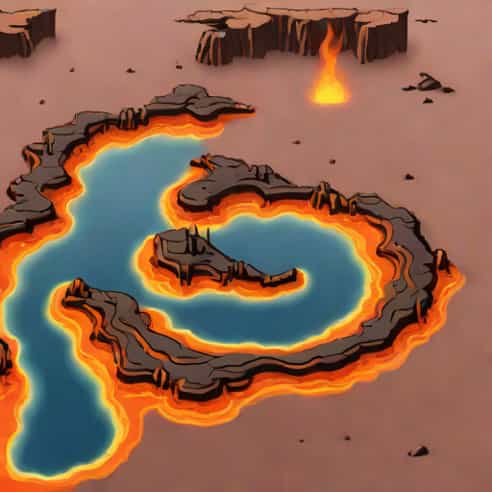
Lava-dammed lakes in Africa represent one of the continent’s most fascinating geological features. These lakes form when flowing lava from volcanic eruptions blocks a river valley or drainage path, creating a natural dam that traps water behind it. Over time, these volcanic lakes develop into unique ecosystems and play a significant role in local hydrology, ecology, and human settlement. Across the African continent, several examples of lava-dammed lakes can be found, each telling a story about the region’s volcanic history and natural evolution.
Formation of Lava-Dammed Lakes
The formation of lava-dammed lakes begins with volcanic activity. When molten lava flows down from a volcano, it can spread across valleys and river channels. If the flow is large enough, it can obstruct the natural path of rivers, preventing water from continuing downstream. Over time, rainwater and upstream flow accumulate behind the hardened lava, forming a lake. The process depends on factors such as the viscosity of the lava, the slope of the valley, and the amount of water available in the river system.
Geological Process Behind the Formation
- Volcanic eruptionAn eruption releases lava, ash, and gases. The lava spreads outward, often following the contours of the land.
- Lava flow obstructionWhen lava reaches a river valley, it can solidify across the flow, acting as a natural dam.
- Water accumulationRivers, rainfall, or melting snow build up behind the new lava dam, creating a lake.
- StabilizationOver years or centuries, sedimentation and vegetation stabilize the lake’s boundaries.
This process is relatively rare but can occur in regions with active or historically active volcanic systems. Africa, being home to the East African Rift System-a zone of tectonic and volcanic activity-is one of the world’s prime areas for studying such formations.
Major Lava-Dammed Lakes in Africa
Several lava-dammed lakes have formed across the African continent, particularly in the Great Rift Valley region. These lakes not only provide insight into the geological past but also support diverse ecosystems and local communities. Some have existed for thousands of years, while others are more recent in geological terms.
Lake Kivu (Rwanda and Democratic Republic of the Congo)
One of the most famous lava-dammed lakes in Africa is Lake Kivu, located between Rwanda and the Democratic Republic of the Congo. This lake formed due to volcanic activity associated with the Virunga Mountains, a chain of volcanoes in the western branch of the East African Rift. Lava from ancient eruptions blocked the flow of rivers, creating a vast lake basin that stretches over 2,700 square kilometers. Lake Kivu is also known for its dissolved gases-methane and carbon dioxide-trapped beneath its surface, which scientists monitor closely for safety and energy production.
Lake Nyos and Lake Monoun (Cameroon)
Although smaller, Lake Nyos and Lake Monoun in Cameroon are also believed to have formed due to volcanic damming. Located in the Cameroon Volcanic Line, these lakes occupy craters and valleys blocked by past lava flows. Both lakes gained attention because of their limnic eruptions-rare natural disasters where dissolved gases suddenly escape, posing dangers to nearby communities. These events highlight the complex and potentially hazardous nature of lava-dammed lakes.
Lake Bunyonyi (Uganda)
Lake Bunyonyi, in southwestern Uganda, is another notable example. Its name means place of many little birds, reflecting the rich biodiversity of the area. The lake was formed when lava from the Virunga volcanic chain flowed into the Ndego River valley, blocking it and creating a deep freshwater lake. With depths exceeding 40 meters in some parts, Lake Bunyonyi has become a vital ecological and cultural landmark for local populations and a growing destination for tourism due to its scenic beauty.
Other Lesser-Known Lava-Dammed Lakes
- Lake Mutanda (Uganda)Formed by volcanic activity in the southwestern region near the Virunga Mountains, similar in origin to Lake Bunyonyi.
- Lake Bishoftu (Ethiopia)Although primarily a crater lake, its formation is associated with volcanic obstruction in the Rift Valley region.
- Lake Awing (Cameroon)A smaller example formed in a volcanic depression where lava altered local drainage patterns.
Ecological and Environmental Importance
Lava-dammed lakes in Africa are not only geological wonders but also ecological treasures. They provide freshwater resources, support diverse aquatic life, and create microclimates that sustain surrounding vegetation and wildlife. These lakes often become essential water sources for nearby communities and contribute to local agriculture and fisheries.
Biodiversity and Habitats
The unique geological formation of lava-dammed lakes creates varied habitats. Shallow areas support aquatic plants, while deeper regions host fish species adapted to cooler, oxygen-rich environments. In Lake Kivu, for instance, the stratified layers of water host specific microbial communities that thrive under different chemical conditions. Lakes such as Bunyonyi are home to numerous bird species, amphibians, and endemic fish, making them hotspots for ecological research.
Human and Economic Significance
- FisheriesMany lava-dammed lakes provide livelihoods through fishing, though sustainable practices are crucial to maintaining ecological balance.
- TourismLakes like Bunyonyi attract visitors for boating, birdwatching, and cultural tourism, boosting local economies.
- Energy resourcesMethane extraction from Lake Kivu demonstrates how natural resources in these lakes can be harnessed safely for energy.
Hazards Associated with Lava-Dammed Lakes
Despite their beauty and benefits, lava-dammed lakes can also pose significant risks. Because many are located in volcanic or tectonically active regions, they are vulnerable to natural hazards. Changes in gas concentrations, landslides, or renewed volcanic activity can trigger dangerous events.
Potential Dangers
- Dam failureNatural erosion or renewed volcanic activity can cause the lava dam to weaken, leading to catastrophic flooding.
- Gas emissionsSome lakes, like Nyos and Kivu, contain large amounts of dissolved carbon dioxide or methane that could be released suddenly.
- Earthquakes and volcanic activitySeismic events can destabilize the lakebed or release trapped gases, affecting nearby populations.
Monitoring and Safety Measures
Scientists continue to study these lakes to predict and mitigate hazards. In Lake Kivu, continuous monitoring systems track gas levels and temperature gradients. In Cameroon, degassing pipes have been installed in Lake Nyos to safely vent carbon dioxide. These efforts show how modern technology can reduce the risks associated with natural geological formations while preserving their ecological value.
Scientific and Educational Importance
Lava-dammed lakes serve as natural laboratories for studying volcanic activity, hydrology, and ecology. Geologists and environmental scientists use them to understand how volcanic landscapes evolve over time and how ecosystems adapt to unique environmental conditions. Students of geology and geography often study these African lakes to explore the relationship between earth processes and natural habitats.
Research Opportunities
- Studying gas composition and stratification in deep volcanic lakes.
- Examining sediment layers to reconstruct volcanic history.
- Investigating endemic species and their ecological adaptations.
- Developing sustainable methods for managing lake resources and tourism.
Lava-dammed lakes in Africa are striking reminders of the continent’s powerful geological forces. From the vast expanse of Lake Kivu to the tranquil waters of Lake Bunyonyi, these lakes tell stories of fire, water, and time. They support rich biodiversity, provide resources for local communities, and offer scientists a window into the planet’s volcanic past. Yet, they also demand respect due to the hidden dangers beneath their surfaces. By combining scientific understanding, conservation efforts, and sustainable use, Africa can continue to cherish and protect these remarkable natural formations for generations to come.
Ultimately, lava-dammed lakes illustrate how destruction and creation coexist in nature. Born from volcanic eruptions that once reshaped the land, they have transformed into life-sustaining ecosystems that enrich both people and the planet. The story of these lakes is a testament to Africa’s dynamic landscape-one where geology, ecology, and human life are deeply intertwined.