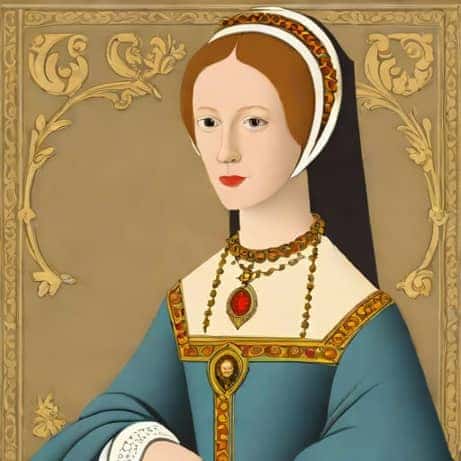
Margaret Pole, Countess of Salisbury, stands out as one of the most remarkable figures of Tudor England, known for her noble lineage, political significance, and tragic fate. Born into the prestigious Plantagenet family in 1473, she was the daughter of George, Duke of Clarence, and Isabel Neville. Her life spanned a period of intense political upheaval, marked by the struggle for power following the Wars of the Roses, the rise of the Tudor dynasty, and the turbulent reign of King Henry VIII. Margaret’s story is a compelling mix of privilege, influence, and peril, making her a fascinating subject for historians and enthusiasts of English history alike. Her unwavering dignity in the face of adversity and her tragic execution demonstrate the precarious position of high-born women in Tudor society, where familial connections could be both a source of power and a cause for downfall.
Early Life and Family Background
Margaret Pole was born into a family with deep royal connections. As the daughter of George, Duke of Clarence, she was the niece of both King Edward IV and King Richard III, placing her at the heart of English royal politics. Her mother, Isabel Neville, was the daughter of Richard Neville, Earl of Warwick, famously known as the Kingmaker during the Wars of the Roses. Margaret’s upbringing in such a politically charged environment exposed her to the complexities of court life from a young age. Her noble birth granted her privileges and opportunities, but it also meant that she lived under the constant threat of political intrigue, as alliances shifted and the Tudor dynasty consolidated its power.
Marriage and Role as Countess
In 1491, Margaret married Sir Richard Pole, a loyal supporter of Henry VII. The marriage strengthened her position at court while aligning her with a family loyal to the Tudor monarchy. Sir Richard was appointed to various important positions, including Constable of Cardiff Castle, which allowed Margaret to wield influence in her own right. As Countess of Salisbury, Margaret managed estates and maintained significant social and political connections. Her role extended beyond domestic duties; she became an advisor and confidante to her children and played a part in shaping their futures within the turbulent world of Tudor politics.
Children and Dynastic Importance
Margaret and Richard Pole had several children, with their offspring continuing the family’s influence in both religious and political spheres. Their son, Henry Pole, Baron Montagu, and daughter, Ursula Pole, were notable figures who benefited from their mother’s careful guidance. Margaret’s family connections placed her children in positions of potential influence at court, yet these same connections ultimately made them targets during periods of political suspicion. Her family’s ties to the Plantagenet lineage made them particularly vulnerable under Henry VIII, who was determined to secure his throne and eliminate perceived threats.
Connection to the Plantagenets
- Margaret’s direct descent from the Plantagenets gave her significant status and legitimacy at court.
- Her lineage included ties to both Edward IV and Richard III, linking her to the old royal line.
- These connections made her a symbol of potential opposition to the Tudor monarchy, particularly during times of dynastic insecurity.
- The Plantagenet heritage of her children also placed them under scrutiny, influencing their political fortunes.
Life at Court and Challenges under Henry VIII
During the reign of Henry VIII, Margaret Pole’s position at court was both prestigious and precarious. Initially, she maintained favor with the king, partly due to her loyalty and the political usefulness of her family connections. She served in roles connected to the queen and was entrusted with overseeing aspects of courtly life. However, the volatile nature of Henry VIII’s court meant that even high-born nobles were vulnerable to accusations of treason and conspiracy. Margaret’s steadfast adherence to her faith and her Plantagenet heritage increasingly drew suspicion, particularly as Henry’s reign became marked by religious upheaval and ruthless measures to eliminate potential threats.
Religious and Political Tensions
- Margaret Pole was a devout Catholic, and her religious convictions increasingly clashed with Henry VIII’s establishment of the Church of England.
- Her children’s involvement in political or religious matters made the family a focus of scrutiny.
- As Henry VIII sought to consolidate power, noble families with royal bloodlines, such as the Poles, were often viewed as potential threats.
- Margaret’s loyalty to her family and faith eventually positioned her against the king’s political and religious agenda.
Arrest and Execution
Margaret Pole’s downfall began in the early 1530s, when Henry VIII’s suspicions of her family culminated in accusations of treason. Her son, Henry Pole, Baron Montagu, was implicated in a plot against the king, and Margaret herself was arrested in 1538. Despite her advanced age and her lack of direct involvement in any conspiracy, she was charged with treason, highlighting the perilous position of noblewomen who represented a symbolic threat due to their lineage. Margaret’s trial was brief and politically motivated, and she was imprisoned in the Tower of London. In 1541, at the age of 67, she was executed, her death serving as a stark reminder of the dangers of high-born status under a monarch determined to secure absolute power.
Legacy of Her Execution
- Margaret Pole’s execution was widely regarded as a brutal and unjust act, drawing attention to Henry VIII’s ruthless policies.
- Her steadfastness in faith and dignity in facing death made her a symbol of resilience and integrity.
- The execution of a woman of such high rank and age shocked contemporaries and has been the subject of historical study and reflection.
- Her death underscored the risks faced by noble families with royal connections during Tudor England.
Historical Significance and Reputation
Margaret Pole, Countess of Salisbury, occupies a significant place in English history, both for her noble heritage and the tragic circumstances of her death. Historians view her life as emblematic of the dangers faced by women in positions of power during the Tudor era, where lineage could be both a source of prestige and a cause for persecution. Margaret’s story is also illustrative of the intersection of politics, religion, and family loyalty in 16th-century England, offering insights into the complexities of Tudor society and governance. Her courage and composure have contributed to her lasting reputation as a dignified and heroic figure despite the tragic end to her life.
Commemoration and Legacy
- Margaret Pole is remembered as one of the last surviving members of the Plantagenet dynasty, linking her to England’s medieval royal history.
- Her story has inspired historical biographies, studies of Tudor politics, and fictional portrayals exploring her courage and tragic fate.
- She serves as a symbol of integrity, loyalty, and the precariousness of noble life under an absolute monarchy.
- Her life and execution continue to attract scholarly interest, reflecting on the human cost of political consolidation in Tudor England.
Margaret Pole, Countess of Salisbury, remains a compelling figure due to her noble lineage, political significance, and personal courage. Born into the Plantagenet family, she navigated a complex and often dangerous court life, balancing loyalty to her family with the demands of a volatile monarchy. Her tragic execution at the hands of Henry VIII illustrates the precarious position of women in Tudor politics and the perils faced by those with royal connections. Margaret’s enduring legacy lies in her resilience, dignity, and the historical lessons her life and death impart about power, lineage, and justice in Tudor England.
Her story continues to resonate with historians and the public alike, highlighting the intersection of personal virtue and political danger. Margaret Pole’s life serves as a powerful example of the challenges faced by noblewomen, demonstrating how courage, loyalty, and faith could endure even in the most perilous circumstances. Through her life, historians gain insight into the complexities of Tudor society, and through her death, the human costs of absolute monarchy are starkly illustrated. Margaret Pole, Countess of Salisbury, thus occupies a permanent place in the annals of English history as both a symbol of nobility and a tragic figure whose story continues to inspire reflection and admiration.