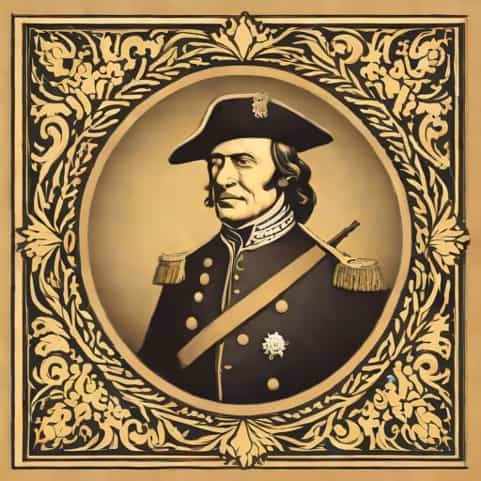
Oliver Cromwell’s Protectorate represents a pivotal period in British history, marking the only time in the country’s history when it was governed as a republic under a Lord Protector. Following the tumultuous English Civil Wars and the execution of King Charles I in 1649, England, Scotland, and Ireland were left without a monarch, creating a power vacuum that Cromwell sought to fill. His Protectorate, which lasted from 1653 to 1658, is best described as a military-dominated republican government with strong executive powers, designed to maintain order and enforce Cromwell’s vision of a godly and disciplined state. The period is significant for its constitutional experiments, political reforms, and the centralization of authority under Cromwell, setting a precedent in the governance of Britain even though it ultimately failed to survive after his death.
Historical Context Leading to the Protectorate
The establishment of Oliver Cromwell’s Protectorate cannot be understood without considering the events that preceded it. The English Civil Wars, fought between Royalists loyal to King Charles I and Parliamentarians, were rooted in disputes over taxation, religion, and the authority of the monarchy. Cromwell, a devout Puritan and skilled military commander, emerged as a leading figure in the Parliamentary forces. The war concluded with the trial and execution of Charles I in 1649, a radical act that left England without a monarchy for the first time in centuries.
Following the king’s execution, the country was declared a commonwealth, a republic led by the Rump Parliament. However, this early experiment in republican governance proved unstable due to political infighting, economic challenges, and dissatisfaction among various factions. Cromwell, frustrated by the inefficiency of Parliament and growing unrest, dissolved the Rump Parliament in 1653 and assumed the role of Lord Protector, establishing the Protectorate as a more centralized and authoritative government.
Structure of Cromwell’s Protectorate
The Protectorate under Oliver Cromwell combined elements of a republican government with strong executive authority. While England was no longer a monarchy, the role of Lord Protector effectively concentrated power in Cromwell’s hands. The government operated under the Instrument of Government, England’s first written constitution, which outlined the framework for leadership and the functioning of Parliament. The Instrument of Government provided for regular parliaments, a council of state, and the Lord Protector as head of state, giving Cromwell the authority to govern with considerable autonomy.
Military Influence and Governance
A defining feature of the Protectorate was the dominant role of the military. Cromwell relied heavily on the army to enforce order and maintain political stability. The military was involved not only in defense but also in administrative decisions and enforcement of laws. This military influence led some historians to describe the Protectorate as a quasi-military dictatorship, where civil authority was subordinated to the need for security and control. The army’s power was a stabilizing force but also a source of tension, especially among civilians who feared the concentration of authority.
Religious Policies
Cromwell’s Puritan beliefs significantly influenced the governance of the Protectorate. The regime promoted Protestant values, encouraged moral reform, and restricted practices deemed sinful. While Cromwell tolerated some degree of religious diversity, particularly among Protestant sects, Catholics faced significant restrictions, especially in Ireland where military campaigns suppressed resistance. Religion under the Protectorate was not only a matter of personal faith but also a tool for consolidating authority and promoting social discipline.
Political and Constitutional Experiments
One of the most notable aspects of the Protectorate was its attempt at constitutional innovation. The Instrument of Government, drafted in 1653, established principles such as regular elections, the separation of powers, and a written framework for governance. Cromwell’s Protectorate also sought to balance authority between the Lord Protector, Parliament, and the council of state. These efforts represented an early attempt to create a constitutional republic in England, a radical departure from centuries of monarchical rule.
Despite these innovations, tensions persisted between Cromwell and Parliament. Many members resisted his authority, fearing that the concentration of power in a single individual threatened republican ideals. In response, Cromwell occasionally dissolved parliaments, ruling by ordinance, which reinforced the perception of the Protectorate as an authoritarian regime. Nevertheless, these experiments in governance laid the groundwork for future constitutional developments in Britain.
Economic and Social Policies
The Protectorate also sought to address economic challenges and promote social stability. Cromwell encouraged trade, improved naval power, and attempted to reform taxation to ensure revenue for the government and the military. Social reforms were guided by Puritan ideals, emphasizing sobriety, moral behavior, and discipline. The regime’s policies were designed to strengthen the state, maintain public order, and support economic growth, although they sometimes provoked resistance from those who opposed Puritan moral restrictions.
Foreign Policy and Military Campaigns
Under the Protectorate, England pursued assertive foreign policies, expanding influence through trade and military intervention. Cromwell’s forces engaged in campaigns in Ireland and Scotland to suppress Royalist uprisings, and the navy protected English interests abroad. The Protectorate also negotiated treaties with European powers, reflecting Cromwell’s vision of a strong, disciplined state capable of projecting influence internationally.
Legacy of Cromwell’s Protectorate
The Protectorate ended shortly after Cromwell’s death in 1658, when his son Richard Cromwell assumed the role of Lord Protector. Richard lacked his father’s authority and military support, leading to political instability and the eventual restoration of the monarchy in 1660 under Charles II. Despite its relatively brief existence, the Protectorate had a lasting impact on British governance and political thought.
Impact on Republican Ideas
The Protectorate demonstrated both the possibilities and limitations of a republic in a country accustomed to monarchy. While it centralized authority and relied on military support, it also introduced principles such as constitutional frameworks, regular parliaments, and the idea that a written constitution could guide governance. These ideas influenced later debates on the balance of power, representation, and executive authority in Britain and abroad.
Controversies and Criticism
Cromwell’s Protectorate remains controversial. Critics argue that it concentrated too much power in a single leader and relied excessively on military enforcement. Others criticize its religious policies and harsh measures in Ireland. Supporters, however, highlight Cromwell’s efforts to maintain order, promote moral reform, and implement a form of constitutional government during a period of national crisis. The Protectorate is best understood as a complex and transitional period, blending republican ideals with strong executive control.
Oliver Cromwell’s Protectorate is best described as a republican government with centralized authority and significant military influence. Emerging from the chaos of the English Civil Wars, it represented an attempt to create a disciplined, godly state governed by law and a written constitution. While the regime introduced innovative political and constitutional ideas, it also faced criticism for concentrating power and suppressing dissent. Despite its eventual collapse, the Protectorate left a lasting legacy in British history, illustrating the challenges of establishing republican governance in a society accustomed to monarchy. It remains a defining example of how leadership, military power, and ideology can shape a nation during periods of profound transformation.