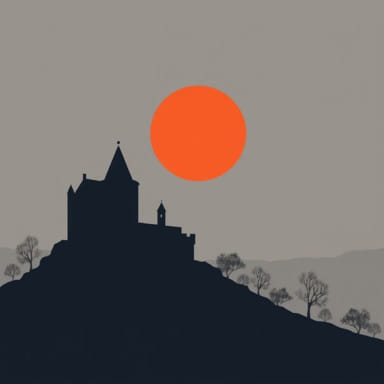
Castle and Sun by Paul Klee stands as one of the most recognizable examples of modern abstract art, blending geometry with imagination in a way that has captivated audiences for decades. Painted in 1928, this work captures the essence of Klee’s approach to visual language, combining form, color, and playful abstraction. With its vivid blocks, structured layout, and whimsical atmosphere, Castle and Sun represents both a personal expression and a key milestone in 20th-century art. Understanding the significance of this painting involves exploring the artist’s style, the context of the time, and the deeper meanings hidden within the composition.
Paul Klee: The Artist Behind the Canvas
Paul Klee was a Swiss-German painter known for his highly individual style, which drew from movements such as Expressionism, Cubism, and Surrealism. His work is often noted for its childlike simplicity, deep symbolism, and masterful use of color theory. Born in 1879 in Switzerland, Klee was not only a visual artist but also a musician, which influenced his rhythmic and compositional approach to painting.
Teaching at the Bauhaus
At the time Castle and Sun was created, Klee was teaching at the Bauhaus, a German art school famous for its progressive approach to design and fine arts. This environment allowed Klee to experiment with structure and abstraction, which is clearly reflected in the architectural feel of the painting.
Influences on Klee’s Work
- Children’s drawings and their spontaneous forms
- Color theories developed through his own analytical studies
- Music composition, especially the layering and rhythm of notes
- Travel experiences in Tunisia, Egypt, and Italy
These influences converge in works like Castle and Sun, where color, form, and fantasy merge into a singular visual statement.
Analyzing Castle and Sun
Castle and Sun is a painting composed of rectangles, triangles, and circles arranged to depict a cityscape, interpreted by many as a whimsical castle under a dominating sun. The painting’s geometric simplicity is deceptive it invites deeper analysis and interpretation.
Use of Geometric Shapes
The primary components of the painting are simple geometric shapes. Rectangles and squares stack upon each other, forming what resemble buildings or walls. A large red-orange circle sits at the top, representing the sun. The alignment and structure evoke the rigidity of architecture, yet the varying colors and placements keep the composition lively and organic.
Color Palette and Symbolism
Klee used a warm, harmonious palette that includes reds, oranges, yellows, purples, and blues. The dominant presence of warm colors suggests sunlight, warmth, and vitality. The contrast between cool and warm tones provides a sense of depth, shadow, and movement. Many viewers interpret the painting as a representation of an inner world a dream-like city radiating light and imagination.
Perspective and Composition
Although there is no traditional perspective, Klee creates depth through layering and scale. Smaller blocks appear in the background, while larger shapes come to the foreground. The positioning of the sun near the top center gives the painting a focal point, drawing the viewer’s eye upward, reinforcing the idea of ascension or transcendence.
Artistic Themes in Castle and Sun
Several recurring themes in Klee’s work appear in Castle and Sun, providing insights into his worldview and artistic motivations.
The Interplay Between Order and Fantasy
The structured nature of the composition shapes aligned in a grid-like pattern contrasts with the fantastical subject of a glowing castle. This juxtaposition reflects Klee’s belief that art should blend rationality and emotion, logic and play.
Urban Imagery as Metaphor
The castle may not represent a literal place. Instead, it symbolizes the idea of a constructed inner world, a mental or spiritual space filled with light and harmony. Klee often viewed cities as symbolic structures places of memory, consciousness, or the human psyche.
The Role of the Sun
The bright, radiant sun at the top of the composition can be interpreted in multiple ways. It might represent clarity, artistic vision, or a guiding force. In many cultures, the sun symbolizes life, energy, and creation all themes aligned with Klee’s view of the artist as a creator of new worlds.
Technique and Materials
Castle and Sun was created using oil and watercolor on paper, mounted on cardboard. This mixed-media approach was common for Klee, who often experimented with surfaces, textures, and techniques. He was known to combine oil, tempera, ink, and pastels to achieve specific effects and tonal qualities.
Layering and Transparency
One notable feature in Castle and Sun is the sense of layering, achieved through transparent washes of watercolor. This gives the painting a luminous quality, enhancing the effect of sunlight and shadow. Klee’s background in printmaking and drawing contributed to his ability to integrate line and form seamlessly.
Legacy and Cultural Impact
Castle and Sun is frequently featured in art textbooks and museum collections due to its accessibility and visual charm. Its geometric abstraction, vibrant colors, and architectural theme make it a popular choice for teaching children and adults about modern art.
Educational Influence
The painting has been widely used in art education to teach basic principles of color theory, composition, and abstract representation. Its simplicity makes it a perfect entry point for discussions about non-representational art.
Public Recognition
Among Klee’s body of work, Castle and Sun is arguably one of the most recognizable. Reproductions appear in posters, calendars, and design materials, introducing Klee’s work to audiences beyond the traditional art world.
Paul Klee’s Castle and Sun captures the spirit of modernism through its fusion of geometry, color, and poetic imagination. It’s a painting that appears simple on the surface but rewards closer observation with layers of meaning and artistic skill. Whether seen as a literal castle basking in sunlight or a symbolic representation of harmony and vision, the painting continues to enchant viewers across generations. Klee’s unique voice, shaped by music, mathematics, and philosophy, speaks clearly through this artwork, reminding us that even the most structured forms can contain magic and meaning. In a world often divided between realism and abstraction, Castle and Sun stands as a shining example of balance, beauty, and creative expression.