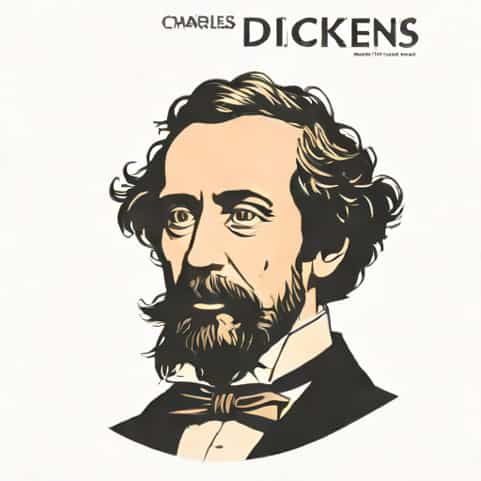
Before Charles Dickens became one of the most famous novelists in English literature, he experimented with anonymity by writing under a pen name. The pen name of Charles Dickens, Boz, is an interesting story in itself, revealing much about the author’s personality, his early career, and the way he developed his voice as a writer. For many readers today, Dickens is remembered for great works likeOliver Twist,A Christmas Carol, andGreat Expectations, but his beginnings under a pseudonym provide a fascinating look into how writers sometimes shape their identity before fame arrives. Understanding why Dickens chose this pen name and how he used it gives us deeper insight into his growth as both a journalist and a novelist.
The Origins of the Name Boz
The pseudonym Boz came about in a rather playful way. Dickens had a younger brother whose nickname was Moses, inspired by a character in Oliver Goldsmith’sThe Vicar of Wakefield. When Dickens affectionately referred to him, it was pronounced through the nose, producing Boses. Over time, this humorous mispronunciation was shortened to Boz. What started as a family joke became the pen name Dickens adopted for his first published sketches.
By using this pen name, Dickens was able to publish his early works without attaching them directly to his own identity. At the time, it was common for writers, especially those starting out, to use pseudonyms. It gave them a sense of freedom, a layer of protection, and sometimes a touch of mystery that intrigued readers.
Early Career as Boz
Charles Dickens first used the name Boz when he began contributing short pieces to newspapers and magazines. These writings, often humorous or observational in nature, were later collected into a volume titledSketches by Boz. Published in 1836, this book became the first significant step in establishing Dickens as a professional writer.
Sketches by Boz contained detailed descriptions of London life, focusing on ordinary people, street scenes, and the quirks of society. The lively prose and sharp observations attracted attention because they combined humor with social awareness. Readers enjoyed the realistic portrayals, and critics began to notice that Boz was someone with real talent.
Why Dickens Used a Pen Name
There are several reasons why Dickens may have chosen to hide behind the name Boz in his early career
- Protection of identity– At the time, Dickens was still working as a journalist and clerk, so a pseudonym gave him privacy.
- Tradition– Many authors in the 19th century used pen names as part of literary culture.
- Marketing strategy– A curious and catchy name like Boz stood out, making readers remember it more easily.
- Personal attachment– Since the name was born out of a family joke, it also reflected Dickens’s sense of humor and warmth.
The Success of Sketches by Boz
When Sketches by Boz was published, it quickly became a success, both critically and commercially. The public enjoyed the freshness of the writing, which stood apart from the more formal styles of other writers of the time. Publishers also took notice, leading to more opportunities for Dickens.
The popularity of the sketches under the name Boz was so great that when Dickens was later invited to writeThe Pickwick Papers, his reputation as Boz helped boost initial interest. The pen name had effectively built a brand for Dickens, even before his own name became widely recognized.
Transition from Boz to Charles Dickens
As Dickens’s fame grew, especially after the enormous success ofThe Pickwick Papers, the pen name gradually faded away. Publishers began to market his works under his real name, Charles Dickens, which soon became associated with some of the greatest novels in English literature. However, the legacy of Boz was not forgotten. It marked the beginning of Dickens’s career and remained attached to him in the minds of many early readers.
Even today, first editions of Sketches by Boz are treasured for their historical importance and as reminders of how Dickens began his journey toward literary greatness. Collectors often prize these works because they showcase Dickens before he became a household name.
Impact of the Pen Name on Dickens’s Identity
The use of the pen name allowed Dickens to experiment with his writing style and find his voice without the pressure of attaching it directly to his personal reputation. This sense of freedom helped him craft stories with humor, wit, and sharp observation. The pseudonym also gave him a way to establish a professional presence while still in the early stages of his career.
For Dickens, Boz represented more than a simple alias-it was a symbol of his transformation from an ambitious young journalist into a writer who would later define the Victorian novel. The sketches he wrote under this name not only entertained readers but also hinted at the social themes that would dominate his later works, such as poverty, injustice, and class struggles.
Other Authors and the Use of Pen Names
It is worth noting that Dickens was not alone in using a pseudonym. Many famous writers have chosen pen names for various reasons, from George Eliot (real name Mary Ann Evans) to Mark Twain (real name Samuel Clemens). For Dickens, Boz was a stepping stone, while for others, pseudonyms became permanent identities.
This tradition highlights how writers often construct different public images for themselves, whether for privacy, marketing, or creative expression. In the case of Dickens, the pen name gave him an initial boost but eventually gave way to his real name, which became legendary in its own right.
Legacy of Boz
Although Charles Dickens later published all his major novels under his own name, the pen name Boz remains an important part of his legacy. It connects readers to his early beginnings and reminds us that even the greatest authors often start small, sometimes with a playful alias born out of a family joke.
Today, when literature students and fans explore Dickens’s career, they often return to Sketches by Boz to see the roots of his storytelling style. The humor, the detail, and the social commentary that later defined novels likeBleak HouseandDavid Copperfieldcan already be glimpsed in those early sketches.
The pen name of Charles Dickens, Boz, tells us much about the writer’s character and development. More than a nickname, it symbolized the starting point of a career that would eventually shape the course of English literature. By writing as Boz, Dickens was able to test his abilities, reach an audience, and establish a reputation that smoothed the way for his later success. While history now remembers him by his real name, the story of Boz continues to fascinate readers and offers a valuable reminder of the playful, creative beginnings of one of the world’s greatest novelists.