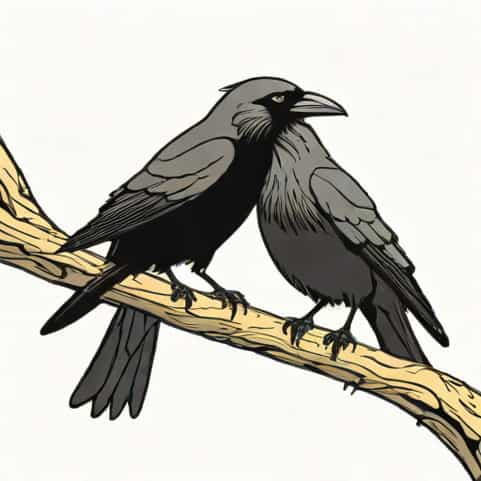
A picture of a jackdaw and a crow can offer an intriguing glimpse into the world of corvids, showcasing two of the most intelligent and adaptable birds in the avian kingdom. Both species belong to the Corvidae family, and while they share many physical and behavioral traits, they also display distinct differences. Observing a photograph of these birds together can reveal fascinating details about their size, plumage, and social interactions, providing insights into how these birds navigate their environment, interact with each other, and communicate in the wild.
Identification of Jackdaw and Crow
The first step in appreciating a picture of a jackdaw and a crow is recognizing the key differences between the two species. Jackdaws (Corvus monedula) are smaller, generally measuring around 34-39 centimeters in length, with a sleek black plumage that often features a lighter gray nape and sides of the neck. Their eyes are strikingly pale, almost silvery, making them easy to distinguish. Crows (Corvus corone), on the other hand, are larger, averaging 46-52 centimeters in length, with fully black plumage and dark eyes that give them a more uniform and imposing appearance. In a single photograph, these contrasting features help viewers immediately identify which bird is which.
Behavioral Traits in Photographs
A picture of a jackdaw and crow can also convey differences in behavior. Jackdaws are highly social birds, often seen in pairs or small flocks, engaging in playful activities, foraging together, or perching closely. They are known for their curiosity and may approach humans or novel objects with a noticeable boldness. Crows, while also social, often display more cautious and deliberate behavior. In images, crows may appear solitary or in smaller groups compared to jackdaws, and their posture often conveys vigilance and intelligence, which is characteristic of the species.
Habitat and Environmental Context
The setting of a photograph can provide context for understanding the habitat preferences of jackdaws and crows. Jackdaws are often found in open woodlands, farmland, and urban areas, frequently nesting in tree cavities, chimneys, or building structures. Crows are highly adaptable and can thrive in a wide range of environments, from dense forests to cities and coastal areas. A picture capturing both birds may highlight their interaction with the environment, showing how they forage on the ground, perch on trees, or utilize urban structures for nesting.
Social Interaction in Images
One of the most captivating aspects of photographs featuring both jackdaws and crows is the potential for observing social interaction. These birds exhibit complex social behaviors, including cooperative feeding, territorial displays, and vocal communication. In a single image, a viewer might notice differences in body language jackdaws leaning toward each other in a sign of social bonding, while crows maintain a more upright and assertive posture. These subtle cues provide insights into the hierarchical and social structures within corvid communities.
Vocalization and Communication
Although not directly visible in a photograph, certain behaviors in an image can hint at vocal communication between jackdaws and crows. Jackdaws often communicate with high-pitched, soft calls, and in photos, they might be depicted with open beaks or engaging in interactions with other birds, signaling communication. Crows, with their deep cawing calls, often exhibit body language indicating vocal signaling, such as raised wings or head tilts. Capturing these moments in a picture provides an opportunity to infer the dynamic exchange of signals between these intelligent birds.
Diet and Foraging Behavior
Photographs can also reveal differences in feeding habits. Jackdaws are known to forage on the ground, searching for insects, seeds, and small invertebrates, sometimes using tools or exploring human-provided food sources. Crows have a more varied diet that includes small mammals, carrion, fruits, and even eggs. In an image, the position of the birds, the presence of food items, and the attention of their gaze can indicate their foraging strategies and priorities, providing valuable insight into their ecological roles.
Symbolism and Cultural Significance
Beyond biological observation, pictures of jackdaws and crows often carry symbolic meanings in various cultures. Crows are frequently associated with intelligence, mystery, and sometimes omens due to their all-black appearance and vocal calls. Jackdaws, while less commonly featured in folklore, are often seen as playful and clever, symbolizing curiosity and adaptability. A photograph capturing both species can thus evoke layered interpretations, connecting the natural world with cultural narratives.
Artistic Composition in Photography
From an artistic standpoint, a picture of a jackdaw and crow offers opportunities for contrast and composition. The smaller size and lighter eyes of the jackdaw juxtaposed with the larger, uniform black of the crow create a visual balance that can be aesthetically striking. Photographers often utilize natural lighting, background settings, and the positioning of birds to emphasize these differences, enhancing both scientific observation and visual appeal.
A picture of a jackdaw and a crow provides more than a mere depiction of two birds; it captures the essence of corvid intelligence, social behavior, and adaptability. Through careful observation of physical characteristics, social interactions, and environmental context, viewers can gain a deeper understanding of these fascinating species. Whether for educational purposes, cultural exploration, or artistic appreciation, such photographs offer a window into the complex lives of two of the most remarkable members of the avian world.