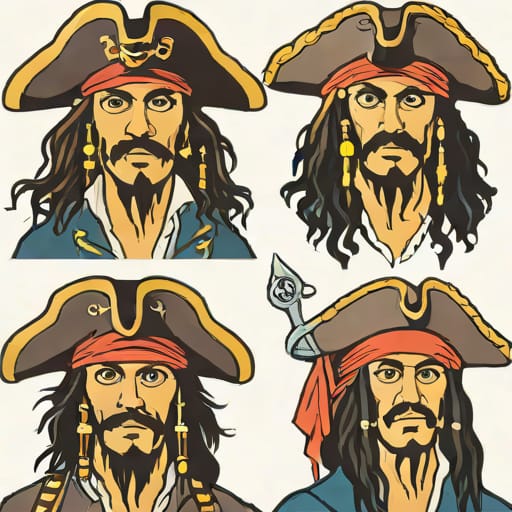
In the expansive world of Pirates of the Caribbean, few characters stand out as much as Lord Cutler Beckett, whose presence and influence shape the trajectory of several key storylines throughout the franchise. Introduced in Pirates of the Caribbean Dead Man’s Chest and playing a central role in At World’s End, Beckett represents the embodiment of corporate and naval control in stark contrast to the free-spirited pirates of the Caribbean. His calculated maneuvers, strategic cunning, and relentless pursuit of dominance over the seas position him as a formidable antagonist whose actions ripple through the lives of iconic characters such as Captain Jack Sparrow, Will Turner, and Elizabeth Swann. Understanding Beckett’s role provides insight not only into the narrative of the films but also into the larger themes of power, greed, and control that drive the franchise.
Introduction to Lord Cutler Beckett
Lord Cutler Beckett is a high-ranking official of the East India Trading Company, an organization symbolizing imperial control and commercial dominance over the oceans. Unlike traditional villains who rely primarily on brute strength or pirate crews, Beckett leverages his authority, financial resources, and intelligence networks to manipulate events to his advantage. He is characterized by his calm demeanor, sharp mind, and unwavering commitment to consolidating power, often using moral ambiguity and strategic alliances to outmaneuver his adversaries.
Beckett’s Role in the Storyline
- Introduced as the principal antagonist controlling the East India Trading Company’s maritime operations.
- Seeks to eliminate piracy and consolidate trade routes under the Company’s authority.
- Manipulates key characters, including Will Turner, by exploiting their vulnerabilities and ambitions.
- Leverages the power of Davy Jones and the Flying Dutchman to strengthen his naval supremacy.
- Represents the clash between corporate control and the freedom of pirate life.
Through his actions, Beckett drives much of the conflict in Dead Man’s Chest and At World’s End, making him a central figure whose presence heightens tension and stakes for both protagonists and the pirate world.
Character Traits and Personality
Lord Beckett’s personality is defined by his calculated approach to power. He is methodical, precise, and unflinching in pursuit of his objectives. Unlike the chaotic nature of pirates, Beckett’s strength lies in his organizational skill, meticulous planning, and ability to foresee consequences. His composed exterior masks a ruthless determination, allowing him to make difficult decisions without hesitation. Beckett’s manipulative tendencies make him a master strategist, as he is adept at turning allies against each other and exploiting weaknesses for personal gain.
Key Traits of Beckett
- Highly intelligent and strategic in planning.
- Calm, composed, and calculating under pressure.
- Ruthless in eliminating obstacles and threats.
- Manipulative, often exploiting others’ ambitions or fears.
- Symbolizes corporate control and authority over chaotic pirate life.
These traits distinguish Beckett from other villains in the franchise and make him a memorable and intimidating adversary for the film’s heroes.
Beckett and the East India Trading Company
The East India Trading Company, under Beckett’s leadership, serves as a symbol of imperialistic ambition and the growing influence of commerce over the seas. Beckett’s mission is to eradicate piracy and establish the Company’s dominance, using both military and supernatural means to achieve this goal. He wields immense power, controlling fleets of ships, political leverage, and access to mystical artifacts, which he employs to enforce his will and expand the Company’s reach. The tension between Beckett’s corporate-driven mission and the pirates’ pursuit of freedom forms a central theme of the series, highlighting conflicts between order, profit, and individual liberty.
Beckett’s Strategies
- Use of naval fleets and advanced weaponry to control shipping routes.
- Leverage over Davy Jones and the Flying Dutchman to intimidate opponents.
- Political alliances and manipulations to maintain authority over key ports.
- Economic control through trade monopolies and financial coercion.
- Exploit rivalries among pirates to weaken resistance.
These strategies demonstrate Beckett’s approach as a combination of intelligence, manipulation, and the application of power, reinforcing his status as a formidable antagonist in the series.
Interactions with Key Characters
Lord Beckett’s interactions with main characters such as Jack Sparrow, Will Turner, and Elizabeth Swann are pivotal in advancing the plot. With Jack Sparrow, Beckett encounters a chaotic and unpredictable force that challenges his methodical planning, leading to humorous and tense confrontations. With Will Turner, Beckett attempts to exploit his loyalty and moral dilemmas to secure control over the Flying Dutchman, illustrating Beckett’s manipulative prowess. Elizabeth Swann also becomes entangled in Beckett’s schemes, reflecting the pervasive reach of his influence over the pirate world.
Impact on Main Characters
- Challenges Jack Sparrow’s freedom and unpredictability with strategic planning.
- Manipulates Will Turner to gain control over supernatural powers.
- Influences Elizabeth Swann’s decisions and alliances through political pressure.
- Forces pirates to unite against a common threat, highlighting leadership dynamics.
- Serves as the central catalyst for major plot developments and climactic battles.
Beckett’s presence is integral to the story, as it not only drives conflict but also facilitates character development and alliances among the protagonists.
Beckett’s Downfall
Despite his intelligence, strategic planning, and extensive resources, Beckett’s downfall is ultimately brought about by overreliance on control and underestimation of pirate ingenuity. In At World’s End, his obsession with dominating the seas and exploiting the power of Davy Jones leads to his defeat during the climactic battle at Shipwreck Cove. His death signifies the triumph of resilience, freedom, and unpredictability over rigid authority and corporate control. Beckett’s demise underscores one of the franchise’s central messages that the human desire for freedom and adventure cannot be completely contained by rules, commerce, or strategy.
Lessons from Beckett’s Arc
- Excessive reliance on control can lead to unexpected downfall.
- Strategic power must consider unpredictability and human ingenuity.
- Represents the limitations of corporate authority in a chaotic and free world.
- Highlights the narrative theme of freedom versus control throughout the series.
- Reinforces the importance of collaboration, courage, and adaptability in overcoming adversity.
Beckett’s story arc, from a formidable antagonist to his eventual downfall, illustrates the complexities of power and the limits of domination in a world governed by unpredictable forces.
Lord Cutler Beckett in Pirates of the Caribbean embodies the tension between corporate control and the chaotic freedom of pirate life. As a cunning and strategic antagonist, his role highlights the stakes of power, manipulation, and ambition in the series. From his calculated leadership of the East India Trading Company to his interactions with iconic characters and eventual downfall, Beckett remains a compelling figure whose influence shapes much of the narrative. His story provides insight into the larger themes of freedom, greed, and resilience that define the franchise, making him one of the most memorable and impactful characters in the Pirates of the Caribbean universe.