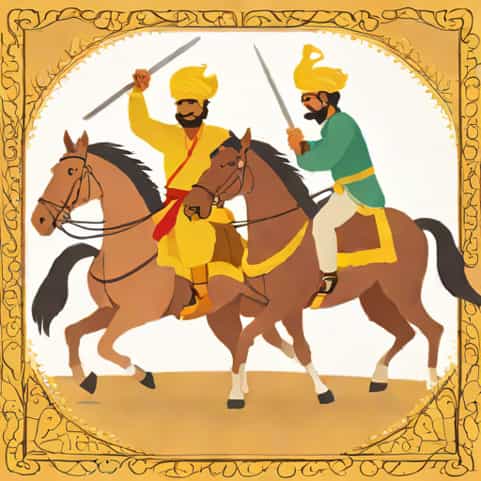
In the pages of Indian history, few rivalries are as iconic and intense as the one between Prithviraj Chauhan and Muhammad Ghori. Their confrontations marked a turning point in medieval India, defining the struggle between native Rajput kingdoms and invading forces from Central Asia. Prithviraj Chauhan, the valiant king of the Chauhan dynasty, is remembered for his bravery and his victory over Muhammad Ghori in one of the most memorable battles of the 12th century. This historical clash not only symbolizes courage and honor but also represents the beginning of a new era in the Indian subcontinent.
The Rise of Prithviraj Chauhan
Prithviraj Chauhan, also known as Rai Pithora, was one of the most prominent rulers of the Chauhan dynasty. He ruled over Ajmer and Delhi, two powerful kingdoms in northern India. Known for his chivalry, intelligence, and skill in warfare, Prithviraj emerged as a hero of Rajput valor. His reign is often seen as the golden age of Rajput pride, when warriors lived by strict codes of honor and loyalty.
Born in the mid-12th century, Prithviraj displayed extraordinary leadership from a young age. His reign was marked by a balance between administrative wisdom and military strength. He expanded his territory, strengthened fortifications, and maintained strong alliances with other Rajput clans. However, his growing power attracted the attention of the Ghurid Empire, led by Muhammad Ghori, who had ambitions to conquer the northern plains of India.
The Background of the Ghurid Invasions
Muhammad Ghori, also known as Mu’izz al-Din, was the ruler of the Ghurid dynasty based in modern-day Afghanistan. After consolidating his power in Central Asia, Ghori turned his eyes toward the Indian subcontinent, which was known for its wealth and strategic importance. The northwestern frontier of India, particularly the Punjab region, was the gateway to the Indian heartland. However, it was also heavily guarded by Rajput rulers who resisted any foreign invasion.
Before his encounter with Prithviraj Chauhan, Muhammad Ghori had already launched several campaigns into India. He captured Multan and Lahore, establishing a base from which he could challenge the Rajput rulers further east. His ambition was to subdue Delhi and Ajmer both under the control of Prithviraj Chauhan. This set the stage for one of the most significant battles in medieval Indian history.
The First Battle of Tarain (1191 CE)
The first major confrontation between Prithviraj Chauhan and Muhammad Ghori took place in 1191 CE near the town of Tarain (also spelled Taraori), located in modern-day Haryana. This battle is historically known as theFirst Battle of Tarain, and it was in this encounter that Prithviraj Chauhan defeated Muhammad Ghori decisively.
Forces and Preparation
Both armies were massive by medieval standards. Prithviraj Chauhan led a coalition of Rajput forces from various kingdoms. His army consisted of heavily armored cavalry, skilled archers, and well-trained infantry. The Rajputs were known for their close combat skills and fearlessness in the face of death.
Muhammad Ghori, on the other hand, commanded a disciplined force composed of mounted archers, infantry, and a strong cavalry unit trained in swift, mobile warfare. His troops were experienced in fighting in rugged terrains and used tactics that relied on speed and surprise.
The Course of the Battle
The battle began with Ghori’s forces launching a direct attack, hoping to break through the Rajput defense lines. However, Prithviraj Chauhan’s strategic planning and superior positioning gave him the upper hand. The Rajput warriors surrounded the invading army, engaging them in intense hand-to-hand combat.
According to several historical accounts, during the heat of the battle, Muhammad Ghori was gravely injured. Some sources say that Prithviraj’s general, Govind Rai, struck Ghori with a lance, wounding him badly and forcing the Ghurid army to retreat. The victory was overwhelming, and Muhammad Ghori narrowly escaped with his life. The Rajputs celebrated this triumph as a great moment of pride and unity, seeing it as a symbol of India’s resistance against foreign invaders.
The Aftermath of the Victory
After his defeat, Muhammad Ghori retreated to his base in Ghazni. Prithviraj Chauhan’s victory at the First Battle of Tarain made him a legendary figure across northern India. His reputation as a fearless warrior spread far and wide, and he was hailed as the protector of the Rajput honor and the northern frontier.
However, this victory also led to a false sense of security among some Rajput kingdoms. Believing that the Ghurids had been permanently defeated, they did not strengthen their defenses or anticipate another invasion. Meanwhile, Muhammad Ghori, humiliated by his loss, began preparing for revenge. Over the next year, he reorganized his forces, studied his opponent’s tactics, and waited for the right opportunity to strike back.
The Second Battle of Tarain (1192 CE)
The following year, in 1192 CE, Muhammad Ghori returned with a stronger and more disciplined army. This time, he used different tactics, avoiding direct confrontation early in the battle. He employed mounted archers to weaken the Rajput lines before launching his full-scale attack. The Rajputs fought bravely, but they were unprepared for the strategic maneuvers of Ghori’s forces.
Despite Prithviraj Chauhan’s leadership, the Rajput army was overwhelmed, and the battle ended in defeat. This marked the beginning of the decline of major Rajput power in northern India and the rise of Muslim rule under the Delhi Sultanate. Yet, the earlier victory of Prithviraj Chauhan in 1191 remained a testament to his courage and military skill.
The Legacy of Prithviraj Chauhan
Even though Prithviraj Chauhan was eventually captured and executed after the second battle, his legacy lived on through centuries of folklore, poetry, and oral tradition. In Indian history and culture, he is celebrated as a symbol of valor and patriotism. ThePrithviraj Raso, an epic poem written by Chand Bardai, immortalized his deeds and his rivalry with Muhammad Ghori.
Lessons from the Battle
The story of how Prithviraj Chauhan defeated Muhammad Ghori in the first battle of Tarain teaches several lessons about leadership and perseverance. It highlights the importance of unity among kingdoms, strategic foresight, and adaptability in warfare. It also underscores how overconfidence after a victory can lead to vulnerability if preparation for future challenges is ignored.
- Strategic planning and terrain knowledge can determine the outcome of battles.
- Unity among allies strengthens defense against powerful invaders.
- Victory requires vigilance even after success complacency can be dangerous.
Historical and Cultural Significance
Today, the tale of Prithviraj Chauhan and his victory over Muhammad Ghori remains deeply embedded in Indian cultural memory. It is taught as an example of bravery and resistance against foreign domination. Many historians view the First Battle of Tarain as one of the last major victories of Indian kings before the onset of centuries-long foreign rule.
Monuments, folk songs, and literary works continue to celebrate his heroism. His courage has inspired generations of Indians to value freedom, honor, and resilience. Even in modern discussions about leadership and patriotism, Prithviraj Chauhan’s name is often invoked as a reminder of the strength of conviction and national pride.
The story of how Prithviraj Chauhan defeated Muhammad Ghori in the First Battle of Tarain stands as a milestone in India’s medieval history. It symbolizes not only the victory of a brave warrior over a powerful invader but also the spirit of unity and determination that defined the Rajput ethos. Though later events changed the course of Indian history, this early triumph remains a proud reminder of resistance, courage, and the enduring will to defend one’s homeland. In every retelling of this great saga, Prithviraj Chauhan remains an eternal icon of bravery his name forever etched in the annals of history as the warrior who stood tall against the tide of invasion.