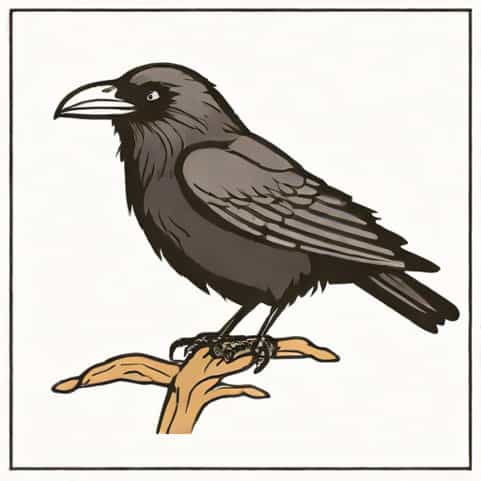
Quoth the Raven, Nevermore is one of the most famous lines in American literature, appearing in Edgar Allan Poe’s 1845 poem, The Raven. This line has fascinated readers for generations because of its haunting sound, eerie repetition, and profound meaning. At first glance, the phrase may seem simple, but when analyzed line by line, it reveals layers of psychological depth, themes of grief and loss, and reflections on human despair. Understanding the meaning of Nevermore requires exploring both the literal and symbolic significance of the raven’s speech, the narrator’s emotional state, and the context in which the word is repeated throughout the poem.
The Context of Quoth the Raven, Nevermore
In Poe’s poem, the narrator is mourning the loss of his beloved Lenore. The story takes place in a dark, lonely room late at night, emphasizing the mood of sorrow and melancholy. A raven appears and perches upon a bust of Pallas Athena, a symbol of wisdom. The bird’s only utterance is Nevermore, a word that initially seems meaningless but grows increasingly significant as the narrator interprets it in relation to his grief. The line Quoth the Raven, Nevermore marks the point where the bird’s speech becomes both a literal and metaphorical echo of the narrator’s despair.
Line by Line Analysis
Breaking down the line Quoth the Raven, Nevermore helps to understand its literary and emotional impact.
Quoth the Raven
The word quoth is an archaic form of said or spoke. Its use immediately creates a formal, almost solemn tone, emphasizing the gravity of the raven’s message. Unlike a casual statement, quoth carries a sense of authority and permanence. The narrator acknowledges that the raven is speaking, and by using this word, Poe elevates the bird from a mere animal to a symbol of fate or prophecy. The raven’s presence is both physical and symbolic, representing a messenger of doom, inevitability, or truth that the narrator cannot escape.
Nevermore
The word Nevermore is short and simple, but its meaning evolves throughout the poem. At first, the narrator imagines it as a trivial or meaningless utterance. However, as the poem progresses, he projects his own fears and sorrow onto the word, interpreting it as a response to his questions about the afterlife, love, and reunion with Lenore. Nevermore becomes a reflection of finality, loss, and despair. It signifies that some things-such as the return of a lost loved one-are impossible, and it echoes the hopelessness that consumes the narrator. The repetition of Nevermore also reinforces the obsessive, cyclical nature of grief, trapping both the narrator and the reader in a haunting rhythm.
Psychological and Symbolic Interpretations
The line Quoth the Raven, Nevermore can be understood on multiple levels beyond its literal meaning. Psychologically, it represents the narrator’s descent into obsession and despair. Each repetition of the word amplifies his anxiety and intensifies his fixation on death and loss. The raven becomes a mirror of the narrator’s own fears, voicing the ultimate truth that his suffering and separation from Lenore are permanent. Symbolically, the raven is often seen as a harbinger of death or a reminder of human mortality, and Nevermore serves as a warning that life is finite and irreversible.
Repetition and Poetic Effect
Poe’s use of repetition in the line emphasizes its hypnotic and musical quality. The repeated Nevermore creates a sense of inevitability, reinforcing the poem’s themes of mourning and hopelessness. By having the raven speak only this word, Poe transforms it into a refrain, much like a chorus in music, that resonates emotionally with both the narrator and the reader. The repetition also mirrors the way grief can dominate thought, creating an unrelenting focus on loss that is inescapable and consuming.
Literary Themes Conveyed Through the Line
The line Quoth the Raven, Nevermore highlights several key themes in Poe’s work
- Grief and LossThe raven’s word emphasizes the permanence of death and separation, echoing the narrator’s sorrow over Lenore’s passing.
- HopelessnessNevermore conveys finality and despair, reminding the narrator that some questions have no comforting answers.
- The SupernaturalThe speaking raven symbolizes forces beyond human understanding, suggesting fate, prophecy, or divine judgment.
- Obsession and MadnessThe narrator fixates on the word, reflecting the psychological impact of grief and the thin line between rational thought and obsession.
- The Inevitability of MortalityThe word serves as a constant reminder that death is inescapable and that life is transient.
Impact on Readers
The line has captivated readers for nearly two centuries because of its simplicity, rhythm, and depth. The combination of archaic diction and a single haunting word creates a lasting impression. Readers often project their own fears, losses, and experiences onto the word Nevermore, which makes it a universal symbol of finality and human suffering. Its enduring popularity demonstrates Poe’s skill in using concise language to evoke complex emotions and philosophical reflection.
Quoth the Raven, Nevermore is a powerful line that encapsulates the themes of Edgar Allan Poe’s poem, including grief, loss, and the inevitability of death. Each word carries weight Quoth the Raven establishes the bird as a solemn, authoritative presence, while Nevermore evolves from a simple utterance into a haunting symbol of finality and despair. Through repetition, rhythm, and symbolism, Poe transforms the raven’s speech into a reflection of human sorrow and psychological obsession. Understanding the line word by word allows readers to appreciate its literary artistry and emotional depth, revealing why it remains one of the most memorable and analyzed phrases in literary history. The meaning of Nevermore continues to resonate because it mirrors the universal human experience of confronting loss, mortality, and the unchangeable nature of certain truths.