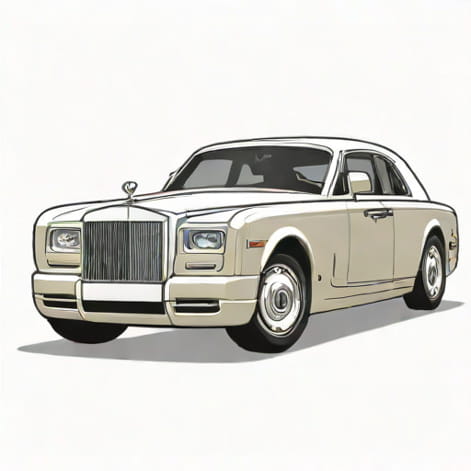
The Rolls-Royce Silver Wraith is one of the most iconic luxury vehicles ever produced, representing an era when craftsmanship, elegance, and bespoke design were paramount in the automotive world. Introduced in 1946, the Silver Wraith marked Rolls-Royce’s return to full production after World War II and quickly became a symbol of prestige, refinement, and technical excellence. Unlike many modern automobiles, the Silver Wraith was known for its hand-built quality and custom coachwork, often commissioned by the wealthiest and most discerning clients. Each vehicle was a testament to meticulous engineering, luxurious appointments, and timeless style, offering not only performance but also an expression of personal taste and status. Its combination of mechanical precision and artistic elegance made it one of the most sought-after cars of its time, securing its place as a classic in automotive history.
Introduction to the Rolls-Royce Silver Wraith
The Silver Wraith was designed to bridge the gap between pre-war elegance and post-war innovation, offering a chassis and engine configuration that allowed for a wide variety of customizations. Rolls-Royce produced the Silver Wraith primarily as a chassis, enabling coachbuilders to create unique bodies tailored to the owner’s specifications. This bespoke approach emphasized exclusivity, as no two Silver Wraiths were necessarily the same, reflecting the tastes and personalities of their owners. The model quickly became popular among royalty, heads of state, and celebrities, further enhancing its status as a symbol of sophistication and luxury.
Design and Coachwork
The hallmark of the Silver Wraith was its coachbuilt body. Since Rolls-Royce supplied the chassis, clients often worked with renowned coachbuilders such as Park Ward, H.J. Mulliner, and Thrupp & Maberly to create personalized bodies. These bodies ranged from elegant sedans and limousines to stylish convertibles and coupes. The exterior design often featured flowing lines, a long bonnet, and the iconic Rolls-Royce grille topped with the Spirit of Ecstasy mascot. Interiors were equally opulent, featuring fine leather upholstery, wood veneers, and luxurious detailing. The emphasis on bespoke craftsmanship ensured that each Silver Wraith was a unique masterpiece tailored to the owner’s specifications.
Technical Specifications
The Rolls-Royce Silver Wraith was powered by a 4.3-liter inline-six engine initially, which was later enlarged to 4.9 liters in 1951 to improve performance. This engine offered smooth, reliable power, perfectly matched to the car’s stately character. The vehicle featured a four-speed manual gearbox, with some later models offering a pre-selector automatic transmission. The suspension system, consisting of independent front suspension and a live rear axle with leaf springs, was designed for comfort and stability, providing a ride quality that was second to none. Rolls-Royce engineers focused on refinement and smoothness, ensuring that the Silver Wraith was capable of covering long distances effortlessly while maintaining an air of quiet sophistication.
Performance and Handling
Although the Silver Wraith was not designed for speed, its performance was more than adequate for the luxury class. The car could reach speeds of approximately 90 mph, which was impressive for its size and era. The emphasis was on a smooth, effortless driving experience, with precise steering and a stable, controlled ride. The vehicle’s suspension and weight distribution provided a comfortable and composed ride, whether navigating city streets or cruising along country roads. This combination of performance, comfort, and refinement became a defining characteristic of Rolls-Royce vehicles and contributed to the Silver Wraith’s reputation as the ultimate chauffeur-driven automobile.
Historical Significance
The Silver Wraith holds a special place in automotive history for several reasons. It was the first post-war Rolls-Royce and symbolized the company’s resilience and commitment to quality during a period of reconstruction and economic challenge. Many Silver Wraiths were purchased by royalty, governments, and international dignitaries, serving as state limousines and ceremonial vehicles. Notable owners included Queen Elizabeth II, King Farouk of Egypt, and various heads of state across Europe and Asia. Its presence in official parades, diplomatic events, and luxury gatherings reinforced its status as a car of prestige, diplomacy, and cultural significance.
Collectibility and Classic Car Status
Today, the Rolls-Royce Silver Wraith is highly prized among collectors and enthusiasts. Its rarity, bespoke coachwork, and historical importance make it a standout classic vehicle. Well-preserved examples often fetch significant sums at auctions, and the car’s timeless design ensures continued appreciation in value. Collectors prize the Silver Wraith not only for its luxury and mechanical excellence but also for the stories and heritage associated with each unique coachbuilt body. Owning a Silver Wraith is seen as owning a piece of automotive history, reflecting both art and engineering at their finest.
Restoration and Maintenance
Maintaining a Rolls-Royce Silver Wraith requires specialized knowledge and dedication. Because each vehicle was often uniquely coachbuilt, restoration projects can be complex, involving custom woodwork, leatherwork, and mechanical refurbishment. Specialists focus on preserving originality while ensuring the vehicle meets modern reliability standards. Routine maintenance includes careful attention to the engine, gearbox, suspension, and electrical systems, all of which were designed for precision and longevity. Owners of restored Silver Wraiths often take pride in showcasing them at classic car shows and concours d’elegance events, celebrating both the vehicle’s craftsmanship and heritage.
Legacy of the Silver Wraith
The legacy of the Rolls-Royce Silver Wraith extends beyond its era. It set a standard for post-war luxury automobiles, blending technical innovation with handcrafted artistry. The model demonstrated that vehicles could be both functional and expressive, providing a personalized experience for owners who valued refinement, comfort, and exclusivity. Its influence can be seen in subsequent Rolls-Royce models, which continued the tradition of bespoke design, smooth performance, and understated elegance. The Silver Wraith remains a symbol of automotive excellence, craftsmanship, and cultural significance.
The Rolls-Royce Silver Wraith represents the pinnacle of post-war luxury automotive design, combining mechanical excellence, bespoke craftsmanship, and timeless style. With its custom coachbuilt bodies, smooth inline-six engine, and elegant interiors, the Silver Wraith offered an unmatched blend of comfort, performance, and prestige. Historically significant, the vehicle became a symbol of status, diplomacy, and refinement, sought after by royalty, heads of state, and discerning collectors. Today, it continues to captivate automotive enthusiasts, representing an era when cars were as much works of art as they were modes of transportation. For those who appreciate automotive history, engineering mastery, and the elegance of bespoke design, the Rolls-Royce Silver Wraith remains an enduring icon of luxury and sophistication.