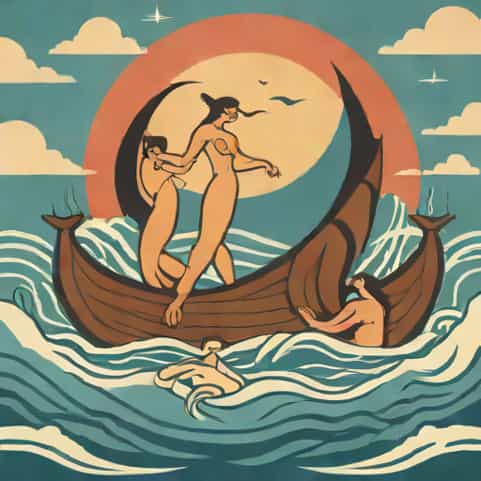
In ancient Greek mythology, few tales capture the imagination and peril of sea travel like the stories of the Sirens, Scylla, and Charybdis. These mythical creatures represent the dangers sailors faced while navigating treacherous waters, combining elements of temptation, fear, and unavoidable threats. The myths have endured for centuries, influencing literature, art, and even modern metaphors. Understanding these legendary beings offers insight into how the ancient Greeks interpreted the natural world, human psychology, and the challenges of maritime life, blending adventure with moral and cautionary lessons for all who dared to sail.
The Sirens Luring Sailors to Danger
The Sirens are among the most famous mythological creatures associated with the sea. Often depicted as half-bird, half-woman beings, they were known for their irresistible singing voices, which lured sailors toward rocky shores and certain death. In Homer’s Odyssey, Odysseus encounters the Sirens on his journey home from the Trojan War. To survive, he plugs his crew’s ears with beeswax and has himself tied to the mast of his ship so he can hear their song without succumbing to their deadly allure. The Sirens embody the concept of temptation and the peril of succumbing to desires that can lead to ruin, a theme that resonates through mythology, literature, and modern culture.
Scylla The Six-Headed Monster
Scylla, another legendary sea monster, represents an entirely different kind of danger. She is described as a monstrous creature with six heads, each capable of devouring sailors who stray too close to her lair. Residing on one side of a narrow strait, Scylla’s domain posed an unavoidable threat to anyone attempting to navigate the waters. Unlike the Sirens, Scylla’s danger is immediate and physical, highlighting the harsh and often inescapable perils of ancient seafaring. The fear of Scylla reinforced the need for skill, strategy, and caution when traversing dangerous waters.
Charybdis The Swirling Whirlpool
Opposite Scylla, in the same narrow strait, lurked Charybdis, a monstrous whirlpool capable of swallowing entire ships. Charybdis personified natural maritime hazards, illustrating the destructive power of the sea. Sailors faced the dilemma of avoiding Scylla on one side while steering clear of Charybdis on the other, a scenario that became a metaphor for navigating between two extreme dangers. The phrase between Scylla and Charybdis is now a common idiom, meaning to choose between two equally perilous options, and has been widely used in literature and everyday language.
The Odyssey Encountering the Triad of Danger
Homer’s Odyssey provides the most detailed account of encounters with these mythological threats. Odysseus must carefully navigate past the Sirens, Scylla, and Charybdis as he attempts to return to Ithaca. Each challenge represents a different kind of hazard the Sirens tempt the mind and willpower, Scylla threatens life directly, and Charybdis embodies uncontrollable natural forces. Odysseus’s strategies, such as tying himself to the mast or steering closer to Scylla to avoid Charybdis, reflect themes of courage, ingenuity, and the need to make difficult choices under pressure.
Symbolism of the Sirens, Scylla, and Charybdis
These mythological figures carry rich symbolic meaning. The Sirens symbolize temptation and the dangers of succumbing to desire or distraction. Scylla represents unavoidable physical threats and the harsh realities of life, while Charybdis illustrates the power of nature and forces beyond human control. Together, they convey lessons about vigilance, decision-making, and the balance between risk and survival. Ancient sailors may have used these myths to conceptualize the unpredictable and often perilous nature of maritime travel, turning real dangers into cautionary tales that were both entertaining and educational.
Impact on Literature and Culture
The stories of the Sirens, Scylla, and Charybdis have influenced literature and culture for centuries. Beyond Homer, writers and poets have invoked these figures to explore themes of temptation, danger, and moral choice. The idiom between Scylla and Charybdis appears in works ranging from Shakespeare to modern novels, illustrating the enduring relevance of these myths. Visual art, theater, and even modern films continue to reinterpret these figures, demonstrating the lasting fascination with their perilous allure and symbolic power.
Modern Interpretations and Metaphors
Today, the mythological triad of danger has become a powerful metaphor in everyday language. In decision-making, political strategy, and business, individuals often refer to being between Scylla and Charybdis to describe navigating situations with two undesirable outcomes. Similarly, the Sirens are invoked metaphorically to discuss temptations or distractions that may lead one astray. These enduring metaphors reflect how ancient mythology continues to provide insight into human behavior, choices, and the risks encountered in complex environments.
- Sirens Symbolize temptation and seduction.
- Scylla Represents unavoidable dangers and direct threats.
- Charybdis Illustrates uncontrollable forces and natural hazards.
- Odysseus’s Journey Highlights courage, strategy, and difficult decision-making.
- Modern Metaphors Used in literature, politics, and daily language to describe complex dilemmas.
Lessons from Mythology
The myths of the Sirens, Scylla, and Charybdis offer timeless lessons. They remind us that life often presents choices between two dangers, requiring wisdom, courage, and sometimes sacrifice. They also emphasize the importance of awareness and preparation in the face of temptation or adversity. In the context of Greek culture, these myths reinforced social and moral values, teaching lessons about prudence, discipline, and respect for natural forces.
The legends of the Sirens, Scylla, and Charybdis continue to captivate audiences due to their rich symbolism, dramatic narratives, and enduring relevance. They represent the myriad challenges faced by sailors, both physical and psychological, and have evolved into powerful metaphors for human decision-making and risk. From Homer’s epic tales to modern cultural references, these mythological figures remind us of the dangers of temptation, the inevitability of certain challenges, and the importance of courage and strategy in navigating life’s perilous waters. Understanding these myths deepens our appreciation for ancient storytelling while offering insights into timeless human experiences and the complexities of navigating between danger and desire.