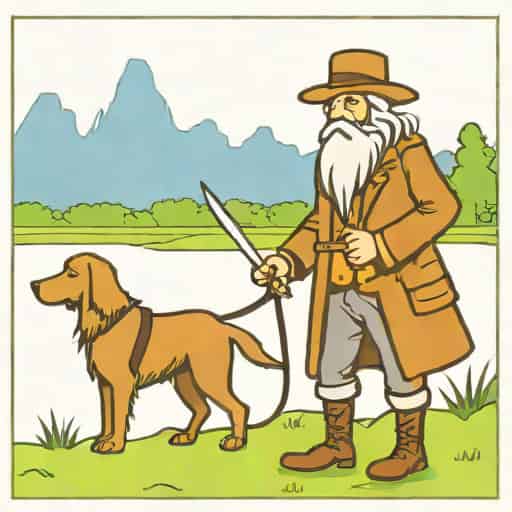
Rip Van Winkle, written by Washington Irving, is a timeless short story that explores themes of change, time, and the contrast between personal idleness and societal transformation. Set in the Catskill Mountains of New York, the story follows Rip Van Winkle, a kind but lazy man who is beloved by his neighbors yet frustrated by his nagging wife. Rip’s life takes an extraordinary turn when he encounters mysterious figures in the mountains, leading to a sleep that lasts twenty years. Through this narrative, Irving examines the passage of time, the evolution of communities, and the human experience of returning to a world that has changed while one has remained still. The story combines elements of folklore, humor, and social commentary, making it a rich and engaging tale that has resonated with readers for generations.
Introduction to Rip Van Winkle
Rip Van Winkle is introduced as a simple, good-natured man living in a small village at the foot of the Catskill Mountains. Despite his amiable nature, Rip is known for his laziness and aversion to hard work, particularly on his own property. His cheerful demeanor makes him popular with the children and neighbors, but his wife’s constant scolding and demands for industriousness create tension in his domestic life. The story establishes Rip’s character as a man more interested in leisure and social interaction than in personal responsibility, setting the stage for the fantastical events that will soon unfold.
Life in the Village
The village community in which Rip Van Winkle resides is depicted as a quaint and somewhat insular society. The townspeople are friendly and enjoy storytelling, communal activities, and gossip. Rip himself is a social creature who often wanders through the village, offering assistance to others and enjoying the company of friends. However, his inability to manage his own affairs and his dependence on the goodwill of others highlight the contrast between individual idleness and communal productivity. This setting allows Washington Irving to explore broader themes of social cohesion and the balance between personal freedom and societal expectation.
- Rip’s popularity among neighbors and children
- His strained relationship with his wife due to laziness
- The village as a close-knit community
- Emphasis on social interaction over personal responsibility
The Mysterious Encounter
One day, Rip wanders into the mountains with his dog, seeking respite from his wife’s constant demands. There, he discovers a group of strange, silent men playing ninepins, dressed in antiquated Dutch clothing. These figures are mysterious and seemingly supernatural, imbued with an aura of otherworldliness. Rip is offered a drink of liquor by the men, and upon consuming it, he falls into a deep, magical sleep. This encounter with the unknown serves as the story’s turning point, transporting Rip into a state of suspended time and creating the central conflict of the narrative.
The Sleep of Twenty Years
Rip’s extraordinary sleep lasts for twenty years, during which the world around him changes dramatically. When he awakens, he finds that his dog has disappeared, the familiar mountains and village are altered, and he no longer recognizes the people he encounters. The village itself has changed due to the passage of time, including new structures, different faces, and a society transformed by events such as the American Revolution. Rip’s disorientation emphasizes the theme of temporal displacement and the inevitable effects of change on both individuals and communities.
- Rip falls asleep after drinking liquor from mysterious figures
- He sleeps for twenty years
- The world changes significantly during his absence
- Rip experiences disorientation and confusion upon waking
Rip’s Return to Society
Upon awakening, Rip returns to the village and discovers that much has changed. He is initially met with suspicion, as the people do not recognize him, and his identity is in question. Eventually, he is welcomed back as an elderly man who has miraculously survived a long absence. Rip reunites with friends and relatives who have aged, while the village has modernized and adapted to new political and social realities. His personal transformation from a lazy, carefree man to one who must navigate a changed world reflects the story’s meditation on the passage of time and the resilience of human adaptability.
Themes and Symbolism
Rip Van Winkle explores several significant themes, including the tension between personal leisure and societal expectation, the inevitability of change, and the enduring impact of historical events on ordinary lives. Rip’s twenty-year sleep symbolizes the human desire to escape responsibility and the consequences of neglecting personal duties. The altered village represents the unstoppable march of time and social evolution, highlighting the contrast between individual stasis and collective progression. Additionally, the story incorporates elements of American folklore, using the mysterious figures in the mountains to create a sense of magic and cultural continuity.
- The passage of time and its effects on individuals
- Conflict between personal freedom and societal responsibilities
- Historical change and its impact on ordinary life
- Use of folklore and supernatural elements to enrich the narrative
- Reflection on human adaptability and resilience
Character Development
Rip Van Winkle undergoes subtle character development through his extraordinary experience. Initially, he is portrayed as indulgent and carefree, avoiding responsibilities and seeking pleasure. The twenty-year sleep serves as a transformative period, forcing him to confront a world that has moved on without him. Though he resumes some of his previous habits, Rip gains a unique perspective on life, aging, and the fleeting nature of time. Other characters, including Rip’s wife and the villagers, illustrate societal expectations and the inevitability of change, providing a backdrop for Rip’s personal journey and the story’s broader social commentary.
Impact on American Literature
Rip Van Winkle has had a lasting impact on American literature, helping to define the short story as a genre in the United States. Washington Irving’s use of folklore, humor, and social observation set a precedent for future writers, blending imaginative storytelling with commentary on real social conditions. The story also reflects early American identity, exploring themes of independence, societal transformation, and the tension between old and new ways of life. Its enduring popularity attests to its universal themes and the relatable human experiences it portrays, making it a cornerstone of American literary heritage.
- Integration of folklore and supernatural elements
- Exploration of early American identity
- Influence on the development of the short story in America
- Reflection on social and personal transformation
- Enduring relevance and universal appeal
Rip Van Winkle is a compelling narrative that intertwines magic, folklore, and social commentary to create a story that is both entertaining and thought-provoking. Through Rip’s twenty-year sleep, Washington Irving examines themes of change, the passage of time, and the contrast between personal idleness and societal evolution. The story’s rich characters, imaginative plot, and profound themes have ensured its place as a classic of American literature. It continues to resonate with readers by illustrating how individuals navigate a changing world, adapt to unforeseen circumstances, and reflect on the inevitable progression of life and society. By combining humor, folklore, and insightful observation, Rip Van Winkle remains a timeless tale that captures the imagination and provides meaningful commentary on human nature and historical change.