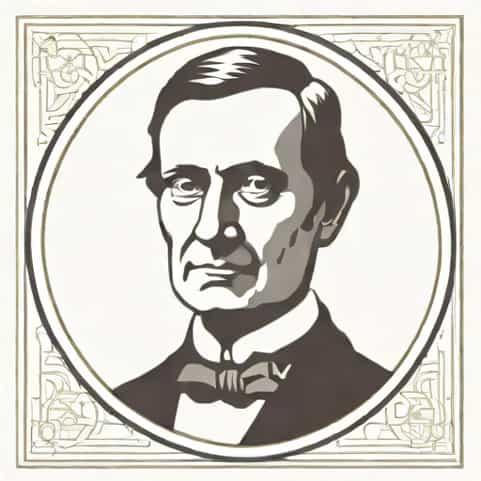
Symbolic logic is a fundamental branch of mathematics and philosophy that uses symbols to represent logical expressions, allowing complex reasoning to be formalized and analyzed. George Boole, an English mathematician and logician, is widely regarded as the pioneer of symbolic logic, whose groundbreaking work laid the foundation for modern computer science, digital circuits, and mathematical reasoning. Boole’s development of a formal system for logical operations transformed the study of logic from a purely philosophical pursuit into a rigorous mathematical discipline. His innovations continue to influence diverse fields, from artificial intelligence to programming languages, demonstrating the enduring impact of symbolic logic on contemporary science and technology.
The Life of George Boole
George Boole was born on November 2, 1815, in Lincoln, England. Despite his modest upbringing, he displayed exceptional mathematical talent from an early age. Largely self-taught, Boole mastered advanced mathematics by the time he was a teenager. He began his career as a schoolteacher while continuing to pursue independent mathematical research. His dedication and intellectual curiosity led to the development of revolutionary ideas in logic and mathematics, culminating in his landmark publication, The Laws of Thought, which formalized logical reasoning using algebraic methods.
Early Contributions to Mathematics
Before his groundbreaking work in logic, Boole made significant contributions to differential equations and algebra. His early research demonstrated his analytical abilities and innovative approach to problem-solving. By combining his knowledge of mathematics with an interest in philosophy and reasoning, Boole began exploring the formal representation of logical statements, ultimately creating the first systematic approach to symbolic logic. This fusion of mathematics and philosophy set the stage for the development of Boolean algebra, the core framework of symbolic logic.
Development of Symbolic Logic
Symbolic logic, as introduced by Boole, uses symbols to represent logical propositions and relationships between them. Boole’s approach involved assigning algebraic symbols to logical statements and applying mathematical operations to evaluate their truth or falsity. This method allowed logical reasoning to be expressed in a precise, systematic manner, making it possible to analyze and manipulate complex logical arguments mathematically. His work established the foundation for modern logic, influencing both theoretical mathematics and practical applications in computer science.
Boolean Algebra
Boolean algebra is the mathematical framework underlying symbolic logic. In Boolean algebra, variables represent truth values, typically true or false, while operations such as AND, OR, and NOT define the relationships between these variables. Boole demonstrated that logical statements could be manipulated using algebraic rules, allowing logical reasoning to be formalized and generalized. This algebraic approach enabled mathematicians and scientists to apply rigorous methods to problems in logic, probability, and set theory, bridging the gap between abstract reasoning and practical computation.
Key Principles of Symbolic Logic
- Propositional RepresentationLogical statements are represented by symbols, allowing complex reasoning to be simplified and analyzed.
- Logical OperationsOperations such as conjunction (AND), disjunction (OR), and negation (NOT) define relationships between logical variables.
- Algebraic ManipulationLogical statements can be combined and transformed using algebraic rules, facilitating systematic reasoning.
- Truth ValuesEach logical statement is assigned a truth value, enabling evaluation of its validity within a given logical system.
- Formal DeductionSymbolic logic provides a framework for deriving conclusions from premises in a consistent, mathematical manner.
Applications of Symbolic Logic
The impact of George Boole’s symbolic logic extends far beyond mathematics. Boolean algebra forms the backbone of modern computing, influencing the design of digital circuits, programming languages, and artificial intelligence algorithms. In computer science, logical gates, which operate on binary values using Boolean principles, are fundamental to the functioning of processors and memory devices. Symbolic logic also underpins database query languages, search algorithms, and decision-making systems, demonstrating its practical relevance in everyday technology.
Impact on Computer Science
Boolean logic is essential for the operation of computers and digital systems. Logical operations form the basis of binary computation, allowing computers to process information efficiently. Boole’s ideas enable the design of hardware components such as AND, OR, and NOT gates, which are used to implement complex computational tasks. Additionally, symbolic logic informs programming logic, algorithm design, and data structures, making it a cornerstone of modern computer science education and research.
Influence on Philosophy and Mathematics
Beyond its technological applications, symbolic logic has profoundly influenced philosophy and mathematics. Philosophers use Boolean logic to analyze arguments, identify fallacies, and construct formal proofs. Mathematicians apply symbolic logic to set theory, probability, and abstract algebra, exploring the foundational principles of mathematical reasoning. Boole’s work demonstrated that logic could be treated as a formal, rigorous discipline, bridging philosophical inquiry and mathematical methodology.
Legacy of George Boole
George Boole’s contributions to symbolic logic and Boolean algebra have left a lasting legacy. His work not only established a formal system for logical reasoning but also provided the conceptual framework for the digital revolution. Modern technologies, from computers to smartphones, rely on the principles he developed nearly two centuries ago. Boole’s integration of mathematics and logic has inspired generations of mathematicians, computer scientists, and philosophers, highlighting the enduring relevance of his ideas in both theory and practice.
Continued Relevance
Today, symbolic logic continues to be a vital field of study. Courses in computer science, mathematics, and philosophy often include Boolean logic and symbolic reasoning as foundational topics. Researchers build on Boole’s principles to develop new algorithms, improve artificial intelligence systems, and explore the theoretical limits of computation. The widespread application of his ideas underscores their universal importance and lasting influence on modern knowledge and technology.
Symbolic logic, pioneered by George Boole, represents a pivotal advancement in the study of reasoning and mathematics. By formalizing logical operations through algebraic symbols and rules, Boole transformed the way humans understand and manipulate logical statements. His work laid the foundation for modern computing, mathematical logic, and philosophical analysis, demonstrating the profound and lasting impact of his ideas. Today, the principles of Boolean algebra continue to drive technological innovation and intellectual exploration, cementing George Boole’s place as one of the most influential figures in the history of logic and science.