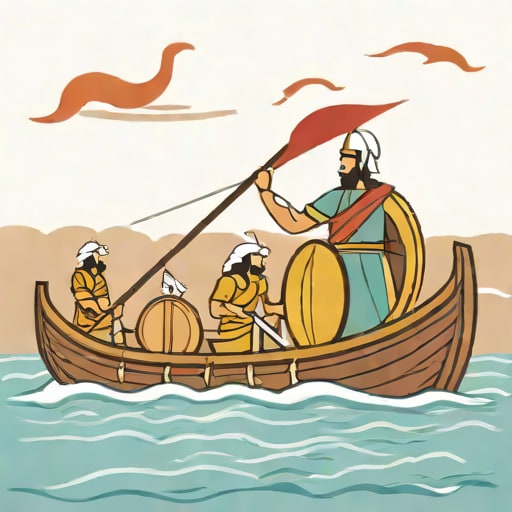
The Battle of Salamis stands as one of the most pivotal naval engagements in ancient history, shaping the outcome of the Greco-Persian Wars and the future of Western civilization. Fought in 480 BCE between the Greek city-states and the invading Persian Empire, this battle demonstrated the strategic ingenuity of the Greeks, particularly under the command of Themistocles, and marked a turning point that would eventually lead to the decline of Persian dominance in the Aegean region. The conflict not only highlighted the importance of naval power but also underscored the value of unity among the often-fractious Greek city-states, who recognized that collaboration was essential to repel a common enemy. Understanding the causes, strategies, and outcomes of the Battle of Salamis provides a comprehensive glimpse into ancient military history, leadership, and the broader cultural context of Greece during the classical period.
Historical Context of the Battle
The Battle of Salamis occurred within the larger framework of the Greco-Persian Wars, a series of conflicts between the Persian Empire and various Greek city-states during the early 5th century BCE. The Persian Empire, under King Xerxes I, sought to expand its influence into mainland Greece, following the earlier invasion led by Darius I, which had ended with the Battle of Marathon in 490 BCE. By 480 BCE, Xerxes had amassed a massive army and navy to subjugate Greece, prompting Greek city-states to form a defensive alliance. Athens, known for its emerging naval power, played a crucial role in the coalition, while Sparta contributed its renowned land forces. The Persian objective was to crush Greek resistance and incorporate the city-states into the empire, whereas the Greeks aimed to preserve their autonomy and cultural identity.
Lead-Up to the Battle
Before the battle, the Persians had advanced through northern Greece, winning engagements such as the Battle of Thermopylae, where the Spartans made their legendary stand. Despite the heroic defense, Greek forces realized that a new strategy was necessary to counter the Persian navy, which outnumbered them significantly. Themistocles, the Athenian general and strategist, proposed luring the Persian fleet into the narrow straits of Salamis, where their numerical advantage would be negated, and the maneuverability of the smaller Greek ships could be exploited. This strategy relied heavily on intelligence, deception, and precise timing, reflecting the sophisticated military thinking of the Greeks during this period.
The Battle Strategy and Tactics
The Battle of Salamis was marked by a combination of strategic deception, clever positioning, and disciplined naval tactics. The Greek fleet, numbering around 300 triremes, took positions within the narrow channel between the island of Salamis and the mainland of Attica. In contrast, the Persian fleet, estimated at over 1,000 ships, was forced to navigate the confined waters, reducing their ability to coordinate and exploit their superior numbers. Themistocles sent a secret message to Xerxes, misleading him into believing that the Greek forces were retreating and disorganized. This deception enticed the Persians to enter the straits hastily, where the Greeks were prepared to engage them in close quarters.
Naval Engagement
Once the Persian fleet was in the straits, the Greek triremes employed ramming and boarding tactics to devastating effect. The triremes, which were smaller and more agile than the Persian vessels, could maneuver quickly, strike the larger ships, and retreat before a counterattack. The Greeks focused on creating chaos within the Persian formation, targeting command ships and disrupting coordination. Their knowledge of the local waters, coupled with superior seamanship, allowed the Greeks to maximize the impact of each attack, causing significant losses to the Persian fleet.
Key Figures in the Battle
Themistocles, the Athenian strategist, was the central figure in orchestrating the Greek victory. His foresight in utilizing the geographic advantage of the Salamis straits and his use of deception were instrumental in leveling the playing field against a numerically superior enemy. On the Persian side, King Xerxes I commanded the massive invasion force and initially sought to personally oversee the naval engagement. However, his confidence in overwhelming numbers led to strategic miscalculations that contributed to the Persian defeat. Leadership, morale, and the ability to adapt to the battlefield were critical factors that shaped the outcome of this historic encounter.
Outcome and Consequences
The Battle of Salamis resulted in a decisive Greek victory, with significant losses for the Persian navy. Contemporary sources estimate that the Persian fleet lost hundreds of ships, while Greek casualties were considerably lower. This victory had immediate and long-term consequences for both sides. In the short term, it prevented the Persians from advancing further into Greece and provided a morale boost for the Greek city-states. In the long term, the defeat at Salamis marked the beginning of the decline of Persian ambitions in the region and paved the way for subsequent Greek successes, including the Battle of Plataea in 479 BCE, which effectively ended the Persian threat to Greece.
Impact on Greek Society and Legacy
The triumph at Salamis had profound implications for Greek society, politics, and culture. Athens, in particular, gained prominence and recognition for its naval capabilities, setting the stage for its leadership in the Delian League and the subsequent Athenian Empire. The victory also reinforced the idea of collective defense among Greek city-states, highlighting the benefits of cooperation despite existing rivalries. In terms of cultural legacy, the Battle of Salamis became a symbol of strategic brilliance, courage, and the resilience of the Greek people. It was commemorated in literature, art, and historical accounts, inspiring future generations to value intelligence and ingenuity in warfare.
Lessons from the Battle
- Strategic use of geography can compensate for numerical inferiority.
- Intelligence and deception are powerful tools in military planning.
- Unity and cooperation among allies can overcome significant challenges.
- Leadership, vision, and adaptability often determine the outcome more than raw strength.
- Naval power and mastery of maritime tactics can decisively influence broader conflicts.
The Battle of Salamis remains a landmark event in ancient history, demonstrating the importance of strategy, leadership, and tactical innovation. By leveraging geographic advantages, employing deception, and exploiting the strengths of their fleet, the Greeks achieved a decisive victory against the Persian Empire. This battle not only secured the autonomy of the Greek city-states but also left a lasting legacy in military history, showcasing how intelligence, coordination, and bravery can triumph over sheer numerical superiority. Understanding the Battle of Salamis provides valuable insights into ancient warfare, leadership, and the enduring significance of tactical thinking in shaping historical outcomes.