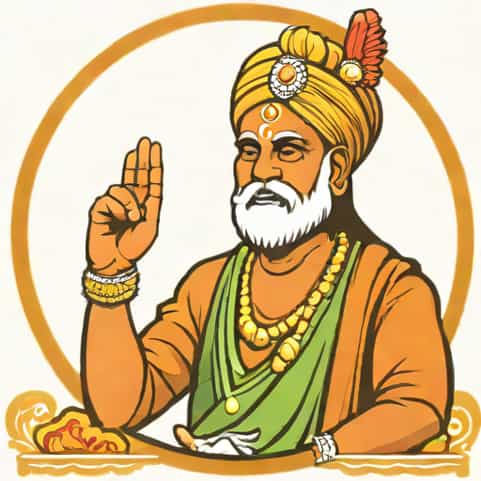
When discussing the rise of Indian nationalism during the late nineteenth and early twentieth centuries, one name often stands out for his fiery speeches, radical ideas, and uncompromising call for freedom-Bal Gangadhar Tilak. Famously referred to as the Father of Indian Unrest by British colonial rulers, Tilak was a towering figure in the struggle against imperial domination. His words and actions inspired millions, and his legacy continues to be remembered as a turning point in India’s political awakening. The phrase itself, though used by the British in a derogatory manner, came to symbolize his ability to stir the spirit of resistance and encourage Indians to demand self-rule.
Background of Bal Gangadhar Tilak
Bal Gangadhar Tilak was born in 1856 in Ratnagiri, Maharashtra. From an early age, he showed a strong interest in learning and a deep pride in Indian culture. He became a teacher, social reformer, journalist, and politician, dedicating his life to the cause of India’s independence. Unlike moderate leaders of his time, Tilak believed that petitions and negotiations with the British would not bring real change. Instead, he pushed for more assertive methods and urged Indians to rely on their own strength and traditions.
The Early Nationalist Movement
During the late 1800s, the Indian National Congress was founded, and its leaders initially adopted a moderate approach. They focused on constitutional reforms and appeals to British fairness. Tilak, however, criticized this strategy as too timid. He argued that self-rule was a natural right and not a gift to be begged for. His famous declaration, Swaraj is my birthright, and I shall have it, became a rallying cry for a generation of Indians who were frustrated by colonial exploitation.
The Title Father of Indian Unrest
The phrase Father of Indian Unrest was coined by British officials, particularly Valentine Chirol, a journalist and political writer who saw Tilak as the most dangerous enemy of colonial peace. For the British, unrest meant disorder, rebellion, and the threat of losing control. But for Indians, unrest symbolized the awakening of national pride and the courage to resist oppression. Thus, the title, while meant as criticism, became a badge of honor that reflected Tilak’s influence on the masses.
Tactics and Strategies
-
Public SpeechesTilak delivered passionate speeches that connected with ordinary people. His words were simple but powerful, and they ignited the flames of nationalism in villages and towns.
-
NewspapersThrough publications likeKesari(in Marathi) andThe Mahratta(in English), Tilak spread nationalist ideas, criticized British policies, and educated the public about their rights.
-
Cultural RevivalHe used Hindu festivals like Ganesh Chaturthi and Shivaji Jayanti as platforms to bring people together, combining religion, culture, and politics into a powerful force for unity.
-
Confrontation with ModeratesTilak often clashed with moderate leaders within the Congress, insisting that passive methods would never achieve independence.
Tilak’s Imprisonments
The British government saw Tilak as a dangerous agitator. He was imprisoned multiple times for sedition, accused of inciting violence and rebellion. One of the most famous trials was in 1908, when he was sentenced to six years of imprisonment in Mandalay, Burma. Even in prison, he studied, wrote extensively, and continued to shape nationalist thought. His resilience only enhanced his reputation as a fearless leader who would not bow down to colonial power.
The Gita Rahasya
During his time in Mandalay, Tilak wrote theGita Rahasya, a commentary on the Bhagavad Gita. In this work, he interpreted the scripture as a call to action rather than renunciation. For him, the Gita was not about retreating from the world but about fulfilling one’s duty with courage. This interpretation provided a spiritual foundation for political activism and strengthened his appeal among Indians seeking both cultural and political freedom.
Influence on the Indian Independence Movement
Tilak’s role in shaping the direction of Indian nationalism cannot be overstated. His assertive style inspired later leaders like Lala Lajpat Rai and Bipin Chandra Pal, forming the trio known as Lal-Bal-Pal. Together, they represented the extremist wing of Congress, which challenged the moderate leadership and pushed the struggle for independence into a more active phase. Tilak’s methods created the groundwork for future movements led by Mahatma Gandhi, Subhas Chandra Bose, and Jawaharlal Nehru.
Contrast with Gandhi
While Tilak emphasized confrontation and bold resistance, Gandhi later popularized nonviolent civil disobedience as the central strategy of the independence movement. Yet Gandhi himself acknowledged Tilak’s contributions, recognizing him as one of the pioneers who laid the foundation for mass mobilization. In many ways, Tilak’s aggressive style and Gandhi’s nonviolent methods represented two sides of the same coin both aimed at securing freedom but through different paths.
British Fear of Tilak’s Influence
The reason the British labeled him the Father of Indian Unrest was simple Tilak had the ability to turn ordinary grievances into a larger political cause. Economic exploitation, cultural suppression, and unfair laws became symbols of foreign domination under his leadership. The colonial government feared his popularity because he could unify people across regions and classes in a common demand for Swaraj.
Key Contributions
-
Advocated for complete self-rule instead of partial reforms.
-
Inspired cultural pride by reviving historical heroes and festivals.
-
Created a strong nationalist press to spread political awareness.
-
Encouraged direct action instead of relying on British goodwill.
Legacy of the Father of Indian Unrest
Bal Gangadhar Tilak passed away in 1920, but his legacy lived on in the hearts of millions. His demand for Swaraj became the foundation of the Indian independence movement, and his strategies shaped future campaigns. The title Father of Indian Unrest, once used to discredit him, became a symbol of pride, representing his courage to challenge one of the most powerful empires in history.
Impact on Modern India
Today, Tilak is remembered not only as a freedom fighter but also as a teacher, journalist, and philosopher. Schools, roads, and institutions bear his name, honoring his contributions to the nation. His life serves as a reminder that true change often requires sacrifice, conviction, and the courage to stand against injustice.
The story of the Father of Indian Unrest is a powerful chapter in India’s freedom struggle. Bal Gangadhar Tilak challenged colonial authority at a time when many believed it impossible. He awakened the masses, instilled a sense of pride, and set the stage for a broader movement that eventually led to independence. His fearless words and actions ensured that the title, though originally meant as an insult, would forever be associated with honor, bravery, and the relentless pursuit of freedom.
In remembering Tilak, we also recognize that unrest, in this context, was not chaos but the first step toward liberation. It was the spark that lit the fire of independence and changed the destiny of a nation.