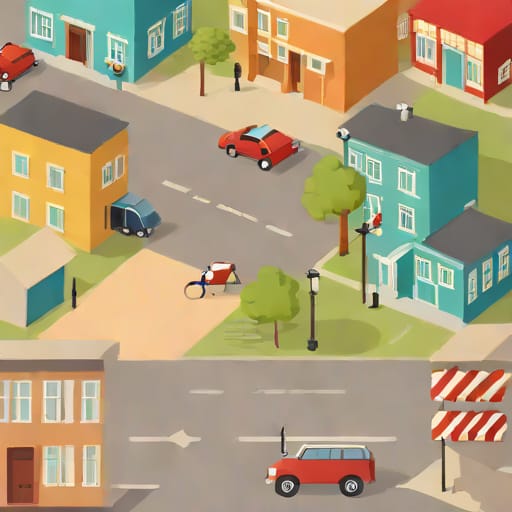
The short story The Street That Got Mislaid offers a fascinating look at imagination, bureaucracy, human curiosity, and the idea of forgotten places. At first glance, it might seem like a quirky tale about a missing street, but beneath the surface lies a theme rich with meaning and symbolic depth. Through the eyes of its main character, readers are invited to examine how society values order versus freedom, what it means to discover something lost, and how people choose to embrace or reject the world around them. The story explores the contrast between rigid systems and human experiences, and it encourages us to think about how overlooked corners of life can hold unexpected beauty and community. With its blend of whimsy and reflection, the theme of The Street That Got Mislaid continues to resonate with readers who appreciate thoughtful, imaginative literature.
Understanding the Story’s Plot
The story centers on Marc Girondin, an ordinary filing clerk in a city’s engineering department, who knows all the streets of his city with remarkable precision-at least on paper. One day while sorting through old records, Marc discovers a forgotten index card bearing the name of a street he has never heard of Green Bottle Street. To his surprise, when he checks this name in official files, the street does not exist in the current city records. Curious and unsettled, Marc decides to search for this mysterious place and, after an effort, he finds it exactly as described. The street is quaint and peaceful, with neatly kept houses and a small, tight-knit group of residents living happily away from the bustle and bureaucracy of the city. Instead of reporting his discovery and restoring the street to the official map, Marc makes the surprising choice to leave it mislaid, embracing the sanctuary it offers.
The Theme of Bureaucracy and Human Experience
One of the dominant themes of The Street That Got Mislaid is the relationship between bureaucracy and human life. Marc’s initial role in the story highlights how bureaucratic systems define and shape people’s understanding of the world. He believes that without official documentation, a street does not truly exist-a mindset that mirrors how many modern societies rely on data, records, and formal recognition to validate reality. His work in managing street records becomes more than a job it becomes a lens through which he views his entire existence.
Bureaucracy as a Limitation
The story suggests that strict adherence to bureaucratic systems can detach individuals from meaningful experiences. Marc’s life before finding Green Bottle Street is depicted as dull and unremarkable, confined to office routines and the rigid logic of the filing cabinet. The bureaucratic mindset limits Marc’s sense of wonder and blinds him to experiences that lie outside official records. This reflects a broader theme about how rigid systems may suppress curiosity or overlook the richness of life beyond paperwork and data.
Discovery and Liberation
In contrast to the rigid world of bureaucracy, Green Bottle Street represents freedom, community, and simplicity. Its existence outside official records frees it from the influence of taxes, inspections, and external regulations. When Marc finally visits, he encounters residents who live in harmony, removed from the pressures and constraints of the city. Their peaceful lives underscore the contrast between the ordered, recorded world and the more organic, spontaneous world that exists beyond bureaucratic recognition.
Choices and Transformation
A crucial theme of the story is the transformation that occurs within Marc as a result of his encounter with Green Bottle Street. At first, he is compelled to share his discovery and correct what he sees as an error. However, as he learns about the residents’ lives-and begins to feel a sense of belonging-he reconsiders. Instead of reporting the street’s existence and returning it to official maps, Marc chooses to leave it mislaid. This decision reveals a theme about personal choice and authenticity. He abandons the rigid expectations of bureaucracy in favor of a life that promises peace, community, and fulfillment.
The Value of Belonging
The transformation Marc undergoes highlights the value of authentic human connection and belonging. The lost street and its inhabitants symbolize an alternative way of life, one that prioritizes community over bureaucracy. By choosing to remain with the residents and keep the street hidden from the outside world, Marc embraces a life that feels more meaningful and genuine to him. This aspect of the theme suggests that belonging and shared experiences can outweigh societal structures that prioritize order and control.
Hope, Memory, and the Unseen
Another important theme in the story is the idea that beauty and meaning often exist outside what is widely recognized or documented. Green Bottle Street, forgotten by maps and records, continues to thrive in its own way. It represents hope, memory, and the unseen parts of life that escape formal acknowledgment. The story invites readers to consider what exists beyond what is recorded and asks whether some things are better appreciated precisely because they are overlooked. This encourages a reflection on hidden wonders in everyday life, such as places, moments, or relationships that go unnoticed but enrich our experience.
Reflection on Modern Life
Readers can also interpret the story’s theme as a commentary on modern life itself. In a world increasingly driven by documentation, data, and digital representation, the narrative suggests there is value in the parts of life that remain undocumented and intangible. Whether it’s an old street, a forgotten community, or an unremarkable moment in time, the story reminds us that value is not solely determined by official acknowledgment.
Legacy of The Street That Got Mislaid
While originally published in the mid-20th century, The Street That Got Mislaid continues to speak to readers because its themes remain relevant. The tension between structured systems and human experience, the importance of personal choice, and the celebration of unseen or forgotten aspects of life resonate across eras. By blending whimsical storytelling with deeper philosophical questions, the narrative encourages readers to question assumptions about reality, belonging, and the meaning of existence. Its enduring appeal lies in its ability to spark imagination while inviting thoughtful reflection on what truly matters in life.
In The Street That Got Mislaid, the theme extends beyond a simple story about a lost street. It explores how systems shape our perception, yet human experience and connection often defy categorization. The story encourages readers to look beyond rigid structures and appreciate the beauty in overlooked places. By choosing freedom over bureaucracy and embracing community over conformity, the protagonist’s journey symbolizes the timeless quest for meaning in a world that often prioritizes order over wonder. Through this rich thematic tapestry, the story ultimately inspires readers to value curiosity, connection, and the unseen moments that make life worth living.