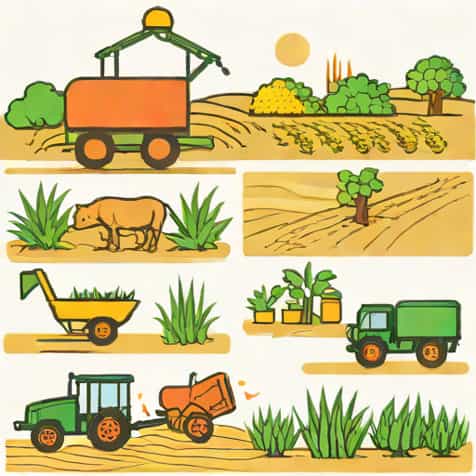
The Agrarian Revolution was one of the most significant turning points in human history. It marked a period when people shifted from a lifestyle based on hunting and gathering to one centered on agriculture and settlement. This change not only transformed how humans lived and worked but also laid the foundation for modern civilization. Understanding what the Agrarian Revolution was and how it developed helps explain many aspects of today’s societies, economies, and technologies that trace their origins back to those early agricultural innovations.
The Meaning of the Agrarian Revolution
The term Agrarian Revolution refers to a major transformation in agricultural practices that dramatically increased food production and reshaped social and economic structures. The revolution occurred in several phases throughout history, starting with the first transition from foraging to farming around 10,000 BCE, often called the Neolithic Revolution. Later, another wave of agrarian change took place during the 18th and 19th centuries in Europe, when new farming technologies and land management methods revolutionized agriculture once again.
Essentially, the Agrarian Revolution represents humanity’s ability to manipulate nature to meet its needs. It involved the domestication of plants and animals, the invention of new tools, and the establishment of permanent settlements. These developments changed not only how people produced food but also how they organized communities and economies.
The Neolithic Agrarian Revolution
The first Agrarian Revolution, known as the Neolithic Revolution, began in different parts of the world independently particularly in Mesopotamia, Egypt, China, and the Indus Valley. Before this period, humans were nomadic hunter-gatherers who depended on wild animals and plants for survival. Around 10,000 BCE, humans began to cultivate crops such as wheat, barley, and rice and to domesticate animals like sheep, goats, and cattle.
Causes of the Neolithic Agrarian Revolution
Several factors contributed to the emergence of agriculture. Climate change after the last Ice Age created conditions favorable for plant growth. Human population growth also encouraged the search for more stable food sources. Over time, humans discovered that by saving and planting seeds, they could produce reliable food supplies, leading to the first farms and villages.
- Warming climate allowed for longer growing seasons.
- Growing populations needed consistent food sources.
- Discovery of plant cultivation and animal domestication techniques.
- Development of tools like sickles, plows, and grinding stones.
This revolution fundamentally altered human existence. People could now produce surplus food, which allowed them to settle in one place and develop communities. These permanent settlements eventually became the world’s first towns and cities.
Social and Economic Impacts of the Early Agrarian Revolution
The move toward agriculture had far-reaching effects on society. With surplus food, not everyone needed to farm, and this led to the rise of specialization. Some people became toolmakers, traders, or leaders, giving birth to social hierarchies and organized governance. Trade networks expanded as communities exchanged surplus goods for resources they lacked.
Land ownership became a central concept during this period. As farming required fixed plots of land, people began to claim and protect property, leading to social inequalities and new systems of power. Eventually, these structures laid the foundation for kingdoms, empires, and early economies.
Cultural Changes and Technological Innovation
The Agrarian Revolution also encouraged the development of new technologies and cultural practices. Pottery, for example, became widespread for storing grains and liquids. Writing systems emerged as people recorded harvests, trade transactions, and taxes. Religion, too, evolved around agricultural cycles, with deities representing fertility, rain, and harvests.
- Invention of irrigation systems to control water supply.
- Use of animal labor for plowing and transport.
- Creation of permanent homes and granaries.
- Development of early governance to manage resources and disputes.
These advancements made societies more complex and interconnected, ultimately paving the way for urbanization and civilization as we know it.
The Second Agrarian Revolution
While the first Agrarian Revolution transformed human existence, another wave of agricultural change occurred during the 18th and 19th centuries, primarily in Britain and Europe. This period is often referred to as the Second Agrarian Revolution or the British Agricultural Revolution. It introduced new farming methods, machinery, and land reforms that drastically increased productivity and efficiency.
Key Developments of the Second Agrarian Revolution
The Second Agrarian Revolution coincided with the Industrial Revolution, and the two were closely linked. Advances in technology allowed farmers to produce more food with fewer laborers, which in turn supported growing industrial populations in cities. Major innovations included
- Crop RotationRotating crops like wheat, barley, turnips, and clover improved soil fertility and reduced waste.
- Selective BreedingFarmers bred livestock for desirable traits such as size, strength, and productivity.
- MechanizationInventions like the seed drill, threshing machine, and mechanical reaper made farming faster and more efficient.
- Enclosure MovementCommon lands were consolidated into private farms, promoting efficiency but displacing small farmers.
These innovations revolutionized agricultural productivity, allowing fewer workers to feed more people. As a result, many rural laborers migrated to cities to work in factories, fueling industrial expansion.
Economic and Social Effects of the Second Agrarian Revolution
The impact of the Second Agrarian Revolution extended beyond the fields. Increased food production led to population growth, urbanization, and the rise of new social classes. The movement of people from rural to urban areas created a workforce that supported industrialization. However, it also caused displacement and hardship for small farmers who lost access to communal lands.
Economically, the revolution contributed to the growth of capitalism by emphasizing private ownership, market competition, and profit-driven farming. It also encouraged scientific approaches to agriculture, with farmers experimenting and sharing results, laying the groundwork for modern agronomy.
Transformation of Rural Life
As farming became more efficient, the nature of rural communities changed. Traditional lifestyles centered around small farms gave way to larger, commercially oriented estates. Rural families increasingly depended on wage labor rather than subsistence farming, altering community structures and values.
The Agrarian Revolution thus marked a shift not just in how food was produced, but in how societies functioned. It influenced patterns of migration, education, and even politics, as nations sought to control and improve agricultural production to strengthen their economies.
The Global Impact of Agrarian Revolutions
The ideas and technologies from both agrarian revolutions spread across the world, transforming agriculture in Asia, Africa, and the Americas. In the 20th century, these transformations continued through what became known as the Green Revolution a modern extension of agrarian change characterized by the use of chemical fertilizers, high-yield crops, and mechanized farming.
Today, the legacy of the Agrarian Revolution continues to shape global food systems, agricultural policies, and environmental challenges. While it enabled human societies to grow and prosper, it also introduced issues such as deforestation, soil depletion, and inequality that persist in the modern world.
The Agrarian Revolution was far more than a change in farming techniques it was a transformation that reshaped human civilization. From the first seeds planted by Neolithic farmers to the mechanized fields of the Industrial Age, the revolution marked humanity’s growing control over nature and resources. It led to population growth, technological advancement, and the creation of complex societies. Understanding what the Agrarian Revolution is reminds us that agriculture has always been at the heart of progress, linking the survival of ancient farmers with the sustainability challenges of today’s world. As we face future environmental and food security issues, the lessons of past agrarian transformations remain deeply relevant.