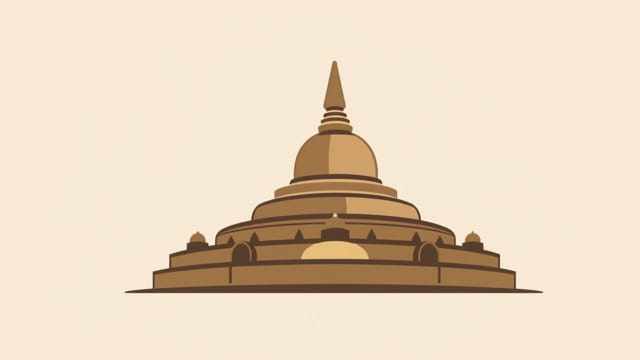
Located in Central Java, Indonesia, Borobudur Temple is one of the most iconic and spiritually significant monuments in Southeast Asia. It stands as a magnificent example of ancient Buddhist architecture and artistry. Millions of visitors from around the world are drawn to its massive stone structure, intricate carvings, and symbolic design. But one of the most intriguing questions about this architectural wonder is: when was Borobudur Temple built? Understanding the timeline and historical context behind its construction offers insight into the religious, political, and cultural life of ancient Java.
The Historical Context of Ancient Java
To understand when Borobudur Temple was built, it’s essential to look into the early history of Central Java, where a number of Hindu-Buddhist kingdoms thrived between the 7th and 10th centuries. The region was dominated by the Sailendra Dynasty, which played a crucial role in shaping the religious and cultural landscape of Java during that era.
The Sailendra rulers were strong supporters of Mahayana Buddhism and left behind an impressive legacy of Buddhist monuments, with Borobudur being the most famous and monumental. This period of peace, prosperity, and religious patronage provided the perfect environment for large-scale construction projects like Borobudur.
Estimated Construction Period
Historians and archaeologists generally agree that Borobudur Temple was built during the 8th and 9th centuries CE. Most estimates place the start of its construction around760 CE, and the temple is believed to have been completed by830 CE.
This timeframe coincides with the reign of the Sailendra Dynasty, particularly during the rule of King Samaratungga. While no official inscriptions explicitly state the exact date of completion, several sources and inscriptions discovered in the region help support this approximate dating.
Inscriptions and Archaeological Evidence
One of the key pieces of evidence used to date Borobudur comes from theKarangtengah inscription, which dates to 824 CE. This inscription mentions a king named Samaratungga, who was likely responsible for commissioning the construction of Borobudur. It refers to the creation of a sacred Buddhist monument, which scholars believe to be Borobudur itself.
Another inscription, theTri Tepusan inscription, also supports the idea that the temple was constructed in the early 9th century. These stone inscriptions, written in ancient Javanese and Sanskrit, help place Borobudur within the historical timeline of early Javanese kingdoms.
Construction Timeline
The construction of Borobudur likely took several decades, possibly more than 50 years, due to its immense size and complexity. The temple was constructed in stages, with careful planning and an understanding of both spiritual symbolism and architectural engineering.
- First phase (around 760 CE): The foundation and base levels were built.
- Second phase: Intermediate terraces and walls were added, featuring hundreds of bas-reliefs and Buddha statues.
- Final phase (by 830 CE): The top circular platforms and central stupa were completed.
Throughout this period, master builders, artisans, and laborers worked using simple tools and incredible craftsmanship to bring the temple to life.
Architectural Style and Symbolism
Borobudur’s architecture reflects Mahayana Buddhist cosmology and represents the path toward enlightenment. The monument is designed in the form of a massive mandala, symbolizing the universe. It consists of nine stacked platforms: six square and three circular, topped by a central dome.
The entire structure is covered with over 2,600 relief panels and 500 Buddha statues, depicting teachings, stories, and Buddhist philosophy. As visitors ascend through its levels, they metaphorically move from the world of desire (Kamadhatu) to the world of forms (Rupadhatu) and finally to the formless realm (Arupadhatu).
This architectural concept further aligns with the time of its construction, when Mahayana Buddhism flourished under the patronage of the Sailendra Dynasty.
Materials and Techniques
Borobudur was built using volcanic stone sourced locally from the nearby rivers and quarries of Central Java. Builders used interlocking stone blocks without mortar, an advanced technique for the time. Each stone was carved with precision and placed to ensure both structural stability and artistic beauty.
The choice of location on a hill surrounded by volcanoes and rivers also reflects careful spiritual and geographical considerations. The landscape adds to the temple’s serene ambiance and emphasizes its connection with nature and the cosmos.
Abandonment and Rediscovery
Despite its grandeur, Borobudur was eventually abandoned. Historians believe that by the 14th century, with the decline of Buddhist kingdoms and the spread of Islam in Java, the temple fell into disuse. Over time, it became buried under layers of volcanic ash and jungle growth.
It wasn’t until the early 19th century that Borobudur was rediscovered by Europeans. In 1814, Sir Thomas Stamford Raffles, the British ruler of Java at the time, initiated efforts to uncover and document the temple. Though restoration efforts continued over the years, it was only in the 20th century that major conservation projects helped restore Borobudur to its former glory.
UNESCO World Heritage Status
In 1991, Borobudur was officially declared a UNESCO World Heritage Site. This recognition helped preserve the temple and brought international attention to its historical and spiritual significance. Ongoing conservation and tourism management efforts aim to protect Borobudur for future generations.
Cultural and Religious Importance
Today, Borobudur Temple is not only a major tourist attraction but also a living center of Buddhist pilgrimage. Every year, thousands of Buddhists gather at the temple to celebrate Vesak Day, which marks the birth, enlightenment, and death of the Buddha. Pilgrims walk around the temple’s levels in silent meditation, retracing the spiritual journey symbolized in its design.
As a cultural symbol, Borobudur represents Indonesia’s rich historical heritage and its long-standing religious diversity. Its construction in the 8th9th centuries stands as a testament to the artistry, engineering, and devotion of the ancient Javanese civilization.
So, when was Borobudur Temple built? The most widely accepted timeframe places its construction between760 and 830 CE, during the golden era of the Sailendra Dynasty in Central Java. This period was marked by religious devotion, artistic excellence, and political stability all of which contributed to the creation of one of the world’s most remarkable Buddhist monuments. The temple’s survival through centuries of neglect and natural disasters adds to its mystique and importance. Today, Borobudur stands as a powerful reminder of Indonesia’s historical achievements and a beacon of peace, faith, and cultural identity.