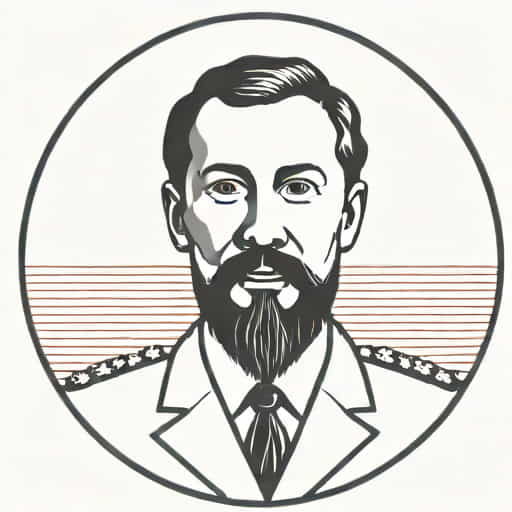
Nikolai Bukharin was a prominent Russian revolutionary, political leader, and Marxist theorist whose influence shaped the early years of the Soviet Union and its Communist Party. Born into an intellectually curious family in Moscow, Bukharin embraced revolutionary politics as a young man and quickly became one of the most respected thinkers within the Bolshevik faction. His work as a theoretician, journalist, and economist made him a leading figure in debates over the direction of the Soviet state, particularly during the turbulent years following the 1917 Revolution. Despite his early prominence and close association with key leaders such as Lenin and Stalin, Bukharin’s political career ultimately ended in tragedy as he became a victim of Stalin’s Great Purge in the late 1930s. His name remains significant in discussions of Soviet history and Marxist theory.
Early Life and Introduction to Revolutionary Politics
Nikolai Ivanovich Bukharin was born on October 9, 1888, in Moscow, Russian Empire. His parents were schoolteachers who encouraged a broad engagement with literature, science, and intellectual pursuits. As a young student, Bukharin became involved in the revolutionary movements opposed to the autocratic rule of Tsar Nicholas II. In 1905, during a period of civil unrest and uprising, he joined radical student groups and later became a member of the Russian Social Democratic Labour Party (RSDLP), aligning himself with its more radical Bolshevik wing. His early commitment to Marxist philosophy and political activism set the stage for a lifetime of involvement in revolutionary politics.
Exile and Formative Years
Throughout the years leading up to World War I, Bukharin faced multiple arrests and periods of exile due to his political activity. In 1910, he was arrested by Tsarist authorities and exiled internally to a remote region near Onega, but he soon escaped and fled abroad. While in Europe, he met key Bolshevik leaders, including Vladimir Lenin, and continued his work as a propagandist and writer. During this period, he also spent time in New York City working with Leon Trotsky on the revolutionary newspaper Novy Mir (New World), helping to spread Bolshevik ideas among expatriate communities.
Role in the 1917 Revolution and Early Soviet Leadership
The Russian Revolution of 1917 marked a turning point in Bukharin’s career. After the February Revolution weakened the Tsarist regime, he returned to Russia and took an active leadership role in the Bolshevik movement. Bukharin was elected to the party’s Central Committee, and following the October Revolution, he became editor of the party newspaper Pravda, a position that placed him at the center of political communication and ideological dissemination. As editor, he helped articulate Bolshevik positions during the Civil War and early years of Soviet governance.
Economic Writings and Theoretical Contributions
During the difficult years of the Russian Civil War and the early Soviet period, Bukharin produced several influential works on Marxist economic theory. These included texts like The ABC of Communism and The Economics of the Transitional Period, which sought to explain the theoretical foundations of socialism and guide the economic policies of the new Soviet state. His writings were widely read within the Communist Party and helped solidify his reputation as one of its foremost theoreticians.
Support for the New Economic Policy (NEP)
By 1921, Bukharin had shifted away from the more radical policies of War Communism that had been implemented during the Civil War. Recognizing the economic hardship facing the country, he became a leading advocate of the New Economic Policy (NEP), which reintroduced limited market practices, private ownership in agriculture and light industry, and a more flexible economic approach designed to stimulate production. Bukharin believed that this policy would strengthen the Soviet economy and provide a foundation for future socialist development. His support for NEP made him a central figure in Soviet economic debates during the 1920s.
Alliance with Stalin and Political Struggles
After Lenin’s health declined and he died in 1924, a power struggle emerged among Soviet leaders. Bukharin initially allied himself with Joseph Stalin against other prominent figures such as Leon Trotsky, Grigory Zinoviev, and Lev Kamenev. During this period, Bukharin also contributed to Stalin’s formulation of the theory of socialism in one country, which argued that the Soviet Union could build socialism independently of global revolution. This alliance helped Bukharin gain influence in the party, and in 1926 he became chairman of the executive committee of the Communist International (Comintern).
Decline and Conflict with Stalin
Despite his earlier alliance with Stalin, Bukharin’s position began to weaken in the late 1920s as Stalin shifted toward rapid industrialization and forced collectivization of agriculture. Bukharin opposed these policies, viewing them as too extreme and economically damaging. His resistance to Stalin’s agenda earned him the label of leader of the Right Opposition, and by 1929 he had been removed from key leadership posts, including his position with the Comintern and his role at Pravda. Although he was later elected again to the Central Committee and served as editor of the newspaper Izvestia in the early 1930s, his influence was greatly diminished.
Later Roles and Works
During the brief period of relative political thaw in the mid-1930s, Bukharin continued to contribute to Soviet intellectual life. As editor of Izvestia, he addressed the external threats faced by the Soviet Union and called for what he termed proletarian humanism, reflecting his broader intellectual interests beyond pure party politics. He also fostered connections with cultural figures, inviting writers like Boris Pasternak to participate in editorial efforts. Despite these efforts, Bukharin never fully regained the power he had held in the early 1920s.
The Great Purge and Execution
In the late 1930s, Stalin launched the Great Purge, a campaign of political repression aimed at eliminating perceived enemies within the Communist Party and society at large. Bukharin was arrested in February 1937, accused of treason, espionage, and counterrevolutionary activities in a series of show trials that were widely condemned internationally. In March 1938, he was found guilty and executed in Moscow. Bukharin’s death marked the tragic end of one of the most influential figures of the early Soviet era.
Posthumous Rehabilitation
Decades after his execution, Bukharin was rehabilitated and reinstated as a member of the Communist Party during the late Soviet era under reforms initiated by leaders who sought to address past injustices. This act of posthumous rehabilitation recognized that the charges against him were politically motivated and unjust, offering a form of historical restitution for his contributions to Soviet political and economic thought.
Legacy and Influence
Nikolai Bukharin’s life and career reflect both the promise and the peril of revolutionary politics in the Soviet Union. As a theorist, he made significant contributions to Marxist thought, particularly regarding economic policy and the transition to socialism. His advocacy of the NEP helped shape Soviet economic policy in the 1920s, and his intellectual works continued to influence thinkers long after his death. Despite his tragic end, Bukharin’s writings remain studied by historians, economists, and scholars of political theory who seek to understand the evolution of Soviet ideology and practice.
Enduring Impact
- Major Bolshevik leader and Marxist theoretician in early Soviet history.
- Chief architect and advocate of the New Economic Policy.
- Key figure in ideological debates within the Communist Party.
- Executed during Stalin’s Great Purge and later rehabilitated.
- Legacy lives on through his writings and political influence.
Nikolai Bukharin was a central figure in the development of Soviet political thought and policy during the early decades of the twentieth century. His journey from young revolutionary to senior party leader, and ultimately to victim of political repression, illustrates the dramatic transformations and internal conflicts of the Soviet Union. Bukharin’s contributions to economic theory, his role in shaping major policies, and his tragic fate contribute to his enduring significance in world history. His legacy continues to be examined by scholars and readers interested in the complexities of revolutionary politics, Marxist theory, and the human stories behind ideological struggles.