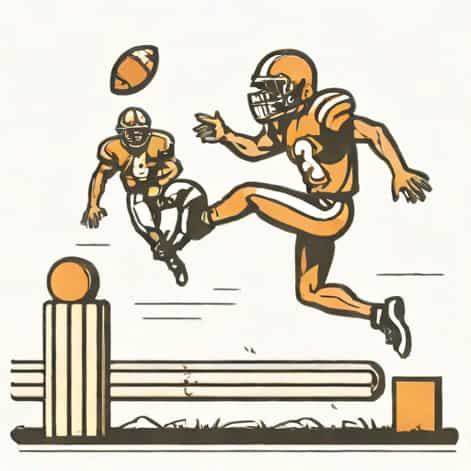
High school football is designed to be competitive, exciting, and educational, but above all, it prioritizes player safety. Fans who watch college or professional games sometimes notice dramatic plays where a ball carrier leaps over a defender. This often leads to a common question from players, parents, and spectators why is hurdling illegal in high school football? The answer involves safety concerns, developmental differences, and the educational mission of high school sports.
Understanding What Hurdling Means in Football
In football, hurdling refers to a ball carrier attempting to jump over a defender to avoid being tackled. This move usually happens when a defender is low to the ground, and the runner tries to leap forward instead of cutting to the side or lowering their shoulder.
While hurdling can look impressive, it also carries significant risks, especially at the high school level where players are still physically developing.
The Core Reason Player Safety
The main reason hurdling is illegal in high school football is safety. High school athletes vary widely in size, strength, and coordination. These differences increase the likelihood of serious injury during high-risk plays.
When a player attempts to hurdle, they place themselves in a vulnerable position midair, with limited control over how they land.
Risk of Head and Neck Injuries
One of the greatest dangers of hurdling is the risk of head and neck injuries. If a hurdling player is hit while airborne, they can be flipped or driven headfirst into the ground.
Such impacts significantly increase the chance of concussions, spinal injuries, and long-term neurological damage.
Danger to Both Players
The risk is not limited to the player attempting the hurdle. Defenders can also be injured if a hurdling player lands awkwardly on them or makes unexpected contact.
High school rules aim to protect everyone on the field, not just the ball carrier.
Differences Between High School and Higher Levels
Many people wonder why hurdling is allowed in college or professional football but illegal in high school football. The difference lies in the level of training, physical maturity, and medical support.
College and professional athletes typically have greater strength, balance, and body control, as well as immediate access to advanced medical care.
Physical Development Factors
High school players are still growing. Bones, muscles, and joints may not yet be fully developed, making them more susceptible to injury from falls and collisions.
Rules at the high school level are intentionally more restrictive to account for this developmental stage.
The Educational Purpose of High School Sports
High school football is part of an educational environment. The goal is not only to win games but also to teach teamwork, discipline, and safe athletic habits.
By banning hurdling, rule makers encourage players to use safer techniques such as cutting, stiff arms, or lowering the shoulder within legal limits.
How the Rule Is Defined and Enforced
In high school football, hurdling is typically defined as an attempt by a runner to jump over a player who is on their feet or attempting a tackle.
Officials are trained to watch for this action and penalize it consistently to discourage dangerous behavior.
Penalty for Hurdling
When hurdling occurs, the offense is usually penalized with a yardage penalty. The play may still count, but the penalty reinforces that the move is not allowed.
This enforcement helps coaches teach players what techniques are acceptable during competition.
Coaching and Player Responsibility
Coaches play a major role in reinforcing why hurdling is illegal in high school football. Proper tackling and running techniques are emphasized during practice.
Players are taught to protect themselves and others, understanding that flashy plays are not worth the risk of injury.
Teaching Safer Alternatives
Instead of hurdling, players are encouraged to
- Change direction quickly
- Use speed to outrun defenders
- Employ legal stiff-arm techniques
- Lower the center of gravity to absorb contact safely
These methods allow players to be effective without putting themselves in unnecessary danger.
Injury Statistics and Prevention
Football already carries inherent risks, and rule makers aim to reduce avoidable injuries. Studies and injury reports have shown that airborne collisions are more likely to result in severe trauma.
By eliminating hurdling, high school football reduces the number of unpredictable, high-impact situations.
Consistency Across Youth Football Levels
The ban on hurdling aligns high school football with youth football rules. Younger players are also prohibited from hurdling for similar safety reasons.
This consistency helps athletes develop good habits early, making the transition to higher levels safer and more structured.
Why the Rule Still Matters Today
As football evolves, safety remains a central concern. Advances in equipment and training have helped, but rules still play a critical role in injury prevention.
The continued prohibition of hurdling in high school football reflects a commitment to protecting student-athletes.
Common Misunderstandings About the Rule
Some people believe hurdling is banned simply to limit creativity or excitement. In reality, the rule exists because the risks outweigh the benefits at this level.
High school football focuses on fundamentals rather than highlight-reel plays.
Balancing Competition and Safety
Football will always involve physical contact, but rules help manage that contact responsibly. Preventing hurdling reduces one of the most dangerous scenarios on the field.
This balance allows players to compete hard while minimizing unnecessary harm.
Hurdling is illegal in high school football primarily because of safety concerns. The risk of serious injury to both the ball carrier and defenders is significantly higher when players leave their feet to jump over opponents.
By banning hurdling, high school football promotes safer play, supports athlete development, and aligns with the educational mission of school sports. The rule may limit dramatic moments, but it protects young athletes and ensures the game remains competitive, fair, and responsible.