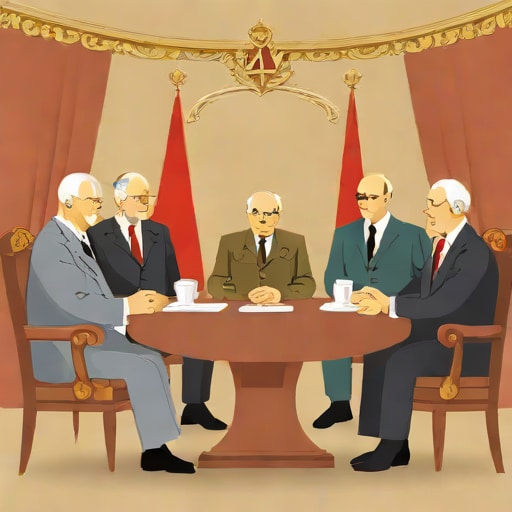
The Yalta Conference, held in February 1945, was one of the most significant meetings of World War II, bringing together the Allied leaders Franklin D. Roosevelt of the United States, Winston Churchill of the United Kingdom, and Joseph Stalin of the Soviet Union. Among the many critical decisions made during this historic summit, the topic of reparations was particularly crucial, as it would shape post-war Europe and the future of Germany. Reparations were intended to compensate nations devastated by the war for their losses and to prevent Germany from becoming a military threat again. The discussions at Yalta regarding reparations reflected the complex balance between political strategy, economic necessity, and the competing interests of the Allied powers. Understanding the context, agreements, and consequences of the reparations decisions at Yalta provides insight into the broader post-war reconstruction efforts and the onset of Cold War tensions.
Context of the Yalta Conference
The Yalta Conference took place near the end of World War II, at a time when the Allied forces were advancing toward victory in Europe. The devastation across the continent was immense, with entire cities destroyed, economies disrupted, and millions of people displaced. The leaders of the United States, the United Kingdom, and the Soviet Union recognized the urgent need to plan for post-war reconstruction. Reparations from Germany were a key element in these plans, aimed at compensating countries such as the Soviet Union, Poland, and France for the massive destruction they had endured. At the same time, the Allies had to balance reparations with the need to rebuild Germany as a stable and functioning state to prevent future conflict.
Objectives of the Reparations Discussion
- Compensate Allied nations for the economic and infrastructural damage caused by Germany.
- Prevent Germany from regaining military strength that could threaten Europe again.
- Establish a framework for post-war economic cooperation and reconstruction.
- Address the divergent interests of the Soviet Union, the United States, and the United Kingdom.
- Ensure long-term stability and peace in Europe through economic measures.
Agreements on Reparations
During the Yalta Conference, the Allied leaders reached preliminary agreements on the issue of reparations, though many details were deferred to subsequent meetings. The Soviet Union, having suffered the greatest losses in terms of human life and infrastructure, pressed for significant reparations from Germany. Stalin emphasized the need for compensation to rebuild the Soviet economy and recover from the war’s devastation. Roosevelt and Churchill, while recognizing the need for reparations, were also concerned about overburdening Germany economically, which could hinder post-war recovery and create political instability. As a result, the Yalta agreements represented a compromise that attempted to balance these competing priorities.
Key Points of the Reparations Agreement
- Germany would pay reparations in kind, including industrial equipment, machinery, and resources.
- The total reparations amount would be determined by the Allied Control Council, with input from all three major powers.
- Reparations would be shared among the Allied nations based on their needs and losses.
- Economic governance of Germany would be coordinated to prevent excessive economic strain.
- Further discussions were planned to address the specifics of how reparations would be implemented and monitored.
Implementation Challenges
Although agreements were reached at Yalta, the implementation of reparations proved to be complicated. Differences in interpretation, logistical challenges, and growing political tensions between the Soviet Union and Western Allies complicated the process. The Soviet Union prioritized extracting as much reparations as possible, while the United States and the United Kingdom were concerned about Germany’s economic capacity to pay without collapsing entirely. Additionally, disagreements arose over the proportion of reparations to be taken from the Western and Eastern zones of Germany, foreshadowing the division of Germany and the onset of the Cold War.
Economic and Political Implications
The reparations decisions had significant economic and political consequences. For the Soviet Union, reparations provided crucial resources to rebuild its devastated infrastructure and industry. In contrast, excessive extraction threatened Germany’s economic stability, which was necessary for the recovery of the broader European economy. These tensions influenced later agreements, such as the Potsdam Conference, and contributed to the eventual partitioning of Germany into East and West. The management of reparations also highlighted the competing visions for post-war Europe, with the Soviets emphasizing compensation and security, and the Western Allies focusing on economic recovery and political stability.
Impact on Post-War Europe
Reparations from Germany played a significant role in shaping post-war Europe. Countries that had suffered under Nazi occupation relied on reparations to rebuild infrastructure, revive industry, and support displaced populations. The Soviet Union, in particular, received substantial reparations from its occupation zone in Germany, including dismantled factories, machinery, and other industrial assets. In Western Europe, the flow of reparations was more limited, and economic recovery often relied on programs such as the Marshall Plan. The Yalta agreements laid the groundwork for these processes, although the practical implementation often diverged from the initial plans due to geopolitical tensions and logistical challenges.
Long-Term Consequences
- Contributed to the division of Germany into East and West and the creation of separate economic zones.
- Influenced the early dynamics of the Cold War between the Soviet Union and Western Allies.
- Shaped economic recovery strategies in both Eastern and Western Europe.
- Set precedents for international agreements on reparations and post-conflict reconstruction.
- Highlighted the difficulties of balancing justice, compensation, and economic stability in post-war planning.
Controversies and Criticism
The Yalta reparations agreements were not without controversy. Critics argue that the reparations policies disproportionately favored the Soviet Union, contributing to resentment in Western Europe and complicating Germany’s recovery. Some historians suggest that the focus on reparations delayed broader reconstruction efforts and exacerbated economic hardships in Germany. Furthermore, the lack of clear guidelines for enforcement and monitoring led to disputes between the Allies. These controversies underscore the complex interplay between political objectives and economic realities in post-war negotiations.
Debates Among Historians
- Extent to which reparations were necessary versus harmful to Germany’s economic recovery.
- The role of Yalta in setting the stage for Cold War tensions.
- Effectiveness of in-kind reparations compared to monetary compensation.
- Impact on European integration and economic cooperation in the long term.
- Lessons for post-conflict reconstruction in modern international policy.
The Yalta Conference reparations discussions were a crucial aspect of post-World War II planning, balancing the need for justice, economic recovery, and political stability. While agreements were reached to compensate the Allied nations and manage Germany’s economic output, implementation proved challenging due to differing national priorities and logistical difficulties. Reparations played a significant role in shaping post-war Europe, influencing both the division of Germany and the broader dynamics of the Cold War. Understanding the Yalta reparations agreements offers insight into the complexities of international negotiations, the balance of power, and the challenges of rebuilding nations after widespread devastation. The decisions made at Yalta continue to serve as a reference point for scholars studying the economic, political, and historical impacts of World War II and post-conflict reconstruction.