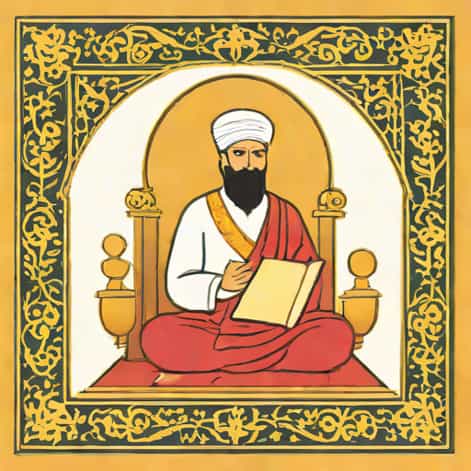
Ziyauddin Barani was a fourteenth century chronicler whose writings offer a detailed window into the political, social, and moral world of the Delhi Sultanate. Living during a time of intense court intrigue, shifting power, and administrative reform, Barani did more than simply record events. He reflected deeply on kingship, justice, religion, and society, making his works valuable not only as historical sources but also as expressions of medieval political thought. His observations continue to shape how historians understand medieval Indian history.
The Historical Context of Barani’s Life
Ziyauddin Barani lived during the reigns of several rulers of the Delhi Sultanate, most notably under Sultan Muhammad bin Tughlaq and Sultan Firuz Shah Tughlaq. The fourteenth century was a turbulent period marked by frequent rebellions, economic experiments, territorial expansion, and administrative challenges.
Barani belonged to a family with close ties to the ruling elite. This background gave him access to court life, royal debates, and official records. At the same time, it also exposed him to the dangers of political favor and disfavor, experiences that strongly influenced his writing.
Barani as a Chronicler
As a chronicler, Ziyauddin Barani combined factual narration with moral commentary. He did not see history as a neutral record of events. Instead, he believed that history should instruct rulers and society about proper conduct, justice, and religious duty.
Barani’s approach reflects the medieval Islamic tradition of historiography, where historians often acted as moral advisors as much as record keepers.
Tarikh-i-Firoz Shahi
Barani’s most famous work is theTarikh-i-Firoz Shahi, a historical chronicle that covers the reigns of several Delhi sultans, from Ghiyasuddin Tughlaq to Firuz Shah Tughlaq. This text is one of the most important sources for understanding the political history of the Delhi Sultanate.
In this work, Barani describes court politics, administrative decisions, military campaigns, and the personalities of rulers. His detailed accounts provide insights that are not available in many other sources.
Fatwa-i-Jahandari
Another major work by Ziyauddin Barani is theFatwa-i-Jahandari, which is not a narrative history but a treatise on political theory and governance. In this text, Barani discusses the qualities of an ideal ruler, the relationship between religion and state, and the moral responsibilities of kings.
This work reveals Barani’s belief that governance should be guided by Islamic principles and ethical discipline.
Views on Kingship and Governance
Ziyauddin Barani was deeply concerned with the nature of power. He believed that a ruler’s authority came with moral obligations, including justice, protection of religion, and care for social order.
Barani admired rulers who upheld religious values and criticized those who, in his view, deviated from Islamic norms. His praise and criticism were often shaped by his own moral framework rather than by modern ideas of neutrality.
The Ideal Ruler
According to Barani, an ideal ruler should be
- Just and fair in administration
- Firm in enforcing laws
- Supportive of religious scholars
- Protective of social hierarchy
These views reflect the intellectual climate of his time, when social order and religious authority were seen as closely connected.
Social Hierarchy and Barani’s Perspective
One of the most debated aspects of Ziyauddin Barani’s writing is his strong emphasis on social hierarchy. He believed that society should be organized according to inherited status and religious merit.
Barani was critical of social mobility, particularly when individuals from lower social backgrounds rose to high administrative positions. From a modern perspective, these views appear rigid and exclusionary, but they help historians understand elite attitudes in medieval India.
Relationship with the Tughlaq Rulers
Barani’s relationship with the rulers he wrote about was complex. He enjoyed periods of favor at court but also experienced hardship and neglect. Under Muhammad bin Tughlaq, Barani witnessed bold but controversial policies, including currency reforms and forced population transfers.
Although Barani admired intellectual ambition, he criticized what he saw as impractical or unjust decisions. Later in life, under Firuz Shah Tughlaq, Barani’s fortunes declined, and he lived in relative poverty. This personal experience influenced the tone of his later reflections.
Reliability and Bias in Barani’s Work
Modern historians value Ziyauddin Barani as a primary source, but they also approach his work with caution. Like all chroniclers, Barani wrote from a particular social and ideological position.
His loyalty to elite values, religious conservatism, and personal experiences shaped his interpretations. While his factual details are often reliable, his judgments and explanations reflect his own worldview.
Why Barani Still Matters Today
Ziyauddin Barani was a fourteenth century chronicler whose influence extends far beyond his lifetime. His writings are essential for understanding the political culture of the Delhi Sultanate and the intellectual traditions of medieval Islamic history.
Barani helps historians explore questions such as
- How medieval rulers justified their authority
- How religion influenced governance
- How historians balanced fact and moral judgment
His work also encourages readers to think critically about how history is written and whose perspectives are preserved.
Barani’s Language and Style
Barani wrote in Persian, the administrative and literary language of the Delhi Sultanate. His writing style is formal, reflective, and often moralistic. He uses anecdotes and examples to illustrate broader principles, making his texts both descriptive and didactic.
This combination of narrative and analysis makes his work rich but also challenging to interpret without historical context.
Legacy in Indian Historiography
For students and scholars of medieval India, Ziyauddin Barani remains a central figure. His chronicles are frequently cited in textbooks, academic research, and historical debates.
Even when historians disagree with his views, they rely on his detailed observations to reconstruct the political and social realities of the fourteenth century.
Ziyauddin Barani was a fourteenth century chronicler whose writings offer a rare and detailed insight into the Delhi Sultanate. Through works likeTarikh-i-Firoz ShahiandFatwa-i-Jahandari, he documented events while also expressing strong ideas about power, morality, and social order. Although his perspectives reflect the biases of his time, his contributions remain invaluable for understanding medieval Indian history and the complex relationship between history, ideology, and governance.