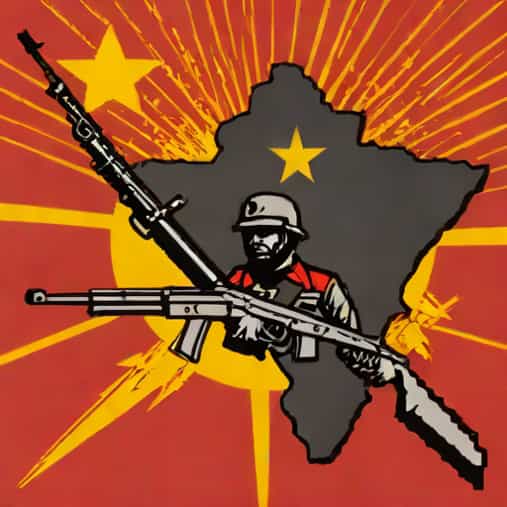
The Angolan War of Independence was one of the most significant struggles in Africa’s history during the 20th century. Spanning from 1961 to 1974, it marked the beginning of the end of Portuguese colonial rule in Angola. The conflict not only reshaped Angola’s political future but also had lasting effects on southern Africa’s regional stability. The war was complex, involving multiple liberation movements, foreign influences, and deep ideological divisions that eventually set the stage for another devastating period the Angolan Civil War. To understand modern Angola, it is essential to examine the roots, key events, and consequences of its fight for independence.
Background and Colonial Context
Angola had been under Portuguese control since the late 15th century, when explorers first established trading posts along the coast. Over the centuries, Portuguese colonization deepened, focusing heavily on resource extraction, plantation agriculture, and forced labor. By the 20th century, Angola had become one of Portugal’s most valuable African territories, rich in oil, diamonds, and fertile land.
Despite its economic potential, Angolans lived under strict colonial rule with limited rights. The Portuguese government maintained tight political and social control, often using violence to suppress dissent. Indigenous populations were exploited through forced labor systems, and racial discrimination was institutionalized. Education was restricted, leaving many Angolans illiterate and economically dependent on the colonial system.
Rise of Nationalism
After World War II, nationalist movements across Africa began to challenge European colonial powers. In Angola, young intellectuals and activists who had studied abroad were inspired by the ideas of self-determination and socialism. By the 1950s, several nationalist organizations had formed with the shared goal of ending Portuguese rule but differing visions of how to achieve it.
- MPLA (Popular Movement for the Liberation of Angola)Founded in 1956, it was largely urban-based and supported by Marxist and socialist ideologies. It drew support from the Mbundu ethnic group and intellectuals in Luanda.
- FNLA (National Front for the Liberation of Angola)Established in 1961, it was rooted in the Bakongo ethnic group in the north and had backing from neighboring Congo (Kinshasa).
- UNITA (National Union for the Total Independence of Angola)Formed later in 1966 under Jonas Savimbi, UNITA sought to represent the Ovimbundu people and adopted a more rural and nationalist approach.
These groups shared the desire for independence but differed in ideology, ethnicity, and foreign alliances. This division would later complicate Angola’s path to peace even after the Portuguese departed.
Outbreak of the War in 1961
The Angolan War of Independence officially began in 1961 when nationalist groups launched coordinated attacks against Portuguese colonial forces and settlers. The first major uprising occurred in the cotton-growing region of Baixa de Cassanje, where forced laborers rebelled against brutal working conditions. Portuguese troops responded with airstrikes, killing thousands of civilians and sparking further resistance.
Shortly afterward, the FNLA initiated attacks in northern Angola, targeting Portuguese plantations and administrative posts. The Portuguese military retaliated harshly, leading to widespread destruction and the displacement of many Angolans. These events drew international attention and marked the start of a prolonged and violent conflict.
Portuguese Response
Portugal, under the authoritarian Estado Novo regime led by António de Oliveira Salazar, refused to recognize Angola’s independence movement. The government considered Angola not a colony but an integral part of Portugal. As a result, Lisbon deployed tens of thousands of troops to suppress the rebellion, beginning what would become a long and costly counterinsurgency campaign.
Portugal relied on conventional military power, air support, and local militias to maintain control over major cities and resource areas. However, it struggled to eliminate guerrilla warfare in rural regions, where nationalist forces enjoyed strong local support and knowledge of the terrain.
Foreign Involvement and Cold War Dynamics
The Angolan War of Independence unfolded during the height of the Cold War, and international interests quickly shaped the conflict. Each of Angola’s main liberation movements found support from different global powers, transforming the independence struggle into a proxy battleground for larger ideological conflicts.
- TheMPLAreceived aid and training from the Soviet Union, Cuba, and other socialist countries.
- TheFNLAwas backed by the United States, Western allies, and neighboring Congo, which provided logistical bases.
- TheUNITAlater gained support from China and, eventually, from anti-communist blocs during the civil war that followed independence.
This international dimension gave the Angolan conflict more firepower and resources, but it also deepened internal divisions. The liberation struggle became not only a war against colonial rule but also an ideological competition influenced by foreign agendas.
Guerrilla Warfare and Civilian Impact
Most of the fighting during the Angolan War of Independence took place in rural and remote areas. Guerrilla fighters used hit-and-run tactics, sabotage, and ambushes to disrupt Portuguese supply lines and communication. In response, the Portuguese military carried out large-scale counterinsurgency operations, often targeting villages suspected of aiding rebels.
Civilians bore the brunt of the violence. Entire communities were displaced, agricultural production collapsed, and thousands of Angolans fled to neighboring countries as refugees. The war created deep social scars and economic devastation that would take decades to heal.
The Fall of Portuguese Rule
By the early 1970s, the Portuguese government was facing increasing international pressure and growing discontent at home. The cost of maintaining colonial wars in Angola, Mozambique, and Guinea-Bissau had become unsustainable. Young Portuguese soldiers were dying in foreign lands, and the economy was suffering.
In April 1974, a military coup in Portugal known as the Carnation Revolution overthrew the dictatorship. The new government immediately began to dismantle its colonial empire, promising independence to its African territories. For Angola, this marked a turning point the long fight against Portuguese rule was finally coming to an end.
Transition to Independence
After the revolution, negotiations began between the Portuguese government and Angola’s liberation movements. The Alvor Agreement, signed in January 1975, established a framework for power-sharing and a path toward full independence later that year. However, deep mistrust between the MPLA, FNLA, and UNITA quickly turned into open conflict even before the Portuguese withdrawal was complete.
When Portugal officially granted Angola independence on November 11, 1975, the country immediately descended into civil war. The rival factions that had once fought side by side against colonialism now battled for control of the new nation, drawing in international powers once again.
Legacy and Significance
The Angolan War of Independence left a lasting legacy on both Angola and the broader African continent. It symbolized the determination of African nations to end colonial domination and assert self-rule. However, it also revealed the challenges of nation-building in a landscape divided by ethnicity, ideology, and foreign intervention.
For Angola, independence came at a tremendous cost. The infrastructure was destroyed, communities were fragmented, and decades of war had crippled the economy. The civil war that followed lasted until 2002, making it one of Africa’s longest and most devastating conflicts. Yet, despite this painful history, Angola’s independence in 1975 remains a proud milestone one that marked the beginning of a new, though difficult, chapter in the country’s history.
The Angolan War of Independence was not merely a rebellion against colonialism it was a complex, multifaceted struggle influenced by global politics and internal divisions. From the first uprisings in 1961 to the eventual collapse of Portuguese rule in 1974, the war demonstrated the resilience and determination of the Angolan people. Though independence did not immediately bring peace, it laid the foundation for the nation’s sovereignty and identity. Today, Angola’s story serves as both a warning and an inspiration a reminder of how the pursuit of freedom can shape generations and redefine a nation’s destiny.