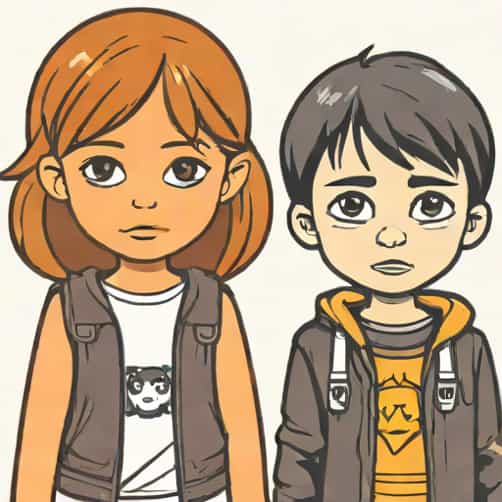
Children of Anguish and Anarchy continues the epic fantasy journey that centers on Zelie Adebola and Prince Inan, two characters shaped by trauma, power, and impossible choices. Set in a world struggling to rebuild after violence and oppression, the story explores how grief and chaos do not disappear after a revolution, but instead transform into new challenges. Through Zelie and Inan, the narrative examines identity, responsibility, and the cost of wielding power in a fractured society.
The World of Anguish and Anarchy
The setting of Children of Anguish and Anarchy is defined by instability. Although magic has returned, peace has not followed. The land is caught between hope and destruction, with communities divided by fear, memory, and unresolved injustice.
Anarchy in this world is not only political but emotional. Old systems have fallen, yet new ones are fragile. Ordinary people live with the consequences of decisions made by leaders, rebels, and warriors.
Zelie as the Emotional Core of the Story
Zelie remains the heart of the narrative. She carries the pain of loss, the burden of leadership, and the expectations of an entire people. Her journey in Children of Anguish and Anarchy is less about discovering power and more about surviving its weight.
Unlike earlier stages of her story, Zelie now understands what her magic can do, and that knowledge brings fear alongside strength.
Zelie’s Inner Conflict
Zelie struggles with anger, guilt, and responsibility. Every choice she makes affects others, and the cost of mistakes is painfully clear.
- She fears becoming what she once fought against
- She questions whether violence can ever lead to justice
- She wrestles with grief that never fully fades
Inan’s Journey Through Darkness
Prince Inan is one of the most complex figures in Children of Anguish and Anarchy. Torn between loyalty, fear, and desire, he represents the consequences of moral compromise.
Inan is neither a simple villain nor a traditional hero. His struggle is deeply psychological, shaped by trauma and the pressure of legacy.
Power and Fear in Inan’s Story
Inan’s relationship with power is rooted in fear. He fears magic, chaos, and losing control, yet he is also drawn to strength as a means of protection.
This contradiction drives many of his decisions and places him in constant conflict with Zelie and himself.
The Relationship Between Zelie and Inan
The connection between Zelie and Inan is one of the most emotionally charged elements of the story. It is shaped by betrayal, attraction, shared pain, and opposing ideals.
Children of Anguish and Anarchy does not present their relationship as romantic simplicity, but as a complex bond influenced by history and trauma.
Tension, Trust, and Betrayal
- They understand each other’s pain more than anyone else
- They stand on opposite sides of power and ideology
- Trust is fragile and easily broken
Anguish as a Central Theme
Anguish in the story is not limited to individual suffering. It is collective, passed down through generations affected by violence and oppression.
Children of Anguish and Anarchy shows how unresolved pain fuels conflict, making healing difficult in a world that demands constant survival.
Anarchy Beyond Rebellion
Anarchy in the novel is not portrayed as mindless chaos. Instead, it represents what happens when systems collapse without clear alternatives.
Power vacuums invite new forms of control, often just as dangerous as the old ones. Zelie and Inan both navigate this reality from different positions.
Magic as a Reflection of Identity
Magic in Children of Anguish and Anarchy is closely tied to identity. It reflects fear, hope, rage, and love. For Zelie, magic is both a gift and a burden.
For Inan, magic represents loss of control and the unraveling of order.
The Cost of Using Power
The story repeatedly emphasizes that power always demands payment.
- Physical exhaustion
- Emotional sacrifice
- Moral compromise
Leadership and Moral Responsibility
Both Zelie and Inan are forced into leadership roles they never truly wanted. Their decisions shape the future of their people.
Children of Anguish and Anarchy asks whether good intentions are enough, or whether leadership inevitably requires moral sacrifice.
The Role of Trauma in Shaping Choices
Trauma influences nearly every character’s actions. Instead of being treated as a background detail, it actively shapes motivations and reactions.
Zelie’s trauma pushes her toward fierce protection, while Inan’s trauma drives his need for control.
Identity in a Broken World
Identity in the story is fluid and contested. Characters are constantly redefining themselves as circumstances change.
Zelie is no longer just a fighter; she is a symbol. Inan is no longer just a prince; he is a product of fear and expectation.
Hope Amid Destruction
Despite its heavy themes, Children of Anguish and Anarchy does not abandon hope. Hope exists in small acts of kindness, moments of understanding, and the refusal to surrender humanity.
Zelie’s persistence and Inan’s moments of doubt both suggest that change, while painful, remains possible.
The Meaning of Justice
The story challenges simple definitions of justice. Revenge and justice are often blurred, forcing characters to confront the consequences of their desires.
Children of Anguish and Anarchy asks whether justice can exist without forgiveness, and whether forgiveness is always deserved.
Why Zelie and Inan Matter
Zelie and Inan represent two paths shaped by the same broken world. One seeks change through resistance, the other through control.
Their conflict highlights how similar pain can lead to radically different responses.
Lasting Impact of the Story
Children of Anguish and Anarchy leaves readers reflecting on power, trauma, and the cost of survival. Zelie and Inan are not symbols of perfection, but of struggle.
Their stories resonate because they reflect real questions about leadership, identity, and what it means to rebuild after devastation.
Final Reflections
Children of Anguish and Anarchy uses Zelie and Inan to explore a world where victory does not erase pain and freedom does not guarantee peace. Through rich emotional depth and moral complexity, the story examines how individuals shaped by suffering choose their paths.
In a land caught between anguish and anarchy, Zelie and Inan stand as reminders that the hardest battles are often fought within.