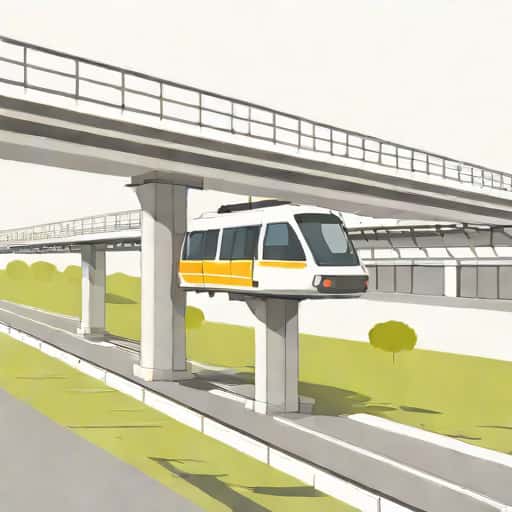
The concept of an elevated trackless rapid transit system represents a transformative approach to urban transportation, combining the efficiency and speed of rail transit with the flexibility and lower infrastructure costs of buses. Unlike traditional rail-based systems, this innovative mode of transit does not rely on physical tracks, allowing vehicles to operate on elevated guideways or dedicated lanes with automated or semi-automated guidance systems. Cities around the world are exploring elevated trackless rapid transit systems to address growing traffic congestion, reduce travel times, and provide sustainable mobility solutions in densely populated urban areas. This technology integrates advanced vehicle control, energy-efficient propulsion, and smart infrastructure, aiming to enhance commuter experience while minimizing environmental impact. With urban populations expanding rapidly, elevated trackless rapid transit systems are poised to become a crucial component of modern public transportation networks, offering a viable alternative to conventional metro systems.
Overview of Elevated Trackless Rapid Transit
Elevated trackless rapid transit systems combine elements of bus rapid transit (BRT) and light rail transit, creating a hybrid solution that can operate above ground without the need for rails. These systems typically consist of articulated, electric-powered vehicles running on elevated guideways or pre-marked lanes, often using sensors, GPS, or automated guidance technology to maintain alignment and safety. By operating above existing roadways or dedicated corridors, elevated trackless systems reduce interference with street-level traffic, allowing for faster and more reliable transit services. This mode of transportation can be deployed more quickly and at a lower cost than traditional metro or monorail systems, making it attractive to cities seeking efficient, scalable solutions to urban mobility challenges.
Key Features
- Electric or hybrid-powered vehicles that reduce emissions and energy consumption.
- Elevated guideways or dedicated lanes that ensure consistent travel speeds and avoid congestion.
- Automated or semi-automated guidance systems for precise navigation and improved safety.
- Flexible deployment, allowing integration with existing transit infrastructure and road networks.
- Enhanced passenger experience through comfortable interiors, real-time information systems, and frequent service intervals.
Advantages of Elevated Trackless Rapid Transit
One of the main advantages of an elevated trackless rapid transit system is its cost-effectiveness compared to traditional rail-based metros. Without the need for rails or extensive tunneling, construction costs are significantly lower, and projects can be completed more quickly. Additionally, elevated trackless systems are highly adaptable, capable of navigating curves and gradients that might be challenging for conventional rail vehicles. This flexibility allows cities to implement rapid transit solutions in areas with complex urban landscapes or limited space for rail infrastructure.
Environmental and Social Benefits
Elevated trackless rapid transit systems contribute to sustainable urban development by reducing greenhouse gas emissions, noise pollution, and dependency on private vehicles. Electric-powered vehicles reduce the carbon footprint of public transportation, while elevated routes free up street-level space for pedestrians, cyclists, and other urban activities. Socially, these systems improve accessibility, connecting underserved neighborhoods to commercial centers, education hubs, and healthcare facilities, thereby enhancing social inclusion and economic opportunities for residents.
Design and Infrastructure
The design of an elevated trackless rapid transit system involves several critical components, including vehicles, guideways, stations, and control systems. Vehicles are typically articulated to accommodate high passenger volumes and equipped with advanced suspension systems for smooth operation. Elevated guideways can be prefabricated or modular, allowing for faster construction with minimal disruption to urban areas. Stations are strategically placed to ensure accessibility and connectivity, featuring amenities such as escalators, elevators, ticketing systems, and real-time passenger information displays.
Vehicle Technology
Vehicles used in elevated trackless rapid transit systems are usually electric or hybrid, powered by batteries or overhead catenary lines. They often include automated guidance technology, such as LIDAR, GPS, or magnetic sensors, which help maintain precise alignment on the guideway. Some systems are capable of driverless operation, enhancing efficiency and reducing operational costs. Vehicles are designed for comfort, with wide doors for quick boarding, low floors for accessibility, and air-conditioned interiors to improve the overall commuter experience.
Operational Efficiency
Elevated trackless rapid transit systems offer high operational efficiency by maintaining consistent travel speeds and reducing delays caused by congestion. Dedicated elevated lanes or guideways allow vehicles to bypass traffic intersections, ensuring punctuality and reliability. Automated scheduling and real-time monitoring enable transit operators to optimize service frequency based on demand, minimizing wait times and improving passenger satisfaction. Integration with other modes of public transport, such as buses and conventional metro systems, further enhances efficiency by providing seamless intermodal transfers.
Safety and Reliability
Safety is a primary consideration in elevated trackless rapid transit systems. Elevated guideways reduce the risk of collisions with road traffic, while automated control systems monitor vehicle speed, spacing, and alignment to prevent accidents. Emergency response protocols and redundant safety mechanisms are incorporated into vehicle and infrastructure design, ensuring reliable operation even under adverse conditions. Additionally, stations and boarding areas are designed to minimize crowding and facilitate smooth passenger flow, enhancing both safety and convenience.
Economic Impact
Investing in elevated trackless rapid transit systems generates significant economic benefits for cities. Construction projects create jobs and stimulate local industries, while improved mobility enhances access to employment, education, and commercial opportunities. Reliable and efficient transit systems can also increase property values along the transit corridors, attract investments, and reduce costs associated with traffic congestion, such as fuel consumption and lost productivity. Overall, elevated trackless rapid transit contributes to a more competitive, livable, and economically vibrant urban environment.
Challenges and Considerations
Despite the many advantages, implementing elevated trackless rapid transit systems presents certain challenges. Initial planning requires careful route selection to minimize environmental and social impacts, while the construction of elevated guideways must account for urban density, underground utilities, and existing infrastructure. Operational considerations include energy supply for electric vehicles, integration with other transit networks, and maintenance of automated systems. Public acceptance and adaptation to a new mode of transit may also require education and awareness campaigns.
Global Examples and Case Studies
Several cities around the world are exploring or implementing elevated trackless rapid transit systems as part of their urban mobility strategies. In China, trackless tram systems have been successfully deployed in cities like Zhuzhou, demonstrating cost-effective, high-capacity solutions that complement existing metro networks. Other cities in Asia, Europe, and the Middle East are conducting feasibility studies to integrate elevated trackless rapid transit with bus rapid transit and light rail systems, aiming to enhance urban connectivity, reduce traffic congestion, and promote sustainable transportation options.
Future Prospects
The future of elevated trackless rapid transit is promising, with ongoing technological advancements improving vehicle efficiency, automation, and passenger experience. Innovations in battery technology, smart infrastructure, and digital mobility platforms will further enhance system performance and reduce operational costs. As urban populations continue to grow, the demand for flexible, efficient, and environmentally friendly transit solutions is likely to increase, positioning elevated trackless rapid transit as a key component of sustainable urban transportation planning worldwide.
Elevated trackless rapid transit systems represent a forward-looking solution to modern urban mobility challenges. By combining the speed and efficiency of rail with the flexibility and lower cost of buses, these systems offer a sustainable and adaptable mode of transportation for rapidly growing cities. With benefits including reduced congestion, lower emissions, improved accessibility, and economic growth, elevated trackless rapid transit is set to play an increasingly important role in shaping the future of urban transportation. Through careful planning, investment, and technological innovation, cities can leverage this innovative system to create safer, faster, and more sustainable transit networks that meet the needs of residents and support long-term urban development goals.