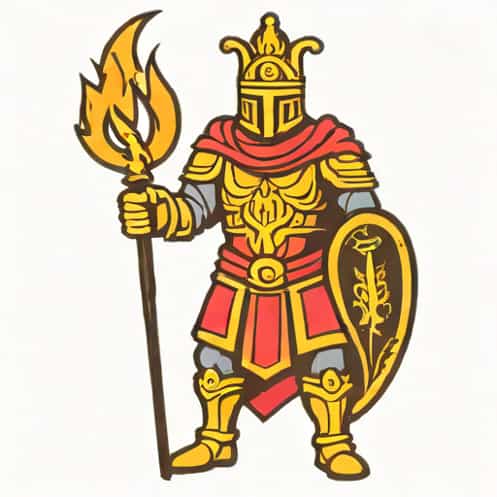
Across cultures and centuries, the image of a god of fire who forges armor has captured the human imagination. Fire represents transformation, destruction, and creation all at once, while armor symbolizes protection, strength, and survival. When these ideas come together, they form a powerful archetype a divine smith who shapes metal with flame and grants warriors the tools to face chaos. The concept of a god of fire, forger of armor, appears in many mythological traditions and continues to influence modern storytelling.
The Symbolism of Fire in Mythology
Fire has always held a special place in human belief systems. It provides warmth, light, and the ability to shape raw materials, yet it can also destroy entire cities. In mythology, fire is often associated with divine power and sacred knowledge.
A god of fire is not merely a destructive force. Instead, fire becomes a tool of refinement. Through fire, impurities are burned away, and something stronger emerges. This symbolism fits naturally with the idea of forging armor, where intense heat transforms raw metal into protective gear.
Fire as Transformation
In many myths, fire represents change. When a god uses fire to forge armor, it reflects the idea that strength is born through struggle and endurance.
This process mirrors human experience, where hardship often leads to growth and resilience.
The Divine Blacksmith Archetype
The god of fire as a forger of armor is closely related to the archetype of the divine blacksmith. This figure appears in multiple mythologies, each with unique traits but shared themes.
The divine blacksmith is usually portrayed as a master craftsman, working in a forge fueled by sacred fire. The weapons and armor created are not ordinary objects, but artifacts infused with divine power.
Craftsmanship and Wisdom
Unlike gods who rule through authority or brute force, the forger god rules through skill and knowledge. Craftsmanship requires patience, precision, and deep understanding of materials.
This suggests that true strength comes not only from power, but from wisdom and discipline.
Examples from Different Mythologies
The idea of a god of fire who forges armor is not limited to one culture. Similar figures appear across the world, each reflecting local values and beliefs.
Greek Mythology
In Greek mythology, Hephaestus is the god of fire, metalworking, and craftsmanship. He is known as the divine blacksmith of the gods.
Hephaestus forged armor and weapons for Olympian gods and heroes, including legendary protective gear. His forge, often associated with volcanoes, symbolizes the raw power of fire harnessed for creation.
Norse Mythology
While Norse mythology does not feature a single god of fire as a blacksmith, fire and forging play important roles through dwarven smiths and divine influence.
The gods often relied on forged armor and weapons created in fiery forges, reinforcing the connection between fire, craftsmanship, and protection.
Hindu Mythology
In Hindu tradition, Agni is the god of fire and serves as a divine messenger between gods and humans. While not primarily an armor forger, Agni’s association with transformation and ritual fire links him to creation and refinement.
Fire in this context purifies and strengthens, echoing the same symbolic meaning found in forging armor.
Other Cultural Traditions
Many indigenous and ancient cultures tell stories of fire spirits or gods who taught humans how to work metal. These figures often occupy a sacred role, bridging the divine and mortal worlds.
The recurring theme suggests a universal respect for the power of fire and craftsmanship.
Armor as a Symbol of Protection and Identity
Armor in mythology is rarely just physical protection. It often represents identity, destiny, and divine favor.
When a god of fire forges armor, the act is deeply symbolic. The armor carries the essence of the god’s power, offering not only defense but also legitimacy and purpose to its wearer.
Armor Forged by Fire
Armor shaped in divine fire is typically portrayed as unbreakable or enchanted. It can protect against both physical and supernatural threats.
This reinforces the idea that true protection comes from something greater than human effort alone.
A Test of Worthiness
In many myths, not everyone is allowed to wear divine armor. The armor often chooses its bearer or is granted only after trials.
This suggests that protection and strength must be earned through courage, integrity, or sacrifice.
The God of Fire as Creator, Not Destroyer
Although fire is often feared, the god of fire as a forger of armor highlights its creative aspect. This god does not merely burn, but builds.
Through controlled flame, chaos is transformed into order, and vulnerability becomes strength.
Balance Between Destruction and Creation
Fire’s dual nature reflects the balance that the forger god must maintain. Too much fire destroys; too little fails to shape.
This balance mirrors the human need for discipline in power and emotion.
Modern Interpretations in Fantasy and Media
The concept of a god of fire forger of armor remains popular in modern fantasy literature, games, and films. Many fictional worlds include fire deities or legendary smiths inspired by ancient myths.
These modern interpretations often emphasize the emotional depth of the forger, portraying them as solitary figures burdened by responsibility.
Fire Gods in Fantasy Worlds
In fantasy stories, fire gods are often portrayed as guardians of ancient knowledge. Their forges produce legendary armor that can turn the tide of war.
These stories draw directly from mythological roots, adapting them to new narratives.
Symbolism for Modern Audiences
For modern audiences, the god of fire forger of armor represents inner strength and resilience. The forge becomes a metaphor for personal growth.
Challenges are the fire, and character is the armor that emerges.
Spiritual and Psychological Meaning
Beyond mythology, the idea of a god of fire forging armor carries psychological and spiritual meaning. It reflects the belief that adversity shapes strength.
The divine forger represents a guiding force that helps individuals endure hardship and emerge stronger.
The Inner Forge
Many people interpret this archetype as a symbol of inner transformation. Life’s struggles act as fire, shaping resilience and wisdom.
The armor forged is confidence, patience, and moral strength.
Why This Archetype Endures
The enduring appeal of the god of fire forger of armor lies in its universal message. Everyone faces moments of vulnerability and fear.
The idea that strength can be forged through challenge offers hope and meaning.
-
Fire represents challenge and transformation
-
Armor symbolizes protection and identity
-
The forger god embodies wisdom and discipline
-
The process reflects personal growth
The god of fire forger of armor is a powerful and timeless figure found across mythologies and modern stories. This archetype combines the raw power of fire with the skill of craftsmanship, symbolizing transformation, protection, and resilience. Whether viewed through ancient myths or modern interpretations, the image of divine armor forged in sacred flame continues to inspire. It reminds us that strength is not given lightly, but shaped through fire, patience, and purpose.