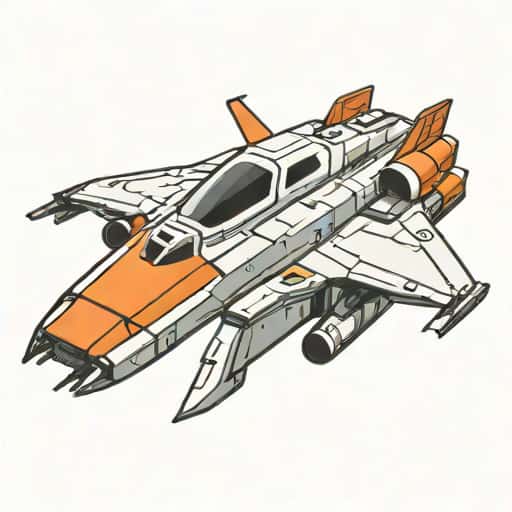
Star Citizen is one of the most ambitious video game projects in history, promising an expansive universe, realistic space simulation, and a dynamic online multiplayer experience. Since its announcement and crowdfunding campaign in 2012, Star Citizen has captured the attention of gamers worldwide. However, despite over a decade of development and billions of dollars raised from backers, the game remains in an alpha stage, with many promised features yet to be fully implemented. This prolonged development has led to frequent debates and questions about whether Star Citizen qualifies as vaporware, a term often used to describe software that is announced but never completed or released. Understanding the history, development challenges, and current state of Star Citizen helps clarify why this question persists and what it means for the gaming community.
What is Vaporware?
Vaporware is a term used to describe software or hardware projects that are announced to the public but experience extensive delays or never reach a full release. The term implies that the product exists more in concept than in reality, leaving consumers and investors waiting indefinitely. Vaporware can arise from technical challenges, funding issues, or overly ambitious project goals. In the gaming industry, several high-profile titles have been labeled vaporware over the years due to missed release dates or failure to deliver promised features, making the term highly relevant in discussions about Star Citizen.
Origins of Star Citizen
Star Citizen was created by Chris Roberts, a veteran game designer known for the Wing Commander series. The project was first announced in 2012 through a crowdfunding campaign on Kickstarter, raising nearly $2 million in its initial days and eventually collecting over $400 million from backers through ongoing crowdfunding efforts. The game was intended to combine space exploration, trading, combat, and social interaction in a single persistent universe. From the start, the project set ambitious goals, promising high-fidelity graphics, complex physics, and deep gameplay systems that would set a new standard in the space simulation genre.
Why Star Citizen is Considered Ambitious
Several factors contribute to Star Citizen’s reputation as an ambitious project
- ScaleThe game promises an open universe with hundreds of star systems, planets, and space stations to explore.
- DetailAdvanced graphics, realistic ship physics, and complex gameplay mechanics are key selling points.
- Multiplayer IntegrationA massive persistent universe where thousands of players can interact in real-time.
- Modular DevelopmentThe game consists of multiple modules like Arena Commander, Star Marine, and Squadron 42, each with distinct gameplay features.
The scale and complexity of Star Citizen make it inherently difficult to develop, contributing to delays and ongoing debates about whether it can ever fully meet its promises.
Development Challenges
Several development challenges have contributed to the perception of Star Citizen as vaporware
- Scope CreepContinuous additions of features and systems have extended development timelines significantly.
- Technical ComplexityImplementing realistic physics, AI, and multiplayer functionality simultaneously has proven to be extraordinarily challenging.
- Funding ModelReliance on ongoing crowdfunding creates expectations and pressure to constantly demonstrate progress while still building the game.
- Transparency and CommunicationRegularly sharing development updates keeps backers informed but also exposes delays and missed milestones.
Arguments for Star Citizen as Vaporware
Critics argue that Star Citizen exhibits several characteristics of vaporware
- Over a decade of development with no final release of the full game.
- Promised features, such as large-scale multiplayer environments and deep narrative campaigns, remain incomplete or in alpha testing.
- Frequent changes to the project scope and delays in release schedules, creating skepticism among backers and the gaming community.
- High funding levels without a corresponding delivery of a complete product, raising concerns about sustainability and feasibility.
These factors lead some to label Star Citizen as vaporware, suggesting that despite its ongoing development, the project may never achieve the original vision promised to backers.
Arguments Against Labeling Star Citizen as Vaporware
Supporters and analysts offer counterarguments to the vaporware label
- The game is actively in development, with regular updates, playable modules, and a dedicated development team.
- Squadron 42, the single-player campaign, is in advanced development, and some parts are already playable in alpha versions.
- The continuous funding allows for a larger development team and ambitious features that would be impossible under a traditional publisher model.
- Many backers enjoy the current alpha and beta experiences, indicating that the project provides tangible value even before full release.
Proponents argue that labeling Star Citizen as vaporware overlooks the ongoing progress, incremental releases, and real playable content that has been delivered to backers over the years.
The Role of Backers and Community
Star Citizen’s development relies heavily on its community of backers, who contribute significant funding and provide feedback on ongoing updates. This model is unusual in the gaming industry, where most projects are financed by publishers with fixed budgets and deadlines. The close relationship between developers and backers has allowed the game to evolve in response to player input, but it also contributes to expectations that make delays more visible. The community’s engagement has both supported development and fueled debates about vaporware, as the project’s ambitious goals clash with the reality of long development timelines.
Impact on the Gaming Industry
Star Citizen has influenced how crowdfunding and ambitious game projects are perceived in the industry. Its extended development highlights both the potential and the risks of crowdfunded gaming projects. On one hand, it demonstrates that fans can fund large-scale projects directly and enjoy early access content. On the other hand, it raises questions about accountability, delivery timelines, and the feasibility of promises made to backers. These lessons are relevant for both developers and consumers in the modern gaming landscape.
Whether Star Citizen is vaporware depends on how the term is defined and the perspective of the observer. Critics point to the prolonged development, incomplete features, and ambitious promises as evidence that the game may never fully materialize as intended. Supporters emphasize the ongoing development, playable content, and transparency in updates as proof that the project is alive and progressing. What is clear is that Star Citizen represents one of the most ambitious and high-profile game projects ever undertaken. It has redefined expectations for crowdfunding, community engagement, and space simulation games. Regardless of whether it is labeled vaporware, Star Citizen continues to be a major topic of discussion in the gaming world, illustrating the challenges of turning ambitious visions into reality while maintaining public trust and delivering on promises.