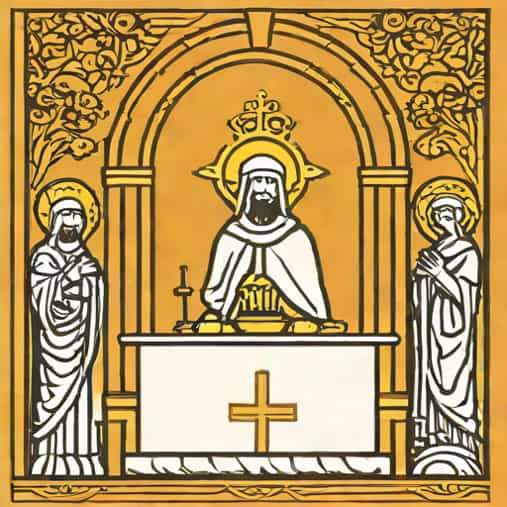
The Latin Mass, also known as the Traditional Latin Mass or the Extraordinary Form of the Roman Rite, has a rich liturgical history that dates back centuries. One of the questions that often arises among the faithful and those exploring this form of worship is whether there is a homily included in the Latin Mass. Understanding the role of the homily in the context of the Latin Mass requires exploring the structure of the Mass, the historical development of the liturgy, and the distinctions between the Ordinary Form and the Extraordinary Form. This examination sheds light on how preaching is integrated into worship and how it differs between Latin and vernacular celebrations of the Mass.
The Structure of the Latin Mass
The Traditional Latin Mass follows a highly structured liturgy, often referred to as the Tridentine Mass, codified after the Council of Trent in the 16th century. The Mass is divided into two main parts the Mass of the Catechumens (the Liturgy of the Word) and the Mass of the Faithful (the Liturgy of the Eucharist). Each section has specific prayers, readings, and rituals conducted in Latin. The emphasis is on reverence, solemnity, and continuity with the historic Church.
Liturgy of the Word
The Liturgy of the Word in the Latin Mass includes readings from Scripture, typically one from the Epistles and one from the Gospels. These readings are traditionally read in Latin, and the congregation listens or follows along in missals. The focus is on contemplation of God’s Word, and it serves as preparation for the Eucharist that follows.
Liturgy of the Eucharist
After the readings and the Offertory, the Mass continues with the Liturgy of the Eucharist. This portion includes the Canon of the Mass, prayers, the consecration of the bread and wine, and the distribution of Holy Communion. The ritual is performed with precise gestures, chant, and Latin prayers, emphasizing the sacramental and mystical aspects of the Mass.
The Homily in the Latin Mass
Yes, there is a homily in the Latin Mass, but its presence and placement can vary depending on the specific celebration. The homily, or sermon, is a short teaching or reflection given by the priest after the Gospel reading. Its purpose is to explain the Scripture readings, provide spiritual guidance, and encourage the faithful to live according to God’s will.
Placement of the Homily
In the Extraordinary Form of the Mass, the homily typically occurs immediately after the Gospel reading and before the Creed and Offertory. This placement allows the faithful to reflect on the Scriptures while preparing for the sacrificial part of the Mass. The priest may give the homily in Latin, the vernacular, or a mixture of both, depending on the congregation and local custom.
Content of the Homily
The homily in the Latin Mass focuses on explaining the meaning of the readings, applying moral and spiritual lessons, and offering practical guidance for living a faithful Christian life. Unlike modern homilies, which may sometimes be lengthy and interactive, the Latin Mass homily is generally concise and focused on instruction and meditation.
- Explanation of Scripture passages
- Reflections on virtue and morality
- Encouragement to live according to Catholic teaching
- Connection between Scripture and the Eucharist
Variations in the Homily
While the homily is a standard component of the Latin Mass, there are occasions when it may be omitted. For example, on certain weekdays or during Masses for private intentions, a homily may not be given. Additionally, in Masses celebrated with very small congregations, the priest might shorten or adapt the homily to suit the context. Nevertheless, the presence of the homily is an integral part of the liturgy on Sundays, holy days, and solemn feasts.
Language Considerations
In many places today, priests are encouraged to give the homily in the vernacular to ensure the congregation understands the message. In traditional Latin Mass communities, the homily may still be delivered in Latin, but translations or explanations are often provided in printed missals or verbally before or after the Mass.
Purpose and Spiritual Importance
The homily is not merely a formality; it serves a vital spiritual function. It helps the faithful connect the Scripture readings to their own lives, deepens understanding of the Catholic faith, and reinforces the moral and spiritual lessons that the Church wishes to convey. For those attending the Latin Mass, the homily offers a moment of reflection and personal application amid the solemnity of the liturgy.
Supporting Devotional Life
By providing guidance and reflection, the homily enhances the devotional experience of the Mass. It allows individuals to meditate on the meaning of the Word of God and prepares them spiritually to receive the Eucharist with greater reverence and understanding.
Historical Development of the Homily
The homily has been part of the Mass for centuries. In the early Church, homilies were delivered in the local language to catechumens and the faithful, explaining Scripture and guiding moral conduct. With the codification of the Tridentine Mass, the readings and prayers were standardized in Latin, but the homily retained its role as a teaching moment. Over time, the content and language of the homily have adapted to meet the needs of the congregation while maintaining continuity with tradition.
Comparison with the Ordinary Form
In the Ordinary Form of the Mass, which is usually celebrated in the vernacular, the homily often follows the same placement after the Gospel reading. However, it may be longer, more interactive, and include references to current events or social issues. The Latin Mass homily, by contrast, is typically more focused on timeless spiritual lessons and meditation on the Scripture readings.
Practical Tips for Understanding the Homily in Latin Mass
For those attending a Latin Mass, understanding the homily may require preparation. Here are some practical tips
- Read the Scripture readings in advance to follow along during the homily.
- Use missals or printed guides that provide translations and commentary.
- Listen attentively to the priest’s words and reflect on their spiritual meaning.
- Take notes or meditate quietly on key points to enhance personal understanding.
In summary, there is indeed a homily in the Latin Mass, and it plays an essential role in explaining Scripture, guiding moral conduct, and supporting the spiritual growth of the faithful. While the homily may be shorter and more focused than in the modern vernacular Mass, it remains a central component of the liturgy, especially on Sundays, feast days, and solemn occasions. Whether delivered in Latin or the local language, the homily provides a moment of reflection, instruction, and spiritual preparation, helping participants connect more deeply with the Word of God and the sacramental life of the Church.