Lunar seismology is a specialized field of planetary science focused on understanding the Moon’s internal structure, tectonic activity, and geophysical properties through the study of moonquakes and other seismic events. Over the decades, the collection and analysis of seismic data from the Moon have provided unique insights into its composition, thermal history, and dynamic processes. The development of instrumentation for lunar seismology, including seismometers deployed during manned and unmanned missions, has been crucial in gathering accurate and long-term measurements. Reviewing both the data collected and the instruments used allows researchers to evaluate the progress made in lunar seismology, identify limitations, and suggest improvements for future missions aimed at exploring the Moon’s seismic activity more comprehensively.
Historical Context of Lunar Seismology
The study of lunar seismology began in earnest during the Apollo missions in the late 1960s and early 1970s. Apollo 11, 12, 14, 15, and 16 carried seismometers to the lunar surface, providing the first systematic observations of moonquakes. These instruments recorded a variety of seismic events, including deep moonquakes, meteoroid impacts, and thermal stress events resulting from the Moon’s surface temperature fluctuations. Early lunar seismology helped scientists understand that, unlike Earth, the Moon has a relatively quiet seismic environment with low levels of tectonic activity, yet distinct internal layering consisting of crust, mantle, and possibly a small core.
Key Apollo Mission Contributions
- Apollo 11 Deployed the first seismometer, which operated for about 21 days.
- Apollo 12 and 14 Provided more detailed recordings of moonquakes and meteoroid impacts.
- Apollo 15 and 16 Extended the seismic network and provided long-term data for several years.
Seismic Data from the Moon
The data collected from lunar seismometers include various types of seismic events, each offering insights into the Moon’s structure. Deep moonquakes, typically occurring 700 to 1,200 kilometers below the surface, are generally low in magnitude but regular in occurrence. Shallow moonquakes, while less frequent, can be significantly stronger and may pose risks to future lunar habitats. Meteoroid impacts also generate seismic waves, helping researchers calibrate instruments and understand the Moon’s response to external forces. Thermal quakes, caused by the extreme heating and cooling of the lunar surface, add another layer of complexity to the seismic data. Collectively, these datasets have provided an unprecedented view into the Moon’s internal behavior.
Types of Lunar Seismic Events
- Deep Moonquakes Regular, low-magnitude tremors occurring deep within the mantle.
- Shallow Moonquakes Stronger and less frequent events near the lunar crust.
- Meteoroid Impacts Seismic signals from collisions with small celestial bodies.
- Thermal Quakes Surface stress events due to extreme temperature variations.
Instrumentation in Lunar Seismology
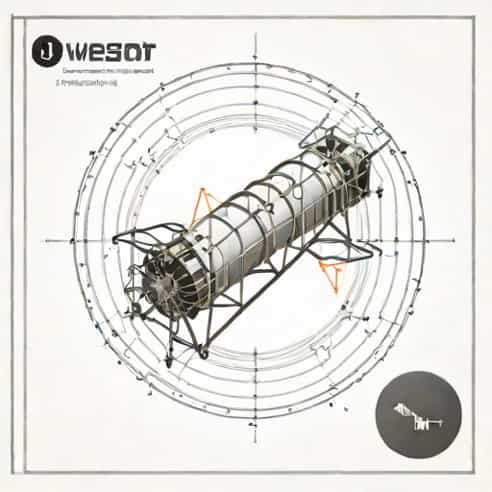
Seismic instruments designed for the Moon must operate under harsh conditions, including extreme temperature fluctuations, low gravity, and vacuum. The Apollo-era seismometers were highly sensitive and capable of detecting vibrations from both local and distant events. Modern advances in sensor technology and data telemetry have allowed for more robust and accurate measurements, with potential improvements including broadband seismometers, autonomous recording units, and real-time data transmission. Instrumentation reviews are critical to understanding the limitations of past missions and to guide the design of future lunar seismic experiments.
Characteristics of Lunar Seismometers
- Highly sensitive to low-frequency seismic waves
- Capable of operating in extreme temperature ranges (-150°C to +100°C)
- Lightweight and compact to accommodate lunar mission payloads
- Long-duration data recording for continuous monitoring
Challenges in Lunar Seismology
Despite decades of research, lunar seismology faces several challenges. The Moon’s seismic environment is very different from Earth, with weaker seismic signals and unique propagation characteristics. Additionally, the limited number of deployed seismometers restricts spatial coverage, making it difficult to fully map the Moon’s internal structure. Instrument sensitivity and environmental noise, such as thermal expansion or micrometeorite impacts, can also complicate data interpretation. Understanding these challenges is essential for improving data accuracy and reliability in future lunar missions.
Key Challenges
- Low-magnitude signals making detection difficult
- Limited number of seismic stations on the lunar surface
- Environmental noise affecting measurements
- Complex interpretation of seismic wave propagation in a dry, fractured crust
Data Analysis and Interpretation
Analyzing lunar seismic data involves identifying different types of events and interpreting their sources. Researchers use techniques such as spectral analysis, waveform modeling, and cross-correlation to extract meaningful information. Deep moonquakes provide insights into the Moon’s mantle structure, while shallow moonquakes inform scientists about the crust’s mechanical properties. By studying seismic wave propagation, scientists can infer the thickness of the lunar crust, the composition of the mantle, and the potential existence of a small core. Accurate data analysis is key to building comprehensive models of the Moon’s geophysical characteristics.
Analysis Techniques
- Spectral analysis to identify frequency components of seismic events
- Waveform modeling to simulate propagation through lunar layers
- Cross-correlation to compare signals from different seismometers
- Event classification to distinguish between moonquakes, impacts, and thermal effects
Future Directions in Lunar Seismology
Looking ahead, lunar seismology is poised for significant advancements with new missions and improved instrumentation. Deploying a network of modern seismometers across multiple lunar locations would allow for higher-resolution mapping of the Moon’s interior. Integration with other geophysical instruments, such as gravimeters and heat-flow probes, could provide a more comprehensive understanding of lunar dynamics. Additionally, the development of autonomous and remotely operated sensors capable of long-term monitoring will enhance our ability to study the Moon continuously, offering valuable insights for both scientific research and future lunar exploration missions.
Future Mission Considerations
- Deploying multiple broadband seismometers across diverse lunar regions
- Combining seismic data with gravity and thermal measurements
- Using autonomous data logging and real-time telemetry
- Supporting infrastructure for long-duration lunar research stations
Lunar seismology has made remarkable progress since the early Apollo missions, providing critical data on the Moon’s internal structure, tectonic activity, and response to environmental forces. Reviewing the data and instrumentation highlights both the achievements and challenges in this field. The sensitivity of seismometers, the variety of seismic events, and the harsh lunar conditions all underscore the importance of robust instrumentation and careful data analysis. Future advancements in sensor technology, mission design, and data interpretation promise to deepen our understanding of the Moon, paving the way for new discoveries about its geophysical properties and supporting the planning of sustained human presence on the lunar surface.