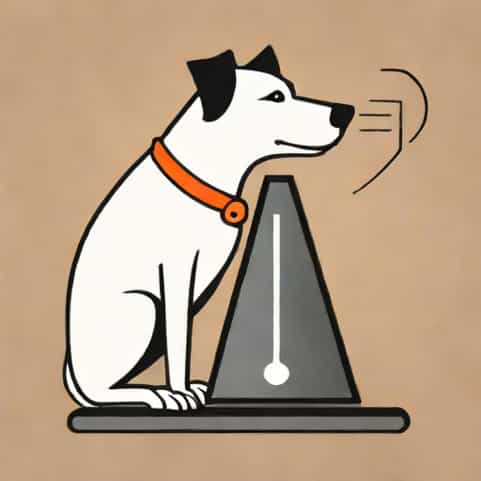
Ivan Pavlov, a Russian physiologist, is best known for his groundbreaking work on classical conditioning, a form of learning in which an organism comes to associate a previously neutral stimulus with a meaningful event. One of the most famous experiments in psychology involved Pavlov and his dogs, where he observed and measured salivation in response to a metronome. This research not only revealed important insights into the mechanisms of learning but also laid the foundation for behaviorist psychology, influencing fields ranging from education to therapy. Pavlov’s work demonstrated how behaviors could be conditioned through repeated associations, showing that responses previously thought to be purely reflexive could be influenced by experience.
The Setup of Pavlov’s Experiment
Pavlov’s initial research focused on the digestive systems of dogs, where he measured saliva production in response to food. He noticed that dogs often began to salivate not only when food was presented but also when they saw the lab assistants who fed them. This observation led Pavlov to hypothesize that salivation could be triggered by a stimulus that was associated with food, even if the stimulus itself had no inherent connection to eating. To systematically test this idea, Pavlov designed experiments using a neutral stimulus, such as a metronome, to see if it could come to elicit the salivation response.
The Role of the Metronome
In the experiment, the metronome served as the neutral stimulus. Initially, the ticking sound of the metronome did not produce any salivation in the dogs. Pavlov paired the sound with the presentation of food multiple times. Over repeated trials, the dogs began to salivate at the sound of the metronome alone, even when no food was presented. This demonstrated the process of classical conditioning, where a neutral stimulus becomes a conditioned stimulus through its association with an unconditioned stimulus, in this case, food. The salivation that occurred in response to the metronome became known as a conditioned response.
Key Components of Classical Conditioning
Pavlov’s experiment with dogs and the metronome illustrates several fundamental concepts in classical conditioning. Understanding these components helps explain how the process works and why it is so significant in psychology.
Unconditioned Stimulus and Response
The unconditioned stimulus (US) is something that naturally and automatically triggers a response. In Pavlov’s experiment, food served as the US because it naturally caused the dogs to salivate. The unconditioned response (UR) is the reflexive reaction to the US, which in this case was salivation. These responses occur naturally and do not require learning.
Conditioned Stimulus and Response
The conditioned stimulus (CS) is a previously neutral stimulus that, after being paired repeatedly with the US, begins to trigger a response. In Pavlov’s experiment, the metronome became the CS. The conditioned response (CR) is the learned reaction to the CS, which mirrors the UR. When the dogs salivated in response to the metronome alone, it represented the CR, showing that they had learned to associate the sound with food.
The Process of Learning in Pavlov’s Experiment
Classical conditioning involves a specific sequence of events, and Pavlov’s research provides a clear example of how this learning unfolds
- Initially, a neutral stimulus (metronome) produces no response from the organism.
- The neutral stimulus is repeatedly paired with an unconditioned stimulus (food) that naturally elicits an unconditioned response (salivation).
- After multiple pairings, the neutral stimulus becomes a conditioned stimulus capable of triggering a conditioned response similar to the unconditioned response.
- This process demonstrates that behaviors can be shaped through association and repeated exposure to specific stimulus pairings.
Extinction and Spontaneous Recovery
Pavlov also discovered that if the conditioned stimulus was presented repeatedly without the unconditioned stimulus, the conditioned response would gradually weaken and eventually disappear, a process known as extinction. Interestingly, after a period of rest, the conditioned response could reappear when the conditioned stimulus was presented again. This phenomenon, called spontaneous recovery, indicated that learned associations are not always permanently erased but can remain latent and reemerge under the right conditions.
Significance of Pavlov’s Research
Pavlov’s experiments with the dogs and the metronome had a profound impact on the field of psychology. They provided empirical evidence that behavior can be influenced through environmental stimuli and established the principles of classical conditioning, which have applications across multiple domains. For example, his findings influenced behaviorist psychologists such as John Watson and B.F. Skinner, who applied similar principles to human behavior. Pavlov’s work also contributed to the development of therapies for phobias and anxiety, where conditioned responses are modified to reduce unwanted behaviors or emotional reactions.
Applications in Everyday Life
The principles of classical conditioning can be observed in many aspects of everyday life. Advertisers, for instance, pair products with appealing images or music to elicit positive emotional responses from consumers. Teachers may use rewards and consistent cues to encourage desired behaviors in students. Even in personal habits, people can develop conditioned responses, such as craving a snack when hearing a familiar ringtone associated with lunchtime. Pavlov’s research shows that associations in our environment play a crucial role in shaping behavior.
Criticisms and Limitations
While Pavlov’s work laid the foundation for behaviorist psychology, it also has limitations. Critics argue that classical conditioning does not account for complex human cognition, decision-making, or emotions. It primarily addresses reflexive and automatic behaviors rather than voluntary actions or higher-order thought processes. Despite these limitations, classical conditioning remains a fundamental concept for understanding learning and behavioral change.
Pavlov’s experiment, in which he conditioned dogs to salivate in response to a metronome, represents a pivotal moment in the study of psychology and learning. By demonstrating that reflexive responses could be elicited through association, Pavlov revealed the principles of classical conditioning and opened the door to understanding how behaviors are acquired and modified. The experiment highlights the significance of environmental stimuli, repeated exposure, and learned associations in shaping behavior. From its practical applications in therapy and education to its influence on behavioral research, Pavlov’s work with the dogs and the metronome continues to inform our understanding of learning, behavior, and human psychology.