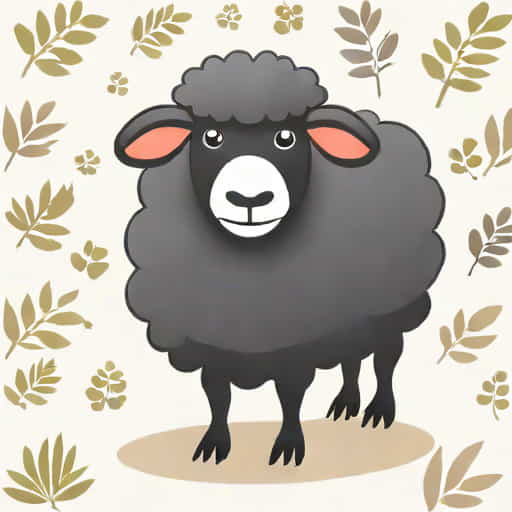
Baa Baa Black Sheep is a classic nursery rhyme that has captured the imagination of children and parents for generations. Its simple melody and repetitive lyrics make it easy for young children to learn, sing, and remember. The rhyme dates back several centuries and carries a fascinating history that intertwines with cultural and educational practices. Over the years, it has been adapted and performed by countless artists, including Raffi, whose gentle voice and engaging style have made the song accessible and enjoyable for a new generation of listeners. The song’s appeal lies not only in its musical simplicity but also in its rhythm and story, which children find amusing and memorable. It introduces basic counting concepts and social interactions, helping children develop language skills and early numeracy in a playful manner.
Origins and History of Baa Baa Black Sheep
The nursery rhyme Baa Baa Black Sheep first appeared in written form in the 18th century, though its oral tradition likely predates this. Historically, the song reflects the economic and social conditions of the time, including the wool trade in England. Some scholars suggest that the lyrics, which mention a master, a dame, and a little boy, hint at historical taxation on wool and the distribution of resources among different social classes. Despite these interpretations, the rhyme has endured primarily as a beloved children’s song, detached from its original context. Over the centuries, it has been translated into numerous languages and incorporated into educational materials, ensuring its presence in classrooms and homes worldwide.
Raffi’s Interpretation
Raffi, a Canadian singer-songwriter known for his children’s music, has brought a fresh perspective to Baa Baa Black Sheep. His version features a soft, melodic delivery that is both soothing and engaging for young listeners. Raffi emphasizes the playful aspects of the song, allowing children to interact through clapping, counting, and singing along. His recordings often include educational elements, encouraging children to recognize numbers and understand sharing, making the song more than just entertainment. By performing Baa Baa Black Sheep, Raffi has helped preserve the rhyme’s legacy and introduced it to families who may not have encountered the song in its traditional format.
Educational Value of the Song
Baa Baa Black Sheep is more than a simple nursery rhyme; it serves as a valuable educational tool for early childhood development. The repetitive lyrics and clear structure help children improve memory, language acquisition, and pronunciation. Counting the bags of wool introduces basic numeracy, while the interaction with the master, dame, and little boy provides a narrative that promotes social understanding and empathy. Teachers often use the song in classrooms to reinforce these skills, pairing it with visual aids, finger counting, and rhythm exercises to create a multi-sensory learning experience. The song’s simplicity allows children to focus on fundamental learning concepts without feeling overwhelmed.
Impact on Early Childhood Music Education
Incorporating songs like Baa Baa Black Sheep into early childhood music education has long-term benefits. Musical exposure enhances auditory discrimination, rhythm recognition, and vocal expression. By singing along with Raffi’s recordings, children learn timing, pitch, and melody while also enjoying a sense of accomplishment as they master the song. Educators often pair the rhyme with instruments such as tambourines, shakers, or xylophones, further enriching the learning environment. The song also serves as an introduction to more complex musical concepts, making it an essential part of early musical experiences.
Cultural Significance
Over time, Baa Baa Black Sheep has become a cultural touchstone, representing childhood innocence and traditional learning. Its simple story about sharing and distribution resonates across different societies, making it universally relatable. The song appears in books, educational programs, and children’s performances, reinforcing its status as a timeless piece of folklore. Raffi’s rendition, in particular, highlights the enduring appeal of nursery rhymes in modern culture, bridging generations and keeping the tradition alive. The song’s popularity has led to numerous adaptations, including animated versions, interactive games, and musical compilations, further solidifying its cultural significance.
Lyrics and Structure
The traditional lyrics of Baa Baa Black Sheep are concise and rhythmic
- Baa, baa, black sheep, have you any wool?
- Yes sir, yes sir, three bags full.
- One for the master, one for the dame,
- And one for the little boy who lives down the lane.
The repetition and rhyme pattern make the lyrics easy to remember and sing. Raffi’s version often incorporates playful pauses, variations in tempo, and gentle emphasis on certain words, enhancing the song’s auditory appeal. This approach helps children recognize patterns in language and music, which is fundamental for cognitive development.
Modern Adaptations and Influence
Baa Baa Black Sheep has inspired countless modern adaptations, ranging from educational videos to interactive apps. Raffi’s recordings are frequently used in nurseries, daycare centers, and home learning settings, reflecting the song’s adaptability and relevance. The song also influences creative activities, such as drawing sheep, acting out the roles, or counting games, further engaging children in learning through play. Its persistent popularity demonstrates the effectiveness of nursery rhymes in combining entertainment with education, making them a staple in early childhood experiences.
Why Raffi’s Version Stands Out
Raffi’s approach to Baa Baa Black Sheep stands out for several reasons
- He uses a calm and friendly vocal tone, which is comforting to children.
- His rendition encourages participation, allowing children to sing and move along.
- He integrates educational aspects such as counting and sharing, making the song both fun and instructive.
- The production is clear and high-quality, ensuring that the lyrics and melody are easy to follow.
These factors contribute to the enduring appeal of Raffi’s version and help maintain the song’s relevance in contemporary early childhood education.
Baa Baa Black Sheep remains one of the most cherished nursery rhymes, and Raffi’s rendition has helped keep it vibrant and accessible for modern audiences. The song’s combination of simple lyrics, rhythmic melody, and educational value makes it an essential part of early childhood learning. Through singing, counting, and interactive play, children gain foundational skills while enjoying the timeless charm of the rhyme. As a cultural artifact, the song bridges generations, allowing parents and educators to share a piece of musical history with children. Raffi’s contribution ensures that Baa Baa Black Sheep continues to be a joyful, engaging, and educational experience for young learners around the world.