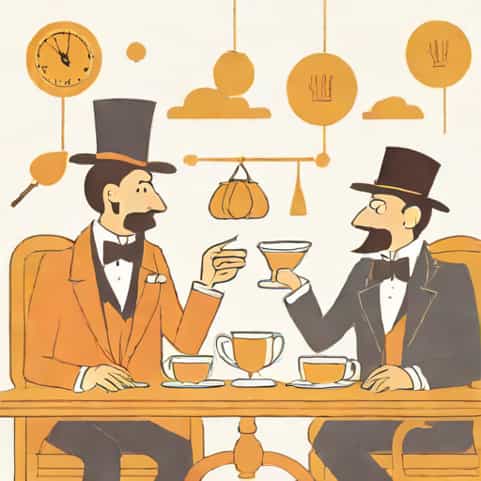
Oscar Wilde’s playThe Importance of Being Earnestis renowned for its wit, humor, and sharp critique of Victorian society. At its core, the play is a comedy of manners that uses satire to expose the superficiality, hypocrisy, and pretentiousness of the social elite. Wilde employs a variety of satiric strategies to engage his audience, ranging from irony and exaggeration to parody and wordplay. These techniques allow the play to entertain while simultaneously providing a critical lens through which Victorian norms, values, and social conventions can be examined. Understanding the satiric strategy inThe Importance of Being Earnestreveals how Wilde balances humor with incisive social commentary.
Irony as a Central Satiric Device
Irony is one of the primary satiric strategies Wilde uses throughout the play. The dialogue and situations are often ironic, creating a contrast between appearances and reality. Characters frequently make statements that, on the surface, seem sincere but are actually contradictory or absurd. For example, Lady Bracknell’s concern with social status and wealth is presented in an exaggeratedly serious manner, highlighting the ridiculousness of prioritizing superficial qualities over genuine character. This type of irony critiques the rigid class system and the emphasis on social propriety in Victorian England.
Verbal Irony and Witty Dialogue
Wilde’s verbal irony often takes the form of witty dialogue, where the meaning of words is subtly inverted. Algernon’s humorous statements, such as referring to trivial matters with undue gravity, serve to ridicule societal norms. Through verbal irony, Wilde exposes the incongruities in social behavior, illustrating how characters manipulate language to uphold appearances rather than express truth. The dialogue’s playful tone ensures that the critique remains lighthearted yet pointed.
Exaggeration and Hyperbole
Exaggeration is another crucial satiric strategy in the play. Wilde amplifies the qualities and behaviors of his characters to absurd proportions, making their follies more visible to the audience. Lady Bracknell’s obsession with wealth and status, for example, is exaggerated to the point of absurdity, emphasizing the superficiality of social climbing. Similarly, the exaggerated secrecy and duplicity of the main characters, Jack and Algernon, underscore the triviality of societal conventions surrounding identity and morality. Hyperbolic characterization allows Wilde to entertain while simultaneously critiquing social pretensions.
Social Commentary Through Characterization
By exaggerating the traits of his characters, Wilde is able to satirize broader societal issues. Lady Bracknell embodies the rigid expectations of the upper class, while Jack and Algernon highlight the performative aspects of social identity. Even minor characters, like Miss Prism and Reverend Chasuble, are depicted with traits that reflect the absurdity of moral rigidity and institutional propriety. This technique allows Wilde to comment on multiple social issues without losing the comedic effect.
Parody of Social Conventions
Wilde also uses parody to mock the conventions and etiquette of Victorian society. The play’s focus on marriage, social status, and propriety is presented in a way that exaggerates and subverts these norms. Courtship rituals are depicted as mechanical and superficial, with characters often more concerned with appearances than genuine affection. This satiric parody highlights the performative nature of social interactions, emphasizing the gap between societal expectations and authentic human behavior.
Marriage and Courtship as Satirical Targets
In Victorian England, marriage was often treated as a social contract rather than a union based on love. Wilde parodies this approach through characters like Lady Bracknell, who evaluates potential suitors based on wealth and social connections. The absurdity of these evaluations, along with the playful subversion of traditional courtship roles, exposes the rigidity and hypocrisy inherent in these social practices. Satire in this context encourages the audience to question the cultural norms surrounding marriage.
Wordplay and Epigrams
Wilde’s use of epigrams and wordplay is another satiric strategy that enhances the play’s humor while delivering pointed commentary. Epigrams are brief, witty statements that often contain paradoxical or ironic insights. Wilde’s epigrams, such as The truth is rarely pure and never simple, succinctly convey critiques of society while entertaining the audience. Wordplay also allows Wilde to explore themes of identity, duplicity, and social expectations in a manner that is both clever and memorable.
Language as a Tool of Satire
Language inThe Importance of Being Earnestserves both a comedic and a critical function. Puns, double entendres, and playful inversions of meaning create humor while simultaneously exposing the absurdities of social pretensions. Through these linguistic devices, Wilde demonstrates that communication in Victorian society often prioritizes style over substance, highlighting the superficiality of social interactions.
Contrasts and Juxtaposition
Wilde frequently uses contrasts and juxtaposition to heighten the satirical effect. The differences between characters’ public personas and private behaviors illustrate the hypocrisy inherent in social norms. For instance, Jack presents himself as the responsible guardian in the country, yet leads a double life in the city as Ernest, indulging in leisure and deception. Algernon similarly navigates social conventions through duplicity. By juxtaposing these contrasting behaviors, Wilde exposes the artificiality of societal expectations and the inconsistencies in human conduct.
Juxtaposition of Seriousness and Absurdity
The play often places serious topics, such as marriage or social rank, alongside absurd situations. This contrast magnifies the satirical critique, showing how seemingly important societal concerns can become ridiculous when examined closely. Wilde’s ability to balance seriousness with absurdity ensures that his satire is both entertaining and intellectually engaging.
The Role of Humor in Satire
Humor is central to Wilde’s satiric strategy, allowing the audience to engage with criticism without feeling lectured. The combination of witty dialogue, exaggerated situations, and clever wordplay creates a comedic effect that softens the critique while making it memorable. Humor also makes the social commentary more accessible, ensuring that audiences from various backgrounds can appreciate both the entertainment and the underlying critique.
Satire as Social Critique
Ultimately, Wilde’s satire inThe Importance of Being Earnesttargets the rigidity, superficiality, and hypocrisy of Victorian society. Through irony, exaggeration, parody, and wordplay, Wilde exposes the absurdities of social conventions and encourages the audience to question established norms. The satiric strategy is carefully balanced with humor, allowing the play to entertain while delivering meaningful critique. This approach ensures the play’s enduring relevance and appeal, as it continues to provoke thought and laughter in modern audiences.
InThe Importance of Being Earnest, Oscar Wilde masterfully employs a range of satiric strategies to critique Victorian society. Irony highlights the contradictions between appearance and reality, exaggeration underscores the absurdity of social pretensions, and parody mocks rigid conventions. Wordplay and epigrams add wit while delivering pointed commentary, and contrasts between characters’ public and private behaviors reveal the hypocrisy of social norms. Through humor and clever dialogue, Wilde engages the audience while encouraging reflection on societal values, identity, and morality. The play’s enduring success lies in its ability to entertain while providing a timeless satirical critique, making it a landmark work in both literature and social commentary.