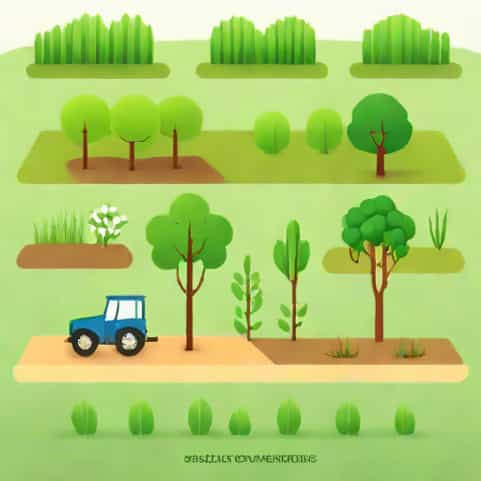
Shifting cultivation is an agricultural practice that has been used for centuries in tropical regions around the world. It involves clearing a plot of land, cultivating it for a few years, and then abandoning it to allow the soil to regenerate while the farmer moves on to a new plot. The method raises questions about whether it is an intensive or extensive form of agriculture. Understanding the characteristics, advantages, and limitations of shifting cultivation can help distinguish its classification and provide insight into how it impacts soil fertility, crop yield, and sustainability. By examining the methods, labor input, and land use patterns, we can analyze whether shifting cultivation aligns more closely with intensive or extensive agricultural practices.
Definition of Shifting Cultivation
Shifting cultivation, also known as slash-and-burn agriculture or swidden farming, is primarily practiced in tropical and subtropical regions. Farmers clear a portion of forested land by cutting down vegetation and burning it. The ash produced from burning acts as a natural fertilizer, enriching the soil with nutrients. Crops are then planted in this cleared area, and cultivation continues for a few years until soil fertility declines. At this point, the plot is left fallow, and the farmer moves to a new area, repeating the process. The cycle of cultivation and fallow periods is crucial for maintaining soil health and productivity in this system.
Characteristics of Shifting Cultivation
- Use of natural forest land and vegetation for temporary cultivation.
- Burning of vegetation to create fertile soil.
- Short-term cultivation periods followed by long fallow periods.
- Minimal use of external inputs such as chemical fertilizers or machinery.
- Crop diversity with multiple types of crops grown together to optimize soil use.
Intensive vs Extensive Agriculture
Agriculture can generally be classified as intensive or extensive based on labor input, land use, and crop yield. Intensive agriculture involves high labor and capital inputs per unit of land, aiming for maximum productivity. It typically uses fertilizers, irrigation, machinery, and improved seeds. On the other hand, extensive agriculture uses larger areas of land with relatively lower labor and capital inputs. Yields per unit of land are generally lower, but the system can cover more land at minimal cost. The distinction between these two approaches is essential for evaluating shifting cultivation.
Intensive Agricultural Features
- High labor input and management per hectare of land.
- Use of chemical fertilizers, pesticides, and modern machinery.
- High yield per unit area due to concentrated effort and resources.
- Short cultivation cycles with continuous use of the same plot.
Extensive Agricultural Features
- Low labor and capital input relative to land area.
- Relies on natural soil fertility rather than artificial inputs.
- Lower yield per unit area, but spread over a larger land area.
- Long fallow periods allow soil regeneration naturally.
Shifting Cultivation as an Extensive System
Shifting cultivation aligns closely with extensive agriculture due to several reasons. First, it involves low labor and capital input per unit of land. Farmers rely on manual tools and natural soil fertility rather than fertilizers and irrigation. Second, the cultivation cycle covers a small plot at a time but shifts across large forest areas over time. The land left fallow for years allows nutrients to return naturally, reducing the need for artificial inputs. Third, crop yield per hectare is relatively low compared to intensive farming methods, but the overall system sustains rural communities by utilizing available forest land efficiently.
Benefits of Extensive Approach in Shifting Cultivation
- Preservation of soil fertility during fallow periods.
- Reduced need for costly fertilizers and machinery.
- Minimal environmental impact if practiced with proper fallow management.
- Support for biodiversity due to temporary clearing of forest patches.
Limitations of Shifting Cultivation
Despite its benefits, shifting cultivation has limitations, particularly in the context of population pressure and land scarcity. As communities grow, available forest land may not suffice for traditional long fallow periods, leading to soil degradation. The method can also result in deforestation and loss of wildlife habitats if fallow periods are shortened. Additionally, low productivity per hectare limits the capacity to produce surplus crops for trade, keeping subsistence farmers reliant on a fragile cycle of forest and cultivation.
Modern Challenges
In contemporary times, shifting cultivation faces challenges such as
- Land fragmentation and competition with commercial agriculture.
- Legal restrictions on forest clearance in protected areas.
- Climate change affecting soil fertility and rainfall patterns.
- Need for sustainable practices to maintain environmental balance.
When Shifting Cultivation May Incorporate Intensive Elements
Although primarily extensive, shifting cultivation can include intensive features under certain circumstances. In some regions, farmers may invest additional labor and resources to improve soil fertility, use improved seeds, or adopt small-scale irrigation techniques. These adaptations can increase productivity on a smaller plot but still retain the cyclical nature of land use. However, such modifications do not transform the system into fully intensive agriculture, as yields per hectare remain lower compared to fully modernized intensive farms.
Examples of Hybrid Practices
- Intercropping with nitrogen-fixing plants to enhance soil fertility.
- Using organic compost or green manure to improve yields.
- Terracing on sloped land to prevent soil erosion.
- Rotation of crops within a single plot for better soil management.
Environmental and Socioeconomic Implications
Shifting cultivation, as an extensive system, has both environmental and socioeconomic impacts. Environmentally, when practiced sustainably with long fallow periods, it preserves soil fertility, supports biodiversity, and reduces dependency on chemical inputs. Socioeconomically, it supports rural livelihoods, provides food security for subsistence communities, and allows cultural practices linked to traditional land use to continue. Balancing these benefits with modern pressures is key to the long-term viability of shifting cultivation.
Strategies for Sustainable Shifting Cultivation
To maintain sustainability, communities and policymakers can adopt strategies such as
- Extending fallow periods to allow soil and forest regeneration.
- Integrating agroforestry techniques to combine trees with crops.
- Providing education on soil conservation and sustainable farming methods.
- Monitoring land use to prevent overexploitation of forest areas.
Shifting cultivation is predominantly an extensive form of agriculture due to its reliance on natural soil fertility, low labor and capital input, long fallow periods, and relatively low yield per unit area. While it can incorporate some intensive elements through additional resources or improved techniques, its cyclical and land-spreading nature firmly places it within the extensive category. Understanding this classification helps in appreciating the cultural, environmental, and economic context in which shifting cultivation operates. When practiced sustainably, it remains a viable method for supporting rural livelihoods and conserving natural ecosystems.
By analyzing the characteristics of shifting cultivation and comparing them with the principles of intensive and extensive agriculture, it becomes evident that this practice emphasizes efficient use of land and natural resources rather than maximizing output per unit of land. For policymakers, researchers, and agricultural planners, recognizing the extensive nature of shifting cultivation is essential for creating strategies that promote sustainability, food security, and ecological balance in regions dependent on this traditional agricultural system.