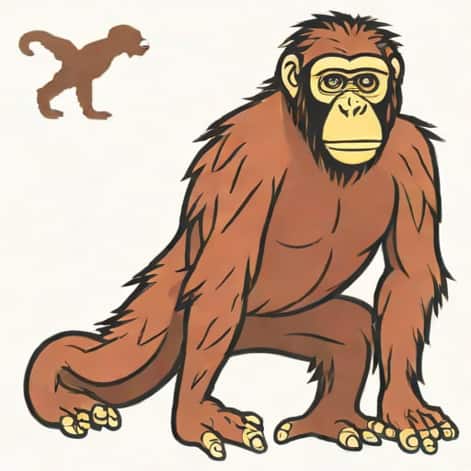
Australopithecus afarensis is one of the most well-known early hominins, providing crucial insights into human evolution. Lived approximately 3.9 to 2.9 million years ago, this species bridges the evolutionary gap between more ape-like ancestors and later members of the genus Homo. Fossil discoveries, most famously the skeleton known as Lucy, have revealed significant biological characteristics that shed light on locomotion, diet, social behavior, and adaptation to their environment. Understanding these traits helps scientists reconstruct the evolutionary history of bipedalism and human morphology, making Australopithecus afarensis a cornerstone in paleoanthropology.
Physical Appearance and Skeletal Structure
The skeletal structure of Australopithecus afarensis displays a combination of ape-like and human-like traits. Their small stature and robust skeletal features suggest adaptations for both climbing and bipedal walking. Adult individuals typically stood between 1.2 to 1.5 meters tall, with males generally larger than females, indicating sexual dimorphism. The bones reveal a lightweight, yet strong build suitable for both terrestrial and arboreal activity, reflecting a versatile lifestyle in mixed woodland and savanna environments.
Cranial Characteristics
The skull of Australopithecus afarensis shows important evolutionary adaptations. The brain size ranged from 375 to 550 cubic centimeters, which is larger than earlier hominins but significantly smaller than modern humans. The facial structure includes a prognathous jaw, prominent brow ridges, and a low forehead, characteristics that are intermediate between apes and humans. The dental arcade is U-shaped, and their teeth show adaptations for a varied diet, including thick enamel to process both plant and some harder food materials. These cranial features provide evidence of dietary flexibility and the evolutionary pressures faced by the species.
Postcranial Features
Postcranial remains offer insight into locomotion and lifestyle. The pelvis is broad and short, allowing effective bipedal walking while retaining some capacity for climbing. The femur angles inward from hip to knee, a trait known as the bicondylar angle, which supports upright walking. The foot retains a robust heel and a non-opposable big toe, indicating efficient bipedalism. Meanwhile, curved finger bones suggest that climbing remained an essential activity, especially in forested areas. This mosaic of traits illustrates a transitional form in hominin evolution.
Locomotion and Bipedalism
One of the most significant biological characteristics of Australopithecus afarensis is their bipedal locomotion. Unlike earlier hominins, they show skeletal adaptations for walking upright on two legs. The structure of the pelvis, femur, knee, and foot all support efficient bipedal movement. Bipedalism allowed for better energy efficiency in long-distance walking, the ability to carry objects, and improved visibility over tall grasses. Despite their bipedal adaptations, they maintained climbing abilities, reflecting a dual lifestyle that included both ground and tree-based activities.
Implications of Bipedalism
Bipedalism in Australopithecus afarensis represents a major evolutionary step. It freed the hands for tool use and carrying food, though evidence for advanced tool use is limited in this species. Upright walking also likely influenced social behavior, enabling individuals to traverse open landscapes, avoid predators, and forage more effectively. These biological adaptations set the stage for further evolutionary developments in the genus Homo.
Dietary Adaptations
Dental and cranial characteristics provide clues about the diet of Australopithecus afarensis. Thick enamel on molars, robust jaws, and U-shaped dental arches suggest an omnivorous diet with a strong reliance on fibrous plant materials, seeds, and fruits. Some wear patterns on teeth indicate occasional consumption of harder foods such as nuts or tubers. The varied diet allowed them to adapt to changing environmental conditions, supporting survival across diverse habitats. Their dental morphology reflects evolutionary pressures to balance food processing efficiency with energy needs.
Evidence from Fossils
Fossil evidence, including microwear patterns on teeth, indicates that Australopithecus afarensis consumed both soft and hard foods. Isotopic analysis of tooth enamel suggests that they exploited a range of food sources, including C3 and C4 plants, which are typical of forested and grassland environments. These findings underline their ecological flexibility and the evolutionary advantages of dietary diversity.
Social Behavior and Reproductive Biology
While direct evidence of social behavior is limited, biological characteristics provide indirect clues. Sexual dimorphism, seen in size differences between males and females, suggests possible social hierarchies or mating competition. Fossil assemblages hint at small group living, which may have provided protection from predators and facilitated cooperative foraging. The combination of upright walking, hand mobility, and moderate brain size likely supported complex social interactions, though these were less advanced than in later hominins.
Life History Traits
Life history characteristics, inferred from skeletal growth and development, suggest that Australopithecus afarensis had a relatively rapid maturation rate compared to modern humans. Juvenile fossils indicate faster growth and earlier reproductive maturity, consistent with the shorter lifespan typical of early hominins. These traits highlight evolutionary trade-offs between growth, survival, and reproduction in a challenging environment.
Adaptation to Environment
Australopithecus afarensis lived in a range of habitats, including woodlands, savannas, and riverine environments. Their biological characteristics reflect adaptations to both climbing and terrestrial life, allowing them to exploit diverse ecological niches. The combination of bipedal locomotion, strong upper limbs, and dietary flexibility suggests resilience in the face of environmental changes. These adaptive traits were crucial for survival in an era marked by climate fluctuations and changing landscapes.
Significance in Human Evolution
The study of Australopithecus afarensis is significant because it represents a key transitional stage in hominin evolution. Their combination of ape-like and human-like traits provides evidence for the gradual development of bipedalism, increased brain size, and dietary flexibility. Understanding these biological characteristics helps explain how early hominins adapted to environmental challenges and laid the foundation for the emergence of later species, including Homo habilis and Homo erectus.
Australopithecus afarensis exhibits significant biological characteristics that illuminate crucial aspects of early hominin evolution. From cranial and postcranial features to locomotion, dietary habits, and social structures, these traits illustrate the species’ adaptive strategies in a dynamic environment. Bipedalism, dental adaptations, and skeletal morphology reveal a transitional form between apes and modern humans, emphasizing the evolutionary significance of this species. Fossil evidence continues to enhance our understanding of Australopithecus afarensis, highlighting its role in shaping the trajectory of human evolution and providing a window into the biological innovations that made bipedal, intelligent, and adaptable hominins possible.