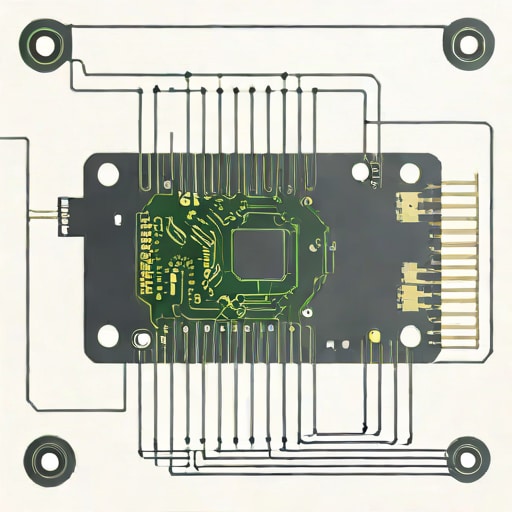
A hybrid microcircuit is a specialized type of electronic component that combines multiple electronic elements, such as resistors, capacitors, diodes, and transistors, into a single, compact package. Unlike standard integrated circuits that are fully fabricated on a single semiconductor substrate, hybrid microcircuits integrate discrete components and thin-film or thick-film technology to achieve complex functions in a small, reliable, and robust form. These circuits are widely used in applications that demand high performance, durability, and stability, such as aerospace, military, medical devices, and telecommunications. The hybrid approach allows engineers to optimize each component for its specific function, resulting in circuits that can operate under extreme environmental conditions while maintaining precise performance. Their design, manufacturing, and application represent a significant advancement in electronics, bridging the gap between traditional discrete circuitry and modern monolithic integrated circuits.
Understanding the Structure of Hybrid Microcircuits
Hybrid microcircuits are composed of several layers and elements that work together to create a functional electronic assembly. At the base, a substrate-often made of ceramic, silicon, or other insulating materials-provides structural support and electrical insulation. On this substrate, thin-film or thick-film processes are used to deposit conductive pathways and resistive elements. These pathways connect discrete components such as transistors, diodes, and capacitors, which are either surface-mounted or bonded onto the substrate. The use of wire bonding or ribbon bonding ensures secure electrical connections. Finally, the entire assembly is encapsulated in a protective material, such as epoxy or ceramic, to shield it from mechanical stress, moisture, and temperature fluctuations.
Thin-Film and Thick-Film Technologies
Hybrid microcircuits utilize thin-film and thick-film technologies to achieve precise electrical characteristics. Thin-film technology involves depositing extremely thin layers of conductive, resistive, or dielectric materials onto the substrate using techniques like sputtering or chemical vapor deposition. This method allows for high precision and uniformity, making it ideal for high-frequency and sensitive applications. Thick-film technology, on the other hand, uses screen-printing techniques to apply thicker layers of conductive or resistive pastes that are subsequently fired at high temperatures. Thick-film processes are cost-effective and durable, suitable for applications that require rugged performance under harsh conditions. Both technologies can be combined in a single hybrid microcircuit to take advantage of their unique benefits.
Advantages of Hybrid Microcircuits
Hybrid microcircuits offer several advantages over traditional discrete circuits and even monolithic integrated circuits
- High ReliabilityThe robust construction and encapsulation make hybrid microcircuits resistant to shock, vibration, and environmental extremes.
- Compact SizeBy integrating multiple components into a single package, these circuits save space and reduce the complexity of wiring.
- CustomizabilityEngineers can tailor each component’s specifications and layout to meet the exact requirements of the application.
- Thermal StabilityCeramic and other high-quality substrates provide excellent thermal conductivity, maintaining stable performance across temperature variations.
- High-Frequency PerformanceHybrid designs minimize parasitic capacitance and inductance, making them suitable for RF and microwave applications.
Applications of Hybrid Microcircuits
Hybrid microcircuits are essential in industries where reliability, precision, and miniaturization are critical. Some key applications include
- AerospaceUsed in satellite systems, avionics, and missile guidance systems, hybrid microcircuits withstand extreme temperatures, vibration, and radiation.
- MilitaryCritical for secure communications, radar systems, and defense electronics where high performance and durability are mandatory.
- Medical DevicesIncorporated into pacemakers, imaging equipment, and diagnostic devices that require reliable, small-scale electronic assemblies.
- TelecommunicationsUsed in high-frequency amplifiers, switches, and signal processing circuits where precise electrical performance is required.
- Industrial ElectronicsEmployed in control systems, sensors, and instrumentation that operate under challenging environmental conditions.
Design Considerations
Designing a hybrid microcircuit requires careful consideration of electrical, mechanical, and thermal factors. Engineers must account for
- Component SelectionChoosing the right discrete components and ensuring they are compatible with thin-film or thick-film processes.
- Substrate MaterialSelecting a substrate with the proper thermal conductivity, dielectric properties, and mechanical strength.
- Layout OptimizationMinimizing parasitic effects by arranging components and conductive paths efficiently, especially for high-frequency circuits.
- Thermal ManagementEnsuring adequate heat dissipation through substrate choice, thermal vias, and encapsulation techniques.
- Encapsulation and ProtectionProviding mechanical support and protection from moisture, dust, and radiation to enhance reliability.
Manufacturing Process
The production of hybrid microcircuits involves several key steps, each requiring precision and quality control
- Substrate PreparationThe substrate is cleaned and prepared for the deposition of conductive and resistive layers.
- Film DepositionThin-film or thick-film materials are deposited and patterned using photolithography, screen printing, or other techniques.
- Component PlacementDiscrete components are carefully positioned and attached using soldering, adhesive bonding, or wire bonding.
- Electrical TestingEach hybrid microcircuit undergoes functional testing to ensure all connections and components meet specifications.
- EncapsulationProtective materials are applied to seal the assembly, providing environmental resistance and mechanical integrity.
- Final InspectionThe finished product is inspected for defects, reliability, and performance before shipment.
Challenges and Limitations
Despite their advantages, hybrid microcircuits present certain challenges
- CostThe specialized materials, labor-intensive assembly, and precision testing make hybrid microcircuits more expensive than standard ICs.
- Complex ManufacturingThe integration of discrete components with thin- or thick-film technologies requires highly skilled personnel and precise equipment.
- Limited Mass ProductionCustom designs and low-volume production are typical, making large-scale production less economical.
- Size ConstraintsAlthough compact, hybrid circuits are generally larger than monolithic ICs for the same functionality due to discrete component inclusion.
Future of Hybrid Microcircuits
As technology advances, hybrid microcircuits continue to evolve. Emerging trends include
- Integration with advanced packaging techniques to further reduce size and improve performance.
- Use of new materials, such as high-performance ceramics, flexible substrates, and nanomaterials, to enhance durability and electrical properties.
- Application in IoT devices, wearable electronics, and autonomous systems where reliability and miniaturization are crucial.
- Combination with monolithic ICs to create hybrid-mixed technology modules that leverage the strengths of both approaches.
Hybrid microcircuits represent a critical innovation in electronics, bridging the gap between traditional discrete components and modern integrated circuits. By combining discrete elements with thin-film and thick-film technologies on a single substrate, these circuits offer high reliability, precision, and adaptability in a compact form. Their applications span aerospace, military, medical, telecommunications, and industrial sectors, where performance and durability are non-negotiable. Understanding the structure, manufacturing, and advantages of hybrid microcircuits highlights their role as a versatile and essential technology in modern electronic design. As industries continue to demand more compact, reliable, and high-performance solutions, hybrid microcircuits will remain at the forefront of engineering innovation, providing the optimal balance of customization, stability, and resilience in challenging environments.