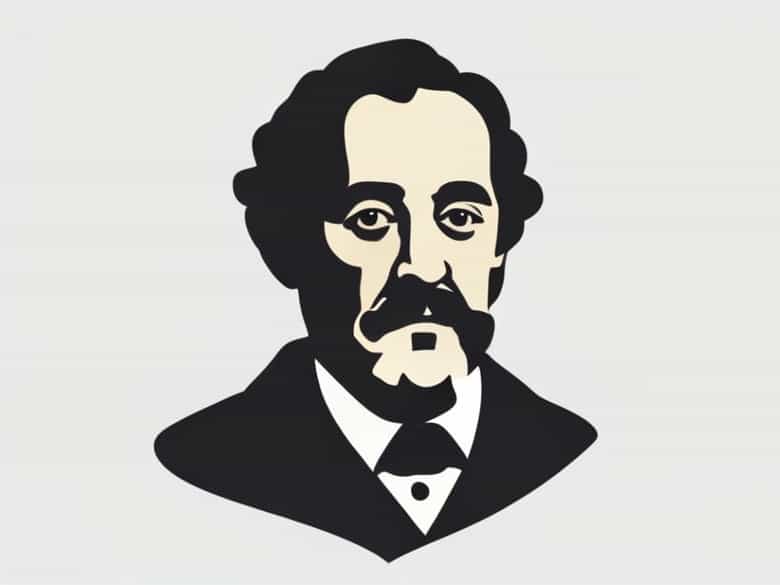
George Boole was an English mathematician, philosopher, and logician whose groundbreaking work laid the foundations for modern computer science and digital technology. He is most widely recognized for developing Boolean algebra, a system of logic that allows statements to be represented mathematically and evaluated as true or false. Boole’s work has had a profound and lasting impact, influencing areas ranging from mathematics and philosophy to electronics and programming. Understanding what George Boole is known for requires exploring his life, key contributions, and the far-reaching implications of his ideas in the modern world.
Early Life and Education
George Boole was born in Lincoln, England, in 1815. He came from a modest background, with limited access to formal education in his early years. Despite these challenges, Boole exhibited exceptional intelligence and a passion for learning from a very young age. He taught himself advanced mathematics, languages, and philosophy through reading and practice. His self-education and dedication allowed him to develop critical thinking skills and a deep understanding of mathematical principles, laying the groundwork for his future contributions.
Early Career and Academic Work
Boole began his career as a schoolteacher and private tutor, where he gained recognition for his teaching skills and mathematical ability. He eventually published several papers on algebra and calculus, drawing attention from the academic community. In 1849, Boole was appointed as the first professor of mathematics at Queen’s College, Cork, in Ireland. His position provided him the platform to expand his research and develop his theories on logic and mathematics.
Development of Boolean Algebra
George Boole is best known for creating Boolean algebra, a mathematical system that represents logical statements using symbols and operations. Boolean algebra provides a way to analyze relationships between propositions and determine whether they are true or false. This system forms the foundation for digital logic, which is essential for computer programming, circuit design, and modern computing.
Key Concepts in Boolean Algebra
Boolean algebra introduced several essential concepts that are still used today in mathematics and computer science
- Logical VariablesVariables that can take only two values, typically true or false, 1 or 0.
- Logical OperationsOperations such as AND, OR, and NOT that manipulate logical variables.
- Equations and ExpressionsMathematical expressions that combine variables and operations to represent complex logical relationships.
- Rules of SimplificationMethods for reducing complex logical expressions to simpler forms, which is crucial in circuit design and programming.
Impact on Modern Technology
Boolean algebra became the foundation for digital circuits and computer science. Every modern computer, smartphone, and digital device relies on the principles Boole developed. Logical operations form the basis of programming languages, database search functions, and digital communication systems. Essentially, Boole’s work transformed abstract mathematics into practical tools that drive the digital world.
Other Mathematical Contributions
Beyond Boolean algebra, George Boole made significant contributions to other areas of mathematics. He worked on differential equations, probability theory, and mathematical analysis, often blending logical reasoning with algebraic methods. His ability to apply abstract mathematical concepts to real-world problems set him apart as a pioneering thinker in his era. Boole’s work in probability also influenced later developments in statistics and decision theory, further extending his impact on modern science.
Publications and Written Works
George Boole’s most influential written works include
- An Investigation of the Laws of Thought (1854)This book introduced Boolean algebra and explored the application of logic to human reasoning.
- A Treatise on Differential Equations (1859)This work examined methods for solving complex differential equations, demonstrating Boole’s analytical skills.
These publications not only established Boole as a leading mathematician of his time but also laid the foundation for the fields of logic, computer science, and artificial intelligence.
Legacy and Recognition
George Boole’s legacy is immense, with his work continuing to influence science, technology, and philosophy. He is often regarded as the father of digital logic and symbolic logic, and his contributions have been honored worldwide. Schools, awards, and institutions have been named after him, recognizing the enduring significance of his achievements. The concepts he developed in Boolean algebra remain central to computer engineering, programming, and information theory.
Influence on Computer Science
The principles Boole introduced are embedded in virtually every aspect of modern computing. Digital circuits, which use binary code, rely on Boolean logic for processing information. Software developers use Boolean expressions in programming languages to create decision-making processes within applications. Database systems, search engines, and network protocols all incorporate Boolean logic to operate efficiently. Without Boole’s foundational work, modern digital technology as we know it would not exist.
Philosophical Contributions
In addition to his technical work, Boole’s exploration of logic also had philosophical significance. He sought to formalize human reasoning mathematically, proposing that logical thought could be represented and analyzed systematically. This idea bridged the gap between abstract mathematics and human cognition, influencing later fields such as artificial intelligence, cognitive science, and formal logic studies.
Personal Life and Character
George Boole was known not only for his intellectual brilliance but also for his humility and dedication. He married Mary Everest, who was herself a mathematician and helped him in his research. Boole balanced his professional work with family life, and despite limited resources in his early years, he achieved extraordinary success through perseverance, self-education, and passion for knowledge. His character and work ethic continue to inspire students and mathematicians around the world.
Final Years
George Boole died unexpectedly in 1864 at the age of 49. Despite his relatively short life, his contributions were transformative and far-reaching. The ideas he developed over decades became more influential after his death, as the rise of computers and digital technology highlighted the relevance of Boolean logic. Today, his work is considered a cornerstone of modern science and technology.
George Boole is known for revolutionizing mathematics, logic, and technology through his creation of Boolean algebra and other mathematical contributions. His work laid the foundation for digital logic, computer science, and modern computing, making him a pivotal figure in the history of science. Beyond his technical achievements, Boole’s exploration of logic and reasoning has influenced philosophy, artificial intelligence, and cognitive studies. His legacy endures through the countless technologies, systems, and academic disciplines that continue to build on his groundbreaking ideas.