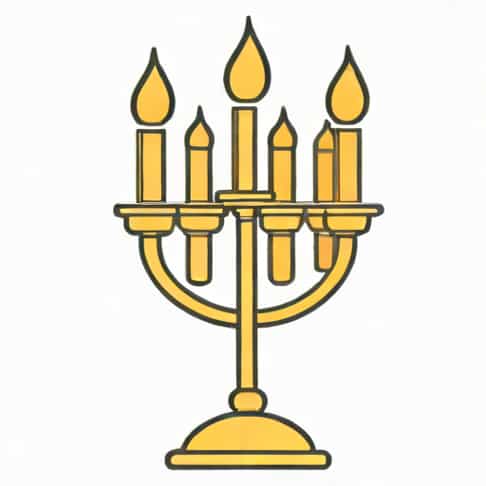
Menorahs are one of the most recognizable symbols of Judaism, often seen in homes, synagogues, and cultural celebrations. While many people are familiar with the nine-candle menorah used during Hanukkah, some menorahs have only seven candles. The seven-candle menorah has a deep historical and religious significance that dates back thousands of years, reflecting ancient traditions and sacred practices. Understanding why some menorahs have seven candles helps illuminate the connection between Jewish history, religious rituals, and the symbolism embedded in these sacred objects.
Historical Background of the Menorah
The menorah is an ancient symbol in Jewish culture, with roots tracing back to the time of the Tabernacle and the First Temple in Jerusalem. According to biblical descriptions, the original menorah was a golden candelabrum with seven branches used in the Temple. It was made of pure gold and designed to hold seven lamps, which were lit daily by the priests. The menorah served both a practical and spiritual purpose, providing light in the sacred space while symbolizing divine presence and guidance.
The Seven Candles of the Original Menorah
The seven candles of the original menorah are not arbitrary; each element carries symbolic meaning. Some interpretations suggest that the seven lamps represent the seven days of creation, symbolizing light, knowledge, and divine wisdom. Others see the seven branches as a representation of the seven classical planets known in ancient times, connecting the menorah to cosmic order and spiritual harmony. Regardless of the interpretation, the seven branches of the menorah in the Temple were considered sacred and were carefully maintained according to religious law.
Religious Significance
In Judaism, the seven-candle menorah holds a special religious significance beyond its function as a source of light. It is mentioned in the Torah, specifically in the book of Exodus, where God instructs Moses on how to construct the menorah for the Tabernacle. The menorah’s light symbolizes divine presence, enlightenment, and the continuous guidance of God for the Jewish people. Each candle represents not only a day of creation but also the spiritual illumination that Judaism encourages in daily life.
Symbolism of the Number Seven
The number seven holds particular importance in Jewish tradition. It appears repeatedly in religious texts, rituals, and practices. For example
- There are seven days of creation, culminating in the Sabbath, a day of rest and spiritual reflection.
- Seven blessings are recited at Jewish weddings, emphasizing completeness and harmony.
- Many Jewish holidays involve cycles of seven, such as the seven weeks of counting the Omer between Passover and Shavuot.
In this context, the seven branches of the menorah reinforce the idea of spiritual completeness, divine order, and sacred tradition. The menorah serves as a physical reminder of these concepts and connects worshippers to their heritage.
Difference Between the Seven-Candle Menorah and Hanukkah Menorah
It is important to distinguish between the seven-candle menorah and the Hanukkah menorah, which typically has nine candles. The Hanukkah menorah, or Hanukkiah, is specifically used during the festival of Hanukkah to commemorate the rededication of the Second Temple and the miracle of the oil. The additional candles on the Hanukkiah, including the central shamash candle, are lit over eight nights to symbolize the miracle of the oil lasting eight days. In contrast, the seven-candle menorah represents the traditional design of the Temple menorah and is not tied to Hanukkah.
Uses of the Seven-Candle Menorah Today
While the original Temple no longer stands, the seven-candle menorah continues to hold cultural and religious importance. It is often displayed in synagogues, Jewish museums, and homes as a symbol of faith and tradition. Some people use it during religious ceremonies, while others display it as a decorative reminder of Jewish heritage. The menorah’s enduring presence reflects its significance as a symbol of enlightenment, resilience, and spiritual continuity across generations.
Artistic and Cultural Significance
Beyond its religious role, the seven-candle menorah has inspired artistic and cultural expressions. Artists and craftsmen create menorahs in a variety of styles, materials, and designs, reflecting both traditional and modern interpretations. The menorah can serve as a centerpiece in Jewish art, symbolizing identity, history, and the ongoing relevance of spiritual symbols in everyday life. Its seven branches are often emphasized to convey balance, harmony, and sacred geometry, blending aesthetic beauty with religious meaning.
Modern Symbolism
In contemporary Jewish culture, the seven-candle menorah is often used as a symbol of continuity and resilience. It is featured in official emblems, such as the emblem of the State of Israel, which incorporates a stylized seven-branch menorah flanked by olive branches. This modern use highlights the menorah’s enduring role as a symbol of national identity, spiritual heritage, and the connection between past and present.
The seven-candle menorah is a powerful symbol with deep historical, religious, and cultural significance. Its design, rooted in the Temple menorah described in the Torah, reflects divine guidance, spiritual illumination, and the sacred cycles of life. The number seven itself carries symbolic meaning in Judaism, representing completeness, harmony, and connection to the divine. While it differs from the nine-candle Hanukkah menorah used for festival celebrations, the seven-candle menorah continues to serve as a reminder of Jewish tradition, heritage, and faith. Whether displayed in homes, synagogues, or as part of cultural artwork, the menorah with seven candles remains a timeless symbol of light, spirituality, and resilience in Jewish life.