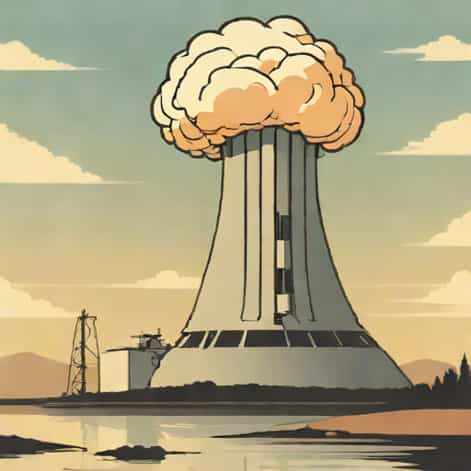
The story of Zhores Medvedev and the nuclear disaster in the Urals is one of secrecy, courage, and the struggle to reveal truth in the face of political pressure. For many years, people outside the Soviet Union knew little about what had happened in the remote region of the southern Urals. It took the work of Medvedev, a Soviet scientist turned dissident writer, to bring attention to what is now widely known as one of the worst nuclear accidents in history. His determination to speak about the hidden dangers of nuclear contamination helped expose the risks faced by thousands of people and changed the way the world viewed nuclear safety, government secrecy, and environmental responsibility.
The Background Of Zhores Medvedev
Zhores Medvedev was not just a political activist. He was a respected biologist and researcher with a deep understanding of Soviet science and its limitations. Over time, he became increasingly aware that important information about public health and environmental safety was being hidden. His scientific background gave him credibility, while his independent thinking pushed him to question official narratives. Eventually, he began to investigate rumors and scattered information about unusual illnesses, radioactive contamination, and quiet evacuations happening in the Urals.
Medvedev’s interest in the subject was not only scientific but also moral. He believed that people had the right to know the dangers they faced and that transparency was essential for safety. His decision to speak out was risky, especially in a political climate where criticism was not welcomed. Yet his persistence helped bring global attention to an event the Soviet government desperately wanted to forget.
The Nuclear Disaster In The Urals
The nuclear disaster that Medvedev exposed is often referred to as the Kyshtym disaster. It occurred in 1957 at a secret nuclear facility near the town of Kyshtym in the Chelyabinsk region of the Soviet Union. The facility, part of a major nuclear development program, stored highly radioactive waste in large underground tanks. One of these storage systems failed catastrophically when its cooling mechanism stopped working, leading to a massive chemical explosion.
The blast released a huge amount of radioactive material into the environment. A radioactive cloud spread over a wide area, contaminating land, rivers, and settlements across hundreds of kilometers. Thousands of people were exposed to radiation, farm land became unsafe, and entire villages were eventually abandoned. However, unlike other well-known global disasters, this event was kept secret for decades.
Government Secrecy And Silent Evacuations
Instead of openly warning the population, Soviet authorities attempted to hide the event. Evacuations took place quietly, sometimes without clear explanations for the residents. Many people were told vague reasons for relocation, while others continued to live in contaminated areas without understanding the risks. The government’s priority was to protect its nuclear reputation and strategic image, not to provide full transparency to its citizens.
Effects Of Secrecy
- Residents lacked accurate health information
- Doctors were restricted in what they could report
- Environmental monitoring data was hidden
- Long-term contamination was downplayed
This secrecy made the disaster more damaging. Without open discussion, it was difficult for scientists, doctors, and environmental experts to properly address the consequences. It also meant that lessons that could have prevented future incidents were not widely shared.
How Zhores Medvedev Revealed The Truth
Medvedev gathered evidence from scientific papers, medical reports, and testimonies. Although direct government confirmation did not exist at the time, he began to reconstruct what happened through indirect but convincing information. His work was published outside the Soviet Union, where it gained international attention. Foreign scientists, journalists, and governments began asking questions. Slowly, the story of the nuclear disaster in the Urals gained recognition.
Medvedev’s role was essential because he bridged scientific knowledge with public communication. He explained not only that a disaster occurred but also why it mattered. His writing helped people understand the human, environmental, and political dimensions of the catastrophe. Over time, more documentation and research supported what he had been saying, reinforcing his credibility and the importance of his revelations.
Human And Environmental Impact
The nuclear disaster in the Urals had long-lasting effects. Radiation exposure affected thousands of residents, causing health problems that continued for years. Contaminated soil and water changed local environments, making certain regions dangerous for agriculture and everyday living. Many families lost their homes and their communities, forced to relocate without clear explanations.
The impact was not only physical but emotional and psychological. Living with uncertainty, secrecy, and fear left a mark on the people of the region. For many, the disaster became part of their personal history, shaping how they viewed authority, science, and safety.
Why This Story Matters Today
The story of Zhores Medvedev and the nuclear disaster in the Urals still matters because it highlights important lessons about nuclear responsibility, public safety, and transparency. It reminds the world that advanced technology must be managed with honesty and care. When governments hide crucial information, the consequences can become even more dangerous.
Key Lessons From The Event
- The need for transparency in nuclear programs
- The importance of environmental monitoring
- The human cost of secrecy
- The value of independent voices like Medvedev
Today, discussions about nuclear safety often refer back to earlier accidents to understand what must be improved. The Urals disaster stands alongside other major nuclear incidents as a warning about what can happen when safety, communication, and accountability fail.
The Legacy Of Zhores Medvedev
Zhores Medvedev is remembered as more than a scientist. He became a symbol of courage and intellectual responsibility. By speaking out, he challenged powerful institutions and helped bring hidden truths to light. His efforts encouraged greater international awareness of nuclear risks and helped ensure that such disasters could no longer be buried in silence as easily as before.
His work also strengthened global conversations about human rights, scientific ethics, and government accountability. Today, when people study nuclear history, Medvedev’s name is closely connected with the effort to uncover the truth about the nuclear disaster in the Urals and to protect future generations from similar harm.
The story of Zhores Medvedev and the nuclear disaster in the Urals is a powerful chapter in both scientific and political history. It reveals how a hidden catastrophe eventually came to public attention because one determined individual refused to remain silent. Through patience, evidence, and moral conviction, Medvedev helped the world understand a tragic event that shaped the lives of countless people. His courage, combined with the harsh reality of the disaster itself, continues to remind us of the need for honesty, responsibility, and respect for human life whenever powerful technologies are involved.