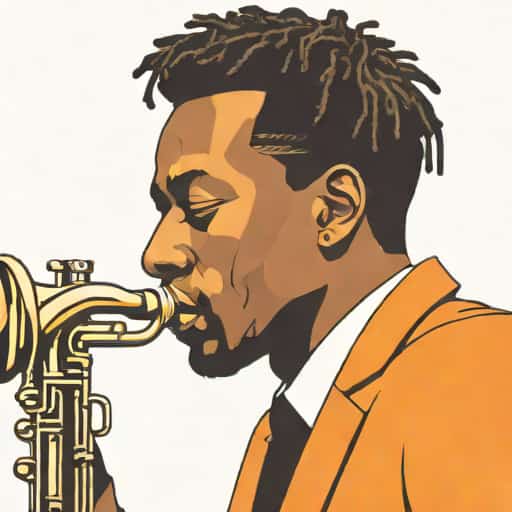
Mental phrasing is a concept that has long been crucial to the art of jazz improvisation, and few musicians have embodied it as elegantly as trumpeter Roy Hargrove. Known for his fluid, expressive style and remarkable sense of rhythm, Hargrove approached improvisation with an internalized sense of phrasing that allowed him to communicate emotion and musical ideas effortlessly. Mental phrasing involves the ability to anticipate and shape musical lines in one’s mind before they are played, giving each note intention and weight. For Hargrove, this mental process was inseparable from his technical skill, his deep understanding of harmony, and his connection to the history of jazz. Exploring his approach to mental phrasing provides insights into how one of the greatest jazz trumpeters of his generation constructed melodies that were both technically sophisticated and emotionally resonant.
Understanding Mental Phrasing in Jazz
Mental phrasing is more than simply playing notes; it is the ability to conceptualize music in the mind and translate that vision onto an instrument. Jazz musicians use mental phrasing to determine where to place emphasis, how to shape a melody, and when to use space or silence for maximum emotional effect. It involves a combination of rhythmic intuition, harmonic awareness, and melodic imagination. In improvisation, mental phrasing allows the musician to navigate chord changes creatively, generating lines that are coherent, expressive, and uniquely personal.
Key Components of Mental Phrasing
- Anticipation Foreseeing the direction of a musical line before playing it.
- Rhythmic Precision Understanding how to manipulate timing and accents for expressive effect.
- Melodic Shaping Controlling dynamics, articulation, and note choice to create a sense of phrase architecture.
- Harmonic Awareness Being aware of chord changes and how the melodic line interacts with underlying harmony.
- Use of Space Incorporating rests and pauses to make musical statements more impactful.
Roy Hargrove’s Approach to Phrasing
Roy Hargrove’s phrasing was remarkable for its clarity, lyricism, and rhythmic vitality. He often approached a phrase with a mental map of how it would evolve, allowing him to execute lines with precision while maintaining a natural, expressive flow. Hargrove’s mental phrasing was rooted in a profound understanding of jazz tradition, including bebop, hard bop, and soul jazz, which he absorbed and then internalized to form his own voice. By anticipating melodic contours and harmonic movement in his mind, he was able to craft solos that felt spontaneous yet fully coherent.
Techniques Hargrove Used
- Internalizing chord progressions to navigate complex changes smoothly.
- Practicing call-and-response patterns to develop conversational phrasing within solos.
- Emphasizing motifs and developing them over a phrase for thematic coherence.
- Using dynamics and articulation to give each note intentional expression.
- Listening deeply to the rhythm section and adjusting phrasing to enhance interaction.
The Role of Rhythm in Mental Phrasing
For Hargrove, rhythm was a key element of mental phrasing. He often employed syncopation, delayed resolutions, and varied note lengths to create tension and release within his lines. His mental approach to rhythm allowed him to predict where a phrase should peak or relax, contributing to a sense of forward momentum in his solos. Understanding rhythm at a conceptual level enabled him to play ahead of or behind the beat intentionally, adding emotional nuance and making each performance distinctive.
Practical Applications
- Practicing with a metronome to internalize complex subdivisions.
- Transcribing solos from jazz masters to study their rhythmic phrasing.
- Experimenting with rhythmic displacement to create tension and interest.
- Using silence strategically to enhance the impact of a note or phrase.
- Balancing technical accuracy with expressive timing for a natural feel.
Mental Phrasing and Emotional Expression
One of the defining qualities of Hargrove’s playing was his ability to convey emotion through mental phrasing. By mentally shaping a phrase before playing it, he could inject subtle inflections, dynamic shifts, and articulations that communicated mood and feeling. Whether playing a ballad with tenderness or a hard bop line with intensity, his internal visualization of the phrase guided his expressive choices. This approach allowed him to maintain a deeply personal voice while interacting with the harmonic and rhythmic structure of a piece.
Examples in Performance
- In ballads, Hargrove often used long, flowing phrases that emphasized melodic contour and gentle dynamics.
- In up-tempo bebop tunes, he incorporated quick bursts of notes with syncopated accents that maintained clarity and direction.
- His solos frequently built motifs and returned to them, creating emotional arcs that were mentally planned and executed.
- Improvised lines often reflected storytelling, with tension and release mirroring narrative structures.
Developing Mental Phrasing Skills
Learning from Hargrove’s approach to mental phrasing involves both technical practice and a deep listening mindset. Musicians can develop mental phrasing by transcribing solos, analyzing the structure of phrases, and practicing visualization techniques. Imagining the shape and emotional contour of a phrase before playing helps internalize the music and improves the ability to execute complex lines spontaneously. Regular improvisation, combined with focused listening to masters like Hargrove, builds both technical skill and mental flexibility.
Practice Tips
- Transcribe and analyze solos of Roy Hargrove to understand his phrasing decisions.
- Practice improvising over chord changes while visualizing the shape of phrases mentally.
- Focus on rhythmic variation and articulation to create more expressive lines.
- Use call-and-response exercises to develop conversational phrasing skills.
- Record practice sessions and evaluate how well mental ideas are translated to the instrument.
The Legacy of Roy Hargrove’s Mental Phrasing
Roy Hargrove’s approach to mental phrasing has left a lasting impact on jazz trumpet players and improvisers across instruments. His ability to merge technical mastery with expressive, internally visualized phrasing set a standard for clarity, emotion, and creativity in improvisation. Musicians who study his recordings gain insight not only into the mechanics of phrasing but also the importance of mental preparation, listening, and internal musical dialogue. Hargrove’s legacy teaches that mental phrasing is as much about thoughtfulness and emotional intention as it is about technical execution.
Mental phrasing, as exemplified by Roy Hargrove, is a crucial skill for jazz musicians seeking to combine technical proficiency with expressive depth. Hargrove’s internalized approach allowed him to anticipate melodic and harmonic movement, shape phrases dynamically, and communicate emotion through his instrument. By studying his techniques, practicing visualization, and incorporating rhythmic and melodic awareness, musicians can develop their own mental phrasing skills. Ultimately, understanding mental phrasing in the context of Hargrove’s artistry demonstrates that the mind and instrument are inseparable in creating music that is both technically impressive and emotionally compelling.